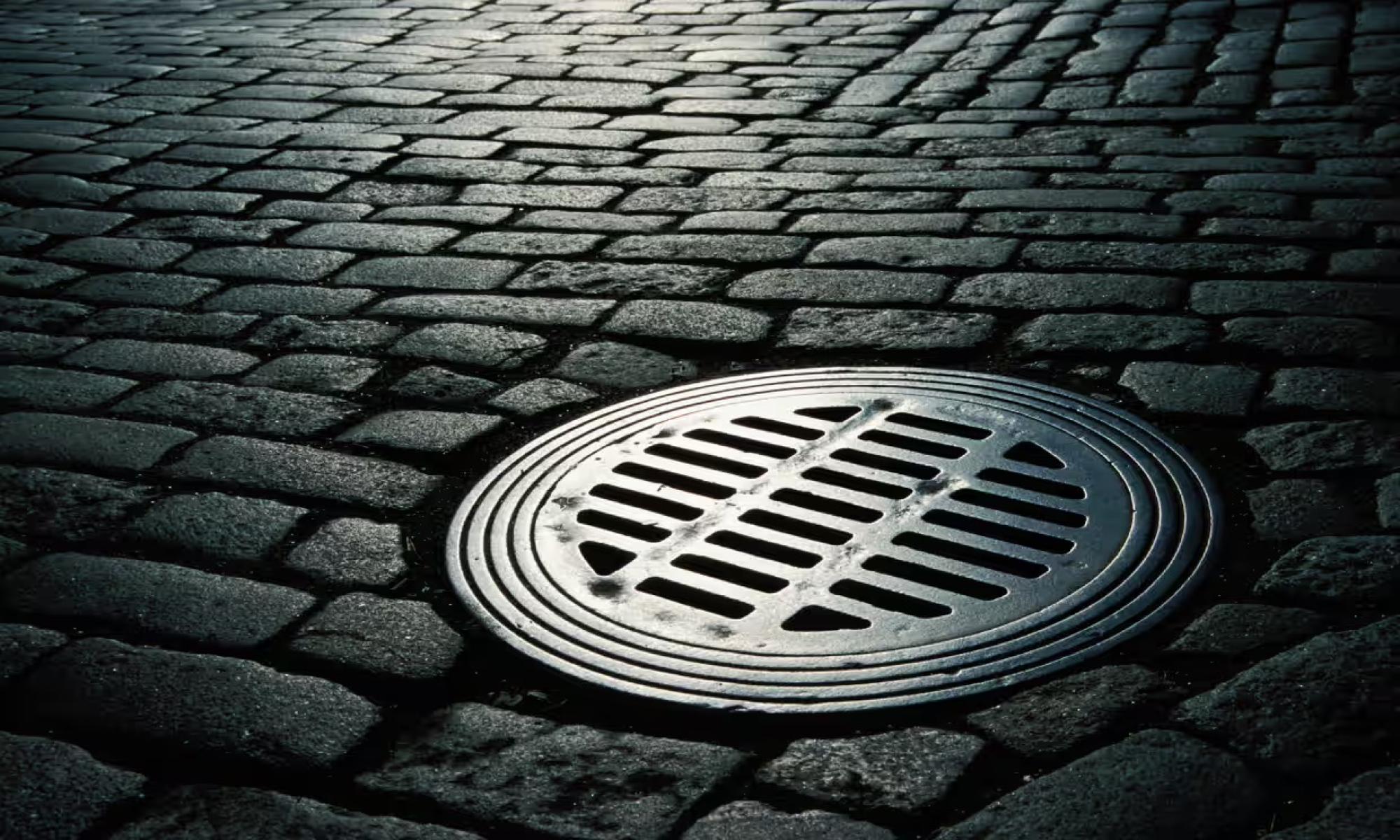
Dutch sewage waste is being seen as a reliable heat source for millions of homes that the government wants to be unhooked from the country's gas system by 2050. Lieven de Key, a housing corporation in Amsterdam, is planning what is believed to be the first sewer warmth project that will tap into a main district sewage pipe to warm 1,600 existing social and student homes. "We have a photo of the street covered with snow, and the manhole covers all without snow," says Jeroen Rademaker, the project leader. "Even when there's snow in the winter, the sewer is warm. Warm sewage water flows 24 hours a day and we should capture it. This can happen wherever there is a big sewage pipe." "The warmth comes from showers, the toilet, wastewater from washing, from the dishwasher, from the washing machine," says Postuma. "Together it all gives, throughout the year, a temperature between 15 and 18 degrees. And we are going to make a bypass around the main sewer, put a heat exchanger around it and bring it to the houses in insulated pipes. We place it in an electric heat pump, and the water is heated up to 60 or 70C " medium temperature." The heat exchanger transfers that source heat from the drain to a working fluid that can be transported to the buildings without needing to circulate the actual sewage waste. Then the blocks' heat pumps, fired by solar energy, can amplify that heat in the opposite way to the workings of a refrigerator.
Latest
Latest News
Each news summary is created according to strict standards. Here's how we do it.
Each summary is created using a consistent editorial procedure. The target length is approximately 16 lines of 11-point Arial text in a 650-pixel-wide column. Up to 25% of a summary may be set in bold to emphasize the most important ideas. Summaries are composed of verbatim excerpts presented in the same sequence as they appear in the original news source, with very minor editorial additions. Where material has been omitted between excerpts, the omission is indicated with ellipses (...). Any words added by an editor for clarity or context appear in [brackets]. Our original news editor was Fred Burks. Tod Fletcher edited most summaries from 2007 through 2014, and Mark Bailey has served as news editor since 2014.