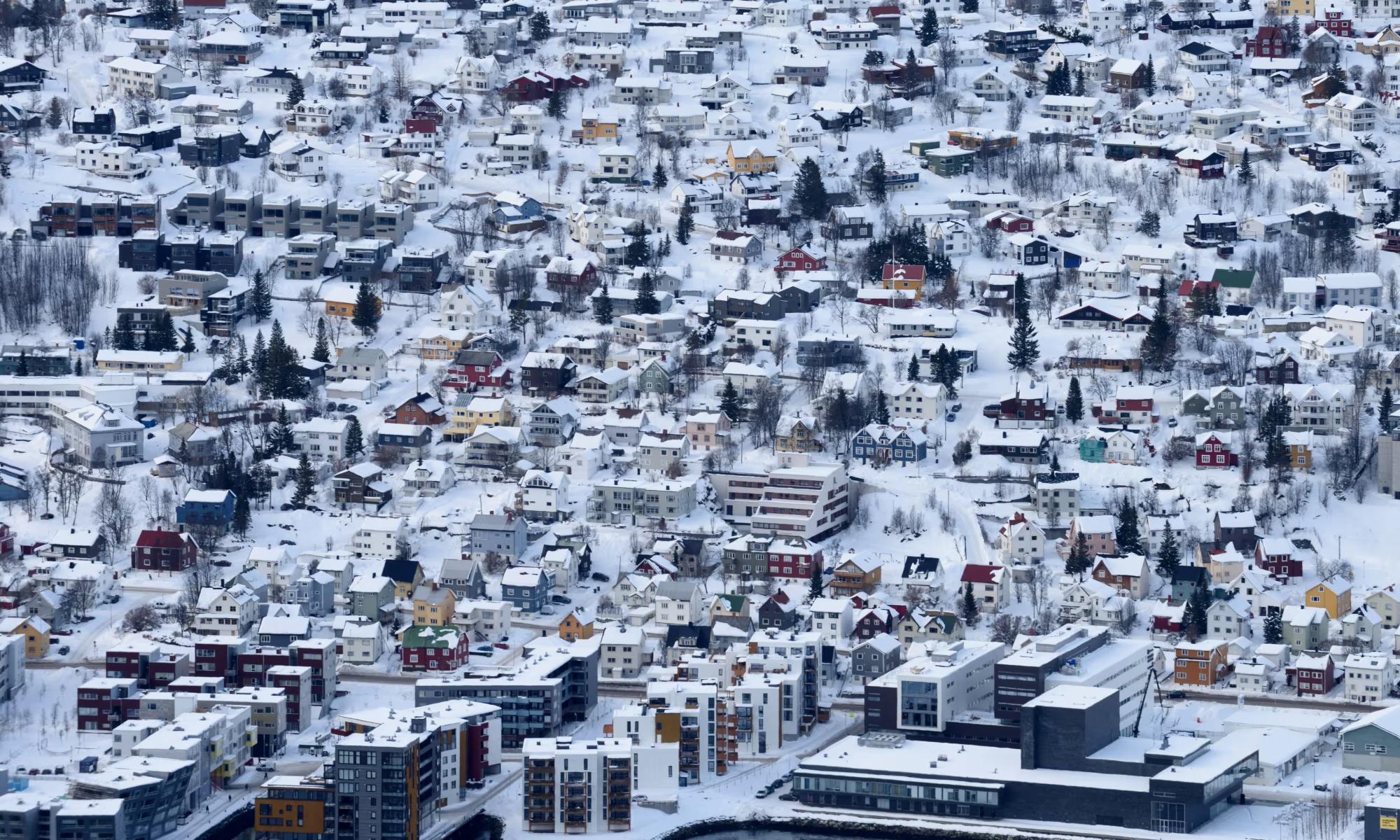
In most of Europe, fitting a heat pump is one of the most powerful actions a person can take to reduce their carbon footprint. But in Norway, where clean-yet-inefficient electrical resistance heaters have long been common, upgrading to a heat pump is often a purely financial decision. Two-thirds of households in this Nordic country of 5 million people have a heat pump, more than anywhere else in the world. For many years, Norwegians and their neighbours heated their homes with fossil fuels. But during the 1973 oil crisis, when prices shot up, the country's political leaders made a conscious choice to promote alternatives. "Norway ensured early on that fossil-fuel heating was the most expensive option, making heat pumps cost competitive," said Dr Jan Rosenow from the Regulatory Assistance Project, a thinktank that works to decarbonise buildings. "They did this by taxing carbon emissions from fossil heating fuels. That's been the key to incentivise heat pump adoption." Norway also trained up a workforce to install them. Heat pumps' efficiency has been increased over decades, partly because of the early adopters in Nordic countries who tinkered away to the point where a modern version can deliver three to five units of heat for every unit of electricity used to power it. An efficient gas boiler, on the other hand, can only produce as much heat as the energy contained in the fuel being burned. A heat pump will have a smaller carbon footprint than a gas boiler even when plugged into an electricity grid.
Latest
Latest News
Each news summary is created according to strict standards. Here's how we do it.
Each summary is created using a consistent editorial procedure. The target length is approximately 16 lines of 11-point Arial text in a 650-pixel-wide column. Up to 25% of a summary may be set in bold to emphasize the most important ideas. Summaries are composed of verbatim excerpts presented in the same sequence as they appear in the original news source, with very minor editorial additions. Where material has been omitted between excerpts, the omission is indicated with ellipses (...). Any words added by an editor for clarity or context appear in [brackets]. Our original news editor was Fred Burks. Tod Fletcher edited most summaries from 2007 through 2014, and Mark Bailey has served as news editor since 2014.