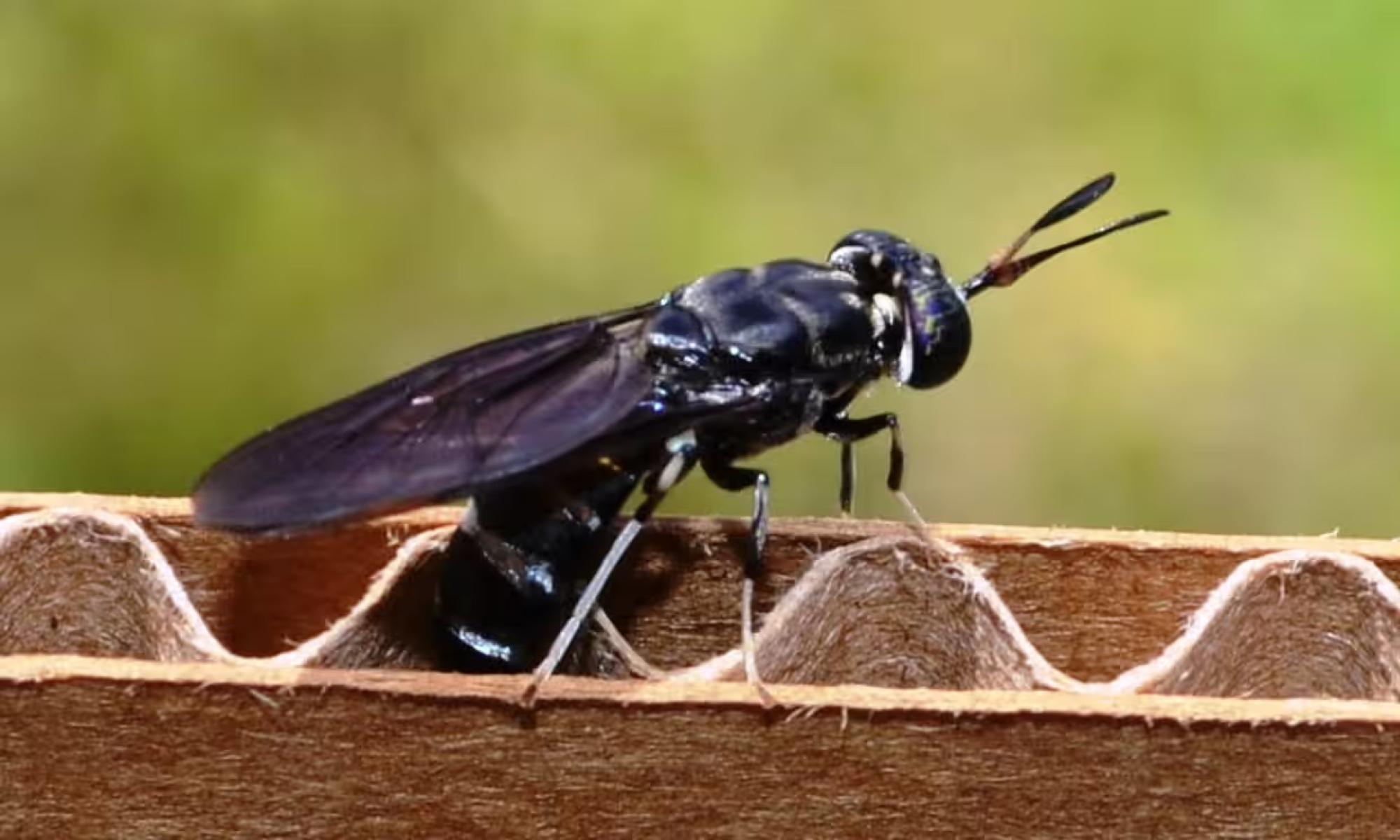
Dead flies could be turned into biodegradable plastic, researchers have said. The finding, presented at the autumn meeting of the American Chemical Society (ACS), could be useful as it is difficult to find sources for biodegradable polymers that do not have other competing uses. "For 20 years, my group has been developing methods to transform natural products such as glucose obtained from sugar cane or trees " into degradable, digestible polymers that don't persist in the environment," said the principal investigator, Karen Wooley. A colleague suggested she could use waste products left over from farming black soldier flies. The larvae of the flies contain proteins and other nutritious compounds so are being raised for animal feed. However, adult flies are less useful and are discarded. Wooley's team has been trying to use these carcasses to make useful materials from a waste product. The researchers found that chitin, a sugar-based polymer, is a major component of the flies and it strengthens the shell, or exoskeleton, of insects and crustaceans. From the fly products, the team created a hydrogel that can absorb 47 times its weight in water in just one minute. This product could be used in cropland soil to capture flood water and then slowly release moisture during droughts. The scientists hope they will soon be able to create bioplastics such as polycarbonates or polyurethanes, which are traditionally made from petrochemicals, from the flies. These plastics will not contribute to the plastic pollution problem.
Latest
Latest News
Each news summary is created according to strict standards. Here's how we do it.
Each summary is created using a consistent editorial procedure. The target length is approximately 16 lines of 11-point Arial text in a 650-pixel-wide column. Up to 25% of a summary may be set in bold to emphasize the most important ideas. Summaries are composed of verbatim excerpts presented in the same sequence as they appear in the original news source, with very minor editorial additions. Where material has been omitted between excerpts, the omission is indicated with ellipses (...). Any words added by an editor for clarity or context appear in [brackets]. Our original news editor was Fred Burks. Tod Fletcher edited most summaries from 2007 through 2014, and Mark Bailey has served as news editor since 2014.