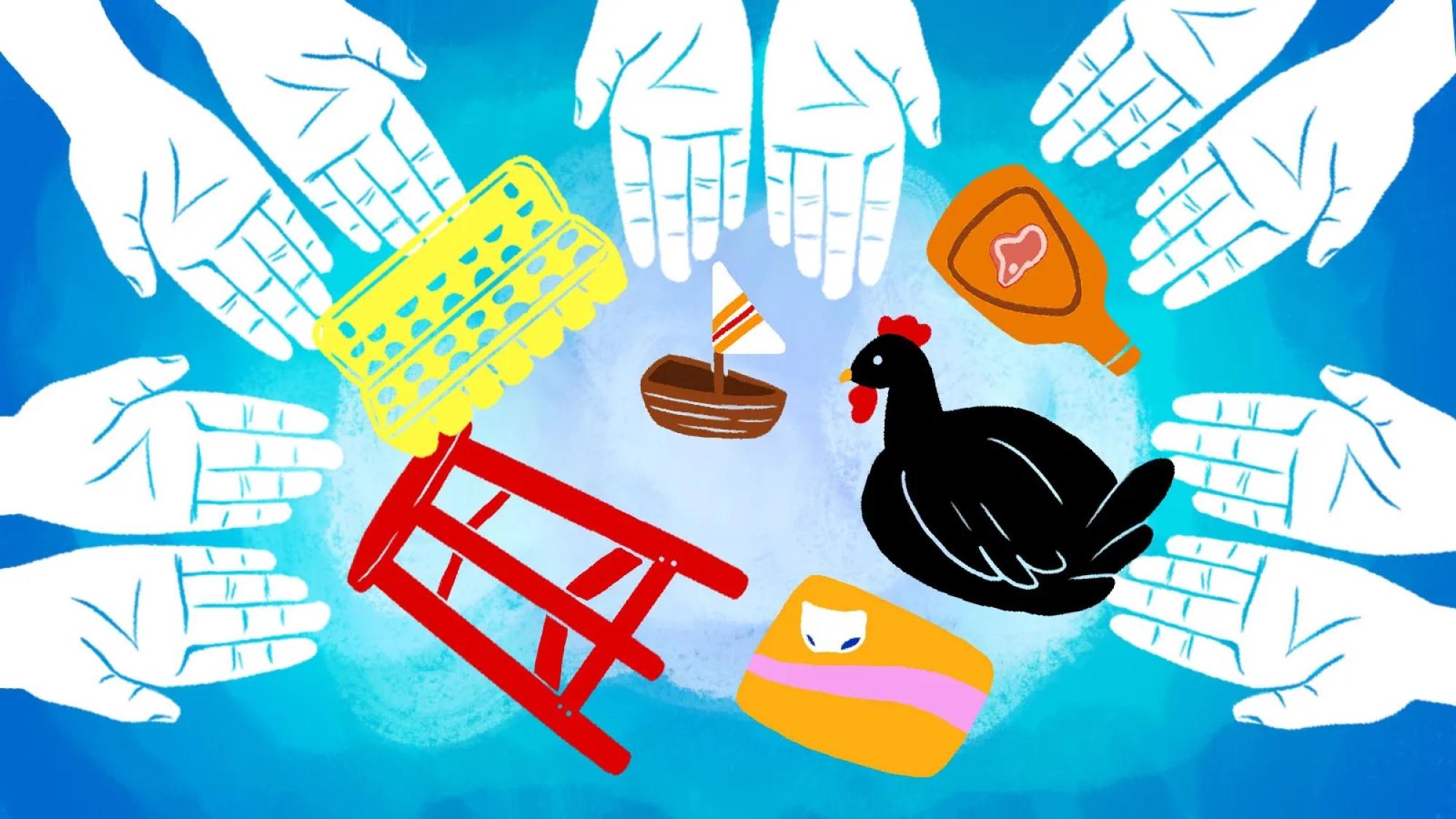
The free, moneyless economy is flourishing in America. Roughly 250 million people were still visiting Craigslist worldwide each month in 2022, 27 years after the site was launched in 1995"and many of those Craigslist users are posting and sharing goods under the site's popular "free stuff" section. About eight years after Craigslist was launched, Freecycle Network came online in 2003. More than 9 million Americans were still using Freecycle as of 2020, which I detailed in an article that year. And then there's the relatively young Buy Nothing Project, which turned 10 years old in July of 2023. In addition to providing a digital space where people can request things they need, post things they're giving away, and share gratitude, one of the B corp's social benefit model goals is to encourage people to organize community and local events around buying nothing. Over the years, Buy Nothing has been gaining popularity"not through any marketing on the part of the organization but through word-of-mouth and organic growth. The Buy Nothing app, which has only been around for about two years, is ... zeroing in on 1 million users. Buy Nothing's model varies from that of Craigslist's "free stuff" and Freecycle in that it is focused on community groups, gatherings, and events organized by and for local communities. The idea is that a global reuse economy will emerge community by community. Buy Nothing exists ... "to build resilient communities where our true wealth is the connections forged between neighbors."
Latest
Latest News
Each news summary is created according to strict standards. Here's how we do it.
Each summary is created using a consistent editorial procedure. The target length is approximately 16 lines of 11-point Arial text in a 650-pixel-wide column. Up to 25% of a summary may be set in bold to emphasize the most important ideas. Summaries are composed of verbatim excerpts presented in the same sequence as they appear in the original news source, with very minor editorial additions. Where material has been omitted between excerpts, the omission is indicated with ellipses (...). Any words added by an editor for clarity or context appear in [brackets]. Our original news editor was Fred Burks. Tod Fletcher edited most summaries from 2007 through 2014, and Mark Bailey has served as news editor since 2014.