























Corporate Corruption Media Articles
Below are key excerpts of revealing news articles on corporate corruption from reliable news media sources. If any link fails to function, a paywall blocks full access, or the article is no longer available, try these digital tools.

[Taylor] Little is among more than 1,800 plaintiffs suing major social-media companies, including Instagram and its parent company Meta, in a massive multidistrict litigation in Northern California. The plaintiffs allege these companies have been “recklessly ignoring the impact of their products on children’s mental and physical health,” and that they are “direct victims of intentional product design choices made by each defendant.” Little’s own complaint seeks to hold Instagram accountable for “knowingly unleashing onto the public a defectively designed product that is addictive, harmful, and at times fatal to children.” They allege the platform fed them a persistent stream of self-harm content that altered their brain and perpetuated constant thoughts of death. “The fact that I was obsessively suicidal at the age I was, that was not just my brain chemistry. That was my brain chemistry being altered by the platform I was on,” Little tells TIME. “Social media shaped my brain.” On Instagram, depression was “romanticized,” Little says. The self-harm content “was kind of comforting”—it felt like a twisted validation of their depression in a way. By the time Little turned 12, [Little's] Instagram feed was filled with images of girls falling off buildings, videos of blades cutting into unscarred flesh, and soft music framing stylized photos of hanging bodies. Teen suicides increased more than 57% between 2007 and 2018. Another 2019 study ... found that 38% of teens who used social media for an average of more than five hours per day showed signs of clinically relevant depression. Researchers at Weill Cornell Medical College in Manhattan found that kids who were more addicted to social media were at two to three times higher risk of suicidal behavior.
Note: Former Facebook executive Tim Kendall told Congress that the company intentionally made its product as addictive as cigarettes. Meta whistleblower Sarah Wynn-Williams told US senators that the company targeted teenage girls with beauty and weight-loss advertisements during moments of heightened vulnerability such as after deleting a selfie. According to her testimony, Meta could detect when users were feeling "worthless," "helpless," or like a "failure," and then make that information available to advertisers. For more along these lines, read our concise summaries of news articles on Big Tech and mental health.
Millions of Americans are borrowing money or draining their savings to buy groceries, highlighting the financial strain many households face as the cost of living rises, new research has found. More than a quarter of working-age adults who relied on credit cards to buy groceries were either unable to pay their balance in full or missed their minimum payment, according to the Urban Institute, a nonpartisan think tank. About one in 10 adults relied on so-called "buy now, pay later" loans to cover their groceries — of those, about a third missed a payment last year, the analysis found. About 20% of working-age adults said they had tapped long-term savings that weren't intended for everyday expenses, such as an emergency fund, at least once in the last 12 months to pay for groceries, the researchers said. Over the past five years, grocery prices have jumped 32%, making food affordability a top concern. In a May CBS News poll, more than three-quarters of Americans said their incomes aren't keeping up with inflation. About 12% of low- and middle-income adults who used credit cards to pay for groceries missed a minimum payment last year, triple the rate for higher-income consumers, the study found. Lower-earning households were also about four times as likely to miss a buy now, pay later payment as higher-income households.
Note: For more along these lines, read our concise summaries of news articles on financial inequality.
Hundreds of contractors working on a project for Meta were instructed to pose as minors online and probe how competitor chatbots responded to prompts involving suicide, sex, eating disorders, and other high-risk subjects, according to internal documents and five people familiar with the project. The prompts were often designed to push the chatbots toward responses their safety systems were supposed to refuse. A single round of testing completed in August 2025 saw more than 45,000 prompts run through the rival chatbots. The companies behind the chatbots weren’t aware of the testing. Testing competitors’ products is not, by itself, unusual in the artificial intelligence industry. Former contractors who worked on the project described several aspects as alarming. According to one former worker, employees feared the possibility they could be generating or preserving child sexual abuse material if a chatbot responded to certain sexual prompts involving minors. Another says they worried the project amounted to secretly taking material from competitors’ systems to potentially feed back into Meta’s system. While a dataset of thousands of youth-safety prompts could be useful for comparing how often chatbots refuse harmful requests, the scale and opacity of [this project, known internally as] Cannes, along with the lack of disclosure to the companies being tested, made it very different from other public safety benchmarks.
Note: For more along these lines, read our concise summaries of news articles on Big Tech and mental health.
Twenty-five years ago, I co-founded Wikipedia, arguably the most important encyclopedia in human history. On Monday, I was indefinitely banned from the site. In early 2000, the internet was ... much freer. But it was also harder to use, and finding information took much longer. We needed a free, fair storehouse of knowledge: an encyclopedia built by, and open to, the public. It was exhilarating to build Wikipedia at that time. I watched in dismay as the site I’d created began to drift from its founding mission. Wikipedia has, over time, become decidedly globalist, academic, secular, and progressive. Important contributors have been blocked; facts censored in the name of “undue weight” and avoiding “fringe views”; and left-leaning outlets overwhelmingly favored. The Republican Party, for instance, is classified as being on the “right-wing to far-right” of the political spectrum. And the Democratic Party? “Center to center-left.”. All this transpires with no mechanisms for real accountability. I was blocked from the site by one Wikipedia admin who declared that the consensus of the mob (the “community”) favored my banning. Information is the most valuable currency in any society, and the ability of citizens to access, evaluate, and learn from a diversity of viewpoints is essential to a free civilization. Yet Wikipedia’s yearslong shift away from that principle—toward ideological gatekeeping and narrative control—undermines the very purpose for which it was created. So, now that I am powerless to try to fix the platform from the inside, what should I do?
Note: Read how Wikipedia, one of the primary sources for AI chatbots and search summaries, is vulnerable to systematic manipulation by powerful PR firms, intelligence agencies, and billionaires seeking to suppress damaging information and shape public narratives. For more along these lines, read our concise summaries of news articles on censorship and media manipulation.
The Supreme Court on Thursday restricted a massive wave of lawsuits claiming the chemical giant Monsanto had a duty to warn consumers of alleged cancer risks from the world’s most popular weed killer, Roundup. The justices ruled that federal law preempts cancer victims from bringing lawsuits against Monsanto in state courts, where most such claims are filed. The justices [also] ruled Monsanto was not required to offer a warning because the Environmental Protection Agency holds that Roundup’s active ingredient, glyphosate, is not a cancer risk. “EPA has not required glyphosate-based pesticides like Roundup to include a cancer warning on their labels,” Justice Brett M. Kavanaugh wrote for the majority. “Therefore, as a matter of federal law, Monsanto legally must use a label without a cancer warning unless and until EPA approves or requires a change.” Monsanto has marketed Roundup as safe to spray in a t-shirt and shorts. The EPA has repeatedly found that glyphosate, which was first marketed in the 1970s, does not cause cancer. Glyphosate is used on about 300 million acres of farmland in the United States. In 2015 the International Agency for Research on Cancer, which is associated with the United Nations and World Health Organization, found glyphosate was “probably carcinogenic to humans.” The agency found a likely link between non-Hodgkin lymphoma and glyphosate.
Note: Our Substack, "The Pesticide Crisis Reveals The Dark Side of Science. We Have The Solutions to Regenerate," uncovers the scope of Bayer/Monsanto's media propaganda machine and the widespread conspiracy to poison our food, air, and along with the powerful remedies and solutions to this crisis. For more along these lines, read our concise summaries of news articles on government corruption and toxic chemicals.
Well, data leaked by the Swiss hacktivist maia arson crimew (who also brought us the justice department’s no-fly list back in 2023) is shedding new light on Dialog, the private social club co-created by the former PayPal boss Peter Thiel and the angel investor Auren Hoffman. The network has been around since 2006, and regularly gathers politicians, entrepreneurs, foreign officials, academics, Silicon Valley founders and even Hollywood folks for invitation-only retreats. there are a few weird things we’ve discovered from this leak. Dialog grades its retreat attenders on a hidden scale, ranking them according to their wealth and fame. Everyone is assigned a grade of A, B or C, with the “C” grade being awarded to the most famous and influential. Lower-grade attenders are charged full-price roughly 70% of the time, while only about a quarter of VIPs have to shell out the bigger bucks. Planned events range from sessions like “Bring Back Nuclear” to others focused on “Disinformation and Deepfakes”, “Contrarian AI Takes”, “Democracy Under Surveillance” and “Money (Does?) Buy Happiness.” The agenda also includes sessions on cult-building (moderated by the founder of the Christian site Pray.com, no less), one on “Navigating WWIII” and a session titled “How’s Your Sex Life?” Dialog has a matchmaking system that pairs members for networking and dating. The data exposed in the leak includes home addresses, phone numbers, emails, dates of birth, and other bio-datas.
Note: Is this Dialog Society the Bohemian Grove of Big Tech? Read how Thiel worked with the CIA to influence the origins of Facebook, and how Palantir software helped the NSA spy on the entire planet.
Just days after a leak exposed members of Peter Thiel’s secretive Dialog society, U.S. Department of Justice (DOJ)-retrieved Jeffrey Epstein files have revealed multiple connections between the disgraced financier and the exclusive network founded by the billionaire investor. Among the documents is a February 2016 email in which Epstein discussed Thiel’s interest in what he described as a “secret society idea.” “peter thiel LOVED the secret society idea,” Epstein wrote in an email to former MIT Media Lab director Joi Ito. “he has done alot of work on the concept. all failed so far.” The email surfaced alongside another newly released record that references Dialog, the invitation-only organization Thiel launched in 2006 with entrepreneur Auren Hoffman. In a November 2012 email, renowned Harvard physicist Lisa Randall forwarded Epstein an invitation to attend Dialog 2014, an exclusive retreat held at Utah’s Sundance Resort. Another email suggests the financier was receiving materials connected to the organization’s retreats. In a September 2013 message, Boris Nikolic — the prominent biotechnology executive who later became one of Epstein’s most well-known scientific associates — forwarded Epstein an email discussing a Dialog breakout session focused on bitcoin and foreign policy. “You should have someone print you various materials in links below,” Nikolic wrote to Epstein.
Note: It appears that Jeffrey Epstein played a significant role in Peter Thiel's rise within some of the world's most powerful business and political networks. Read how Thiel worked with the CIA to influence the origins of Facebook, and how Palantir software helped the NSA spy on the entire planet. Watch a 7-min video with WTK Director Amber Yang and Joe Martino from Collective Evolution discussing the links between Thiel, Palantir, Jeffrey Epstein, the Rothschild banking family, and intelligence agency operations.
A trove of internal records from a secret society for powerful figures in US politics, finance, and tech was left exposed online. The group, called Dialog, is a private, invitation-only organization cofounded in 2006 by the billionaire tech investor Peter Thiel. It convenes US officials, foreign government figures, and Silicon Valley executives at off-the-record annual retreats. Dialog has spent two decades declining to disclose its members. A directory in the website's code was first revealed by the Swiss hacktivist maia arson crimew. Known for exposing the US government’s No Fly List and breaching the surveillance-camera company Verkada, crimew tells WIRED the directory surfaced via an anonymous tip. The registration records list General Alexus Grynkewich, NATO's supreme allied commander Europe and the head of US European Command, who took the post in July 2025 and is recorded on the leaked list as having attended Dialog gatherings since 2021. The website directory names sitting Trump administration officials, two US senators, six members of the Paypal Mafia, a former Middle East chief of intelligence, and a sitting ambassador to the United States, along with the founders and directors of many of the country's largest surveillance, data-broker, and advertising-data companies. What ties the roster together more than any title or office is a shared preoccupation with artificial intelligence, longevity, and the near future.
Note: Read how Thiel worked with the CIA to influence the origins of Facebook. Watch a 7-min video with WTK Director Amber Yang and Joe Martino from Collective Evolution discussing the links between Thiel, Palantir, Jeffrey Epstein, the Rothschild banking family, and intelligence agency operations. For more along these lines, read our concise summaries of news articles on Big Tech.
The U.S. has funded over 120 biolabs in 30-plus countries, according to declassified documents released by outgoing Director of National Intelligence Tulsi Gabbard. “Many of these U.S. government-funded biolabs are currently or have previously engaged in research using hazardous and highly contagious pathogens, in some cases to include dangerous Gain-of-Function research, with very little visibility or oversight,” Gabbard’s office said in a statement. About a third of the biolabs are located in Ukraine and are “vulnerable to longstanding threats of Russian attack, seizure, or damage,” Gabbard stated. Gain-of-function research, which increases the transmissibility or virulence of viruses, has been linked to the development of COVID-19. Gabbard targeted Dr. Anthony Fauci, whom she said “lied to the American people about the existence of U.S.-funded and supported biolabs.” The document release drew the ire of virologists linked to Fauci and gain-of-function research, including Peter Daszak, Ph.D., former president of the Bill Gates-funded EcoHealth Alliance. Stephanie Weidle, executive director of Feds for Freedom, said the release “represents the first time a U.S. official has formally acknowledged the existence of the labs and the threat posed by the scientific work being conducted.” Gabbard said the Office of the Director of National Intelligence (ODNI) will work to identify the labs and to “end dangerous Gain-of-Function research.”
Note:The lab-leak hypothesis was censored on social media and labeled a conspiracy theory for years. Today, the evidence is overwhelming that the pandemic was manmade. Leaked emails, grant proposals, NIH records, congressional subpoenas, whistleblower testimony, criminal indictments and even emerging discoveries into Dr. Anthony Fauci’s biodefense legacy all indicate that COVID was likely the outcome of risky bioweapons research intentionally operating outside of congressional oversight.
Jeff Bezos’ Washington Post is facing a scathing new class-action lawsuit accusing it of using surveillance pricing to gouge loyal readers – in a case that attorneys believe could rack up millions in damages. Since the mid-2010s, WaPo has “covertly harvested” subscriber data, using “deeply personal information” to determine how much they could squeeze out of each loyal reader, according to the suit, which was filed Thursday in the Superior Court of the District of Columbia. Readers largely expected their personal data would be used for “mutually beneficial purposes” like “relevant advertisements” – and did not consent to their personal information being used to hike prices on their subscriptions, the suit alleged. After billionaire Bezos bought WaPo in 2013 for $250 million, the paper started heavily investing in technology and digital subscriptions, the suit noted. “The more loyal a reader became, the more data The Post could gather to estimate how much more that person might tolerate paying at renewal,” the complaint said. “Rather than rewarding loyalty, The Post’s system converted subscribers’ engagement into leverage against them.” The suit also alleged WaPo might be collecting extra information from subscribers’ use of “affiliates” – including Amazon, Bezos’ e-commerce giant. Last year, the publication was forced to reveal it was engaging in surveillance pricing techniques because of a 2025 New York disclosure law.
Note: Read more about the rise of AI surveillance pricing. For more along these lines, read our concise summaries of news articles on Big Tech and mass media.
AI is projected to generate nearly unfathomable amounts of revenue. Any mention of AI tends to be accompanied by warnings that deeper jobs cuts across many more industries are coming for us all. Jensen Huang, CEO of chip giant Nvidia, said in 2025: “Every job will be affected, and immediately. It is unquestionable. You’re not going to lose your job to an AI, but you’re going to lose your job to someone who uses AI.” Increasingly, people young and old flock to a new gold rush in Silicon Valley to toil away on AI-fueled startups. If AI’s worst-case scenario for tech jobs plays out ... that’s still nowhere near the apocalyptic future of labor that many fear. “Is it, in fact, going to destroy all of the jobs?” Naidu asked. “I’m not convinced. Even take software. Software is only about 4 to 6% of GDP. So it’s a lot, but it’s not like the whole economy can be replaced by Claude Code.” Convincing people that AI will replace human workers in droves is a clever marketing tactic. Not only does it stoke rabid investor speculation, but it distracts from a more realistic application of AI: to surveil and micromanage employees to squeeze yet more productivity out of them, all the while pressuring them to feel grateful that they have any kind of work. Gig workers, the people who pick you up in Ubers and deliver your food on platforms like DoorDash, have already been the guinea pigs for this kind of algorithmic management, and labor experts predict it will spread.
Note: For more along these lines, read our concise summaries of news articles on AI and media manipulation.
Dialog, the private network cofounded by Peter Thiel, grades its event attendees on a hidden scale, ranking them by wealth and fame, tracking their relationships, and using algorithms to help decide who they should meet, who they should sit with, and who no longer belongs. Founded in 2006 by Thiel and data broker Auren Hoffman, Dialog is a private club that convenes politicians, investors, entrepreneurs, military leaders, executives, academics, and journalists for invitation-only, off-the-record retreats. According to a Dialog document shared by a past participant, it has “over 1,000 paying members,” and more than 2,500 people have attended its annual retreats. Dialog assigns people grades before they join. Of the 192 dossiers examined by WIRED, 130 are tagged as members. The rest are prospects with files bearing markings like “First Time Dialoger” or “Warm.” Everyone—members and prospective invitees alike—is assigned a grade of A, B, or C. The “C” grade appears reserved for the most famous and influential; only one in seven received it. Most people—141 of 192—received a “B.” The final tier, “A,” appears primarily assigned to older, established members whom the graders consider less notable. The leak also points to a built-in matchmaking system that pairs members for both networking and dating. (Roughly 10 percent of respondents opted into a singles pool.) More than three-quarters already have a list of algorithm-suggested matches.
Note: Is this Dialog Society the Bohemian Grove of Big Tech? Read how Thiel worked with the CIA to influence the origins of Facebook, and how Palantir software helped the NSA spy on the entire planet.
For decades, Congress has tried and failed to give Americans control over their own personal data: the right to see it, correct it, and delete it at will. This inaction has left Americans with no recourse against misuse of their own data, while the data broker industry quietly continues to collect and sell the personal information of millions, operating in a largely unchecked gray market. Now, two new bills, the SECURE Data Act and the GUARD Financial Data Act, offer the latest test of whether Washington can step up and finally pull data brokers out of the shadows and into the reach of the law. Efforts to prevent the SECURE Data Act — or any federal protections — from being enacted are currently on full display. Exacerbating the situation and further endangering consumers, there is an entire category of companies that have deliberately avoided being classified as data brokers in an effort to skirt even the patchwork of state-level regulations. Unlike traditional data brokers, massive data aggregators don’t sell your name and address to the highest bidder. Instead, they operate quietly, harvesting your data from across the internet, then assembling it into risk scores, behavioral profiles, and assessments of your creditworthiness. These opaque calculations increasingly govern your real-world outcomes, including whether you’re approved for a mortgage, the interest rates on your auto loan, and what services or products are marketed to you.
Note: For more along these lines, read our concise summaries of news articles on Big Tech and the disappearance of privacy.
Former Meta employee Sarah Wynn-Williams [was] silenced by Meta’s legal threats to bankrupt her if she spoke. Wynn-Williams has written a book, Careless People, about her time at Meta (then Facebook), where she was an early director of global public policy. But Meta does not like the book. It has done everything in its power to stop it, including seeking an emergency arbitration order that prevents Wynn-Williams from promoting the book, and threatening punitive damages. These serve both to punish Wynn-Williams for writing it, and to send a warning to any future critic. A certain kind of libertarian responds by saying that Meta is not “censoring” Wynn-Williams, because only governments can censor. A certain kind of lawyer may say she brought this on herself by signing a contract agreeing not to criticise Meta. Private censorship is real and, in the time we live in, often more impactful than the public kind. Not all contractual provisions are, or should be, enforceable. You cannot write an enforceable contract to sell a child, to bind someone never to marry or to give up other fundamental rights. Why should the right to speak critically be any different? A contract in which someone agrees never to criticise their employer should be void and unenforceable. That is why we need legislation that makes clear a simple principle: that the free-speech right to criticise your employer is important, fundamental and cannot be sold.
Note: Meta whistleblower Sarah Wynn-Williams once told US senators that the company targeted teenage girls with beauty and weight-loss advertisements during moments of heightened vulnerability such as after deleting a selfie. According to her testimony, Meta could detect when users were feeling "worthless," "helpless," or like a "failure," and then make that information available to advertisers. For more along these lines, read about a new nonprofit called Psst, which is designed to make it safer for Big Tech whistleblowers to report wrongdoing without immediately exposing themselves to retaliation.
The former chief investigations counsel for the House Oversight Committee has been helping to prepare Bill Gates, the billionaire co-founder of Microsoft, to testify privately in the panel’s Jeffrey Epstein investigation on Wednesday. Representative James R. Comer of Kentucky, the Republican chairman of the committee, formally requested in March that Mr. Gates appear before the committee for a transcribed interview. His request came after files released by the Justice Department showed that Mr. Gates met with Mr. Epstein, the convicted sex offender, multiple times and that his closest advisers were in frequent contact with the disgraced financier until 2019, the year of his death in prison. In preparing for the deposition, Mr. Gates has turned to Jake Greenberg, who until December was spearheading the oversight panel’s Epstein inquiry in his role as the committee’s top investigative official. Mr. Gates’s close relationship with Mr. Epstein has roiled his foundation, which has authorized an outside review of its ties to Mr. Epstein. Representative Suhas Subramanyam, Democrat of Virginia, said in an interview that he wanted to know what Mr. Gates “knew of Epstein’s crimes, and the nature and extent of their relationship.” He added, “Epstein was known for befriending and even blackmailing rich and powerful men, and I want to know if Gates was one of them.” Mr. Gates has sought out powerful inside players to help him weather the scrutiny. He hired John Moran, a former lawyer for the Justice Department, who helped him secure an agreement with the committee for him to appear off camera, The Wall Street Journal reported.
Note: Don't miss part one and part two of our investigations into the Epstein files so far. For more along these lines, read our concise summaries of news articles on Big Tech and Jeffrey Epstein.
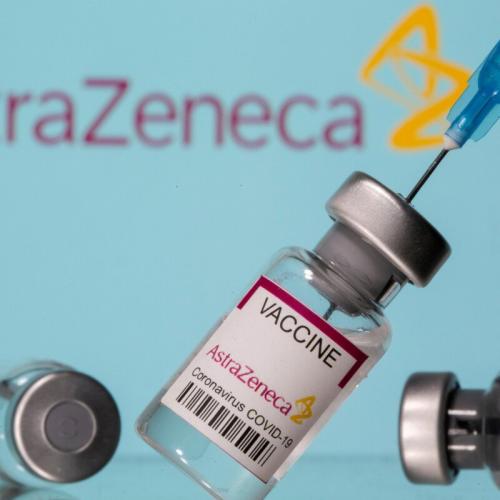
Merck & Co. says it will settle a spate of lawsuits that blame the drugmaker’s blockbuster Gardasil cancer vaccine for causing autoimmune ailments that affect young women’s hearts and reproductive systems. Under the accord, Merck would pay more than $50 million to settle more than 200 cases. Merck, based in Rahway, New Jersey, said in an emailed statement to Bloomberg News that it decided to “end the litigation in its entirety” by settling all the Gardasil litigation — except for one case. In mass-injury litigation like the Gardasil cases, companies can agree to pay a group of people claiming a product hurt them to resolve cases without saying that the product was harmful. Merck isn’t admitting liability as part of settlement. An attorney in the Los Angeles case involving Jennifer Robi, a California woman who contended Gardasilshe got as a teenager caused a heart ailment that’s left her in a wheelchair, declined to comment. Her case could have been the first against Merck over the vaccine to be decided by a jury. Merck said in its statement on the settlement that the amount it would pay is “considerably less than Merck’s anticipated costs” in defending the cases. Merck avoided a showdown over Gardasil in North Carolina last year when a judge dismissed a group of more than 200 cases he concluded were preempted by the US Food and Drug Administration’s approval of the vaccine’s labeling.
Note: In a CBS News article, Dr. Diane Harper, a lead researcher involved in Gardasil's clinical trials, raised concernts that reports of serious side effects could pose greater risks than the disease it was designed to prevent, especially because cervical cancer is often caught early through routine Pap tests and treated successfully. For more, read about the FOIA government records showing that by 2013, the National Vaccine Injury Compensation Program had paid nearly $6 million to Gardasil vaccine injury victims, including the families of two deaths. The report highlights that the original clinical trials were too short to determine whether the vaccines provided long-term protection against cervical cancer.
One of the wealthiest corporations in the world is seeking government permission to release 32 million mosquitoes throughout Florida and California. Called “Debug,” the Google-owned company is attempting to flood disease-carrying mosquito populations with ... male mosquitoes that have been infected with a bacteria called Wolbachia that causes cytoplasmic incompatibility — meaning their sperm can’t fertilize the eggs of uninfected females. Over time, the theory goes, this will disrupt the reproduction cycle, thereby increasing competition and decreasing the overall population. The American people aren’t exactly thrilled with the idea of a tech company releasing millions of skeeters into the wild. “Ask yourself who is to benefit most from this, and why is it being done?” one anonymous citizen commented. “Corporations should not play a part in regulating or artificially altering ecosystems, that is the job of the EPA. This project should NOT be approved.” Another unnamed commentator concurred, writing that “we are not experimental rats. A separate 2019 project in Brazil using genetically modified ... mosquitoes was found to have inadvertently introduced lab DNA into wild populations, because the mosquitoes began reproducing anyway. Debug’s approach is substantially different, but the incident illustrates the highly experimental and uncontrollable nature of large-scale releases: the specter that a bug drop might not just fail, but backfire entirely.
Note: Oxitec, a biotech firm bankrolled by the Gates Foundation, has been authorized to release up to 2.4 billion genetically modified mosquitoes in California’s Central Valley by 2024. A plan to release over 750 million genetically modified mosquitoes into the Florida Keys in 2021 and 2022 received final approval from local authorities, against the objection of many local residents and a coalition of environmental advocacy groups. These Aedes aegypti mosquitoes are engineered so that only non-biting males survive, supposedly to curb Zika, dengue, yellow fever, and chikungunya. Yet California has had no significant outbreaks of these diseases, which means billions of engineered insects are being released into the environment without a genuine health crisis to justify it. Read more about the "Pandora's Box" of bioengineered insects.
Cory Kreft began working on a honey farm at 15 years old ... eventually buying the business from his former boss. But in 2021, his bees suddenly began dying. He lost 85 percent of his hives. The losses continued the next year, and the next. After extensive testing, he identified the culprit: a relatively new class of pesticides called neonicotinoids, often shortened to neonics. Thanks in part to a federal regulatory loophole, the use of neonic-treated seed has quietly exploded in recent years, with little regulation or oversight. Almost all conventional corn and more than half of soy seed in the U.S. is now treated with neonics. When bees encounter neonic-contaminated pollen, the neurotoxin disrupts the neurological functions they rely on to navigate, forage, and survive. The hive then slowly declines and dies. “Over the last five years, we’ve seen between 60 to 85 percent hive mortality each year,” said Kreft. “It’s about a million dollars in losses for us annually.” While the harm neonics inflict on pollinators is well documented, their effects on humans remain less certain. A recent study found that over 95 percent of pregnant women had neonics in their bodies. The chemicals have been linked to neurological, reproductive system, and developmental harms. Because neonics are now so widespread in food and water ... exposure has become nearly constant. “It’s everywhere now,” [researcher Jennifer Sass] said. “It’s in breast milk, tap water, even in baby food.”
Note: For more along these lines, read our concise summaries of news articles on toxic chemicals and mass animal deaths.
Because defense contracts often prevent the military from repairing its own equipment, critics say weapons companies are price-gouging the Pentagon at every turn. The military’s lack of a “right to repair” doesn't just allow defense contractors to charge thousands of dollars, for fixes that could be done for free or very cheaply. Rather, the Pentagon’s dependence on weapons makers for maintenance undermines military readiness. Namely, contractors’ extensive repair delays and sweeping decisions about whether to service gear routinely leave warfighters without critical equipment and weapons systems — even while deployed. Many DoD contracts now leave repair and maintenance, which can make up as much as 70% of a military program’s lifetime cost, to the vendors. “It's a cash-cow for them,” Ben Freeman, director of the Quincy Institute’s Democratizing Foreign Policy Program, tells RS. “They can charge literally thousands of dollars to replace things that service members could replace for pennies.” Take the RQ-11 Raven drone, for example. After hard landings, it often has trouble starting back up again. But due to contractual restrictions, the military is barred from making repairs and must ship the drone to the contractor at a cost of $26,000, regardless of the issue. When an extensive repair backlog meant service members were temporarily allowed to fix the drone themselves, however, they found they could solve the problem — a broken connector — for free with hot glue.
Note: Read more on how congress has prevented the military from repairing its own equipment. For more along these lines, read our concise summaries of news articles on military corruption.
Vermont is the first US state to ban the weedkilling pesticide paraquat, backed by lawmakers who cited concerns about research showing the chemical substantially increases the risk of the incurable brain ailment known as Parkinson’s disease. Phil Scott, the governor, signed the legislation on Tuesday. The new law takes effect on 1 November, though it contains a provision allowing state regulators to issue special permits for paraquat use on fruit-producing tree orchards, berries and other “small fruit” crops up until 31 December 2030. Early versions of the law pointed to multiple studies by the National Institutes of Health have demonstrated that paraquat exposure substantially increases the risk of Parkinson’s disease in those exposed to the herbicide. Lawmakers also noted that other NIH studies have linked paraquat to non-Hodgkin lymphoma and childhood leukemia. Ray Dorsey, a neurologist who directs research into environmental causes of brain diseases at Atria Health and Research Institute, said Vermont’s action was “another step toward preventing this largely man-made disease”. He said that many countries had banned paraquat and said it “is long overdue for the US to do the same”. Numerous scientific studies have found that paraquat damages cells in the brain in ways that can lead to Parkinson’s, and more than 8,000 lawsuits are pending in US courts over the Parkinson’s allegations.
Note: The 1982 neurotoxic contaminant MPTP case was a turning point in showing how a single toxin could instantly trigger Parkinson’s by destroying a specific part of the brain. Scientists later discovered that paraquat — a widely used US pesticide banned in over 70 countries — attacks the brain in much the same way. As rates of Parkinson’s have tragically surged especially among the farming community, neurologists now say the disease is largely environmentally caused, driven by long-term exposure to chemicals like paraquat. A 2024 Politico article put it bluntly: “Parkinson’s is a man-made disease.”
Important Note: Explore our full index to key excerpts of revealing major media news articles on several dozen engaging topics. And don't miss amazing excerpts from 20 of the most revealing news articles ever published.