


















Instagram's Self-Harm and Suicide Algorithms, COVID Vaccine Disabilities, How Art Saves People's Lives
July 2, 2026
Dear friends,
Every week we bring you concise summaries of key news stories on major cover-ups and corruption, exposing the hidden forces shaping history and driving today's global challenges. We also highlight the visionary and inspiring ideas, movements, and individuals who are transforming the darkest corners of society.
This week we've summarized key news articles on:
- how Instagram negatively impacts the mental health of teenagers by showing them content glorifying self harm and suicide
- ongoing attempts to downplay the permanent disabilities and deaths caused by COVID vaccines
- a widely used industrial chemical called "the most important cause of Parkinson’s in the US"
- how the EPA and Supreme Court are working on behalf of Bayer and other chemical companies to keep health warnings off of their cancer-causing products
- how neurotechnology could lead to incredible medical breakthroughs as well as dark new forms of mind control
Our inspiring stories (skip to this section now):
- more and more studies showing how the arts can save people's lives
- the movement to cultivate healthier, inspiring alternatives to social media for under-16s
- a folk school in the Arctic circle that immerses teens in nature to treat cell phone addiction
- how "green prescriptions" and exposure to nature can dramatically improve mental health
- how multiple near-death experiences transformed the life of a NASA scientist
- a group of near-death experiencers coming together to share their spiritual awakenings
Each excerpt is taken verbatim from the news source listed.
See this page if any link fails.
Click here to explore our newsletter archive.
With faith in a transforming world,
Mark Bailey and Amber Yang for PEERS and WantToKnow.info
Special note: We were told that COVID policies and mandates were based on "strong science and good data." Even now, many of their lasting harms remain unacknowledged and unaddressed in the mainstream. In our latest Substack, COVID Revisited: A Complete Guide to Pandemic Propaganda and the Search for Truth in a Divided World, we explore how many COVID-era policies and mandates didn’t actually have a scientific basis, and failed to hold up in the face of real world evidence. We also emphasize the devastating public health costs of fear, division, and social isolation.
'Everything I Learned About Suicide, I Learned On Instagram.'
August 20, 2026, Time
https://time.com/7310444/instagram-lawsuit-self-harm/
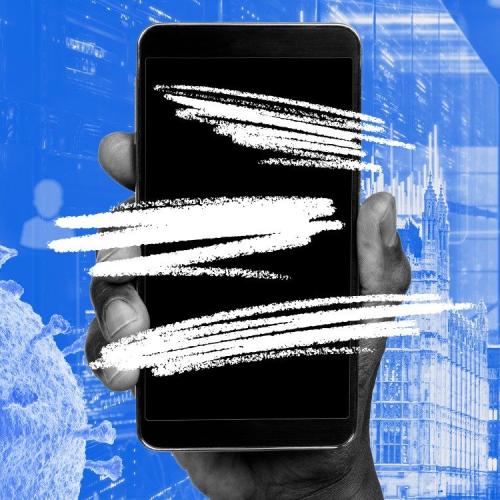
[Taylor] Little is among more than 1,800 plaintiffs suing major social-media companies, including Instagram and its parent company Meta, in a massive multidistrict litigation in Northern California. The plaintiffs allege these companies have been “recklessly ignoring the impact of their products on children’s mental and physical health,” and that they are “direct victims of intentional product design choices made by each defendant.” Little’s own complaint seeks to hold Instagram accountable for “knowingly unleashing onto the public a defectively designed product that is addictive, harmful, and at times fatal to children.” They allege the platform fed them a persistent stream of self-harm content that altered their brain and perpetuated constant thoughts of death. “The fact that I was obsessively suicidal at the age I was, that was not just my brain chemistry. That was my brain chemistry being altered by the platform I was on,” Little tells TIME. “Social media shaped my brain.” On Instagram, depression was “romanticized,” Little says. The self-harm content “was kind of comforting”—it felt like a twisted validation of their depression in a way. By the time Little turned 12, [Little's] Instagram feed was filled with images of girls falling off buildings, videos of blades cutting into unscarred flesh, and soft music framing stylized photos of hanging bodies. Teen suicides increased more than 57% between 2007 and 2018. Another 2019 study ... found that 38% of teens who used social media for an average of more than five hours per day showed signs of clinically relevant depression. Researchers at Weill Cornell Medical College in Manhattan found that kids who were more addicted to social media were at two to three times higher risk of suicidal behavior.
Note: Former Facebook executive Tim Kendall told Congress that the company intentionally made its product as addictive as cigarettes. Meta whistleblower Sarah Wynn-Williams told US senators that the company targeted teenage girls with beauty and weight-loss advertisements during moments of heightened vulnerability such as after deleting a selfie. According to her testimony, Meta could detect when users were feeling "worthless," "helpless," or like a "failure," and then make that information available to advertisers. For more along these lines, read our concise summaries of news articles on Big Tech and mental health.
‘My organs shut down, now I’m in a wheelchair’: The lives ruined by Covid jabs
March 26, 2026, The Telegraph
https://www.telegraph.co.uk/news/2026/03/26/lives-ruined-covid-vaccines/
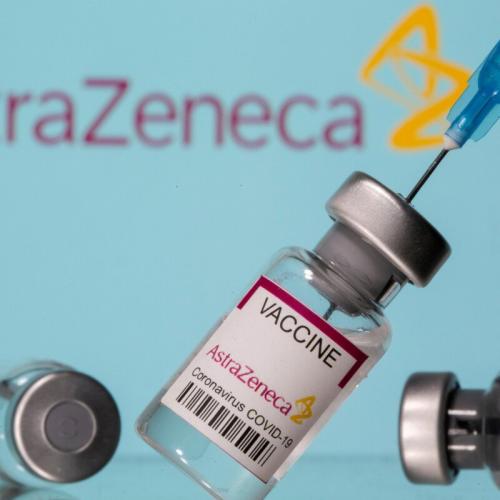
Having been a dental nurse for more than a decade, Nikola Brindley ... was asked to have AstraZeneca's Covid jab in July 2021. She agreed without hesitation. But within hours, Brindley was in A&E fighting for her life as an allergic reaction began to shut down multiple organ systems. “I genuinely thought that it was just going to be another vaccine,” she says. “Take it, get on with things. Instead, my life has been reduced to trying to manage symptoms every single day.” Others ... experienced various autoimmune reactions that damaged different systems in the body. Patrick Stacey, 59, from Derby, developed a form of Guillain-Barré syndrome – a rare autoimmune condition which attacks the nerves, causing muscle weakness and numbness – after receiving the AstraZeneca vaccine in April 2021. There are no official statistics on how many people were impacted in this way. However, data from the Medicines and Healthcare Products Regulatory Agency (MHRA) indicates that the numbers are not insignificant. In the UK, as of February 24, there had been: 194,403 serious reports linked to the AstraZeneca vaccine (and 1,532 with a fatal outcome); 126,535 serious reports linked to the Pfizer vaccine (and 920 with a fatal outcome); 31,339 serious reports associated with the Moderna vaccine (and 102 with a fatal outcome). The plight of people who suffered Covid vaccine injuries has been handled markedly differently around the world. [In the UK], 98 per cent of claims relating to Covid vaccine harm have been rejected. With few available avenues for seeking help, [a vaccine injury support charity] charity said that 73 per cent of their members have admitted to feeling suicidal, with two people subsequently dying by suicide.
Note: This article is also available here. In our latest Substack, COVID Revisited: A Complete Guide to Pandemic Propaganda and the Search for Truth in a Divided World, we examine how government officials, public health institutions, and major media outlets failed to acknowledge or investigate the growing number of reports of serious injuries and deaths following COVID vaccination. For more along these lines, read our concise summaries of news articles on COVID vaccine harms.
‘My wife was left disabled by the Covid vaccine. She deserved more compensation’
April 15, 2026, The Telegraph
https://www.telegraph.co.uk/news/2026/04/15/wife-disabled-covid...
John Stevens, whose late wife Rebecca Stevens was wheelchair-bound and largely incapacitated after receiving the AstraZeneca jab in April 2021, said the Government's compensation system was "not fit for purpose". Mr Stevens told The Telegraph that the Vaccine Damage Payment Scheme (VDPS) – which awards a flat fee of £120,000 to people seriously injured after having vaccinations – needed to be "brought up to date with modern costs". He criticised the arbitrary level of 60 per cent "disablement" that patients must reach in order to qualify for a payout. Mrs Stevens – known as Bec – received a payment under the VDPS, which Mr Stevens described as wholly inadequate given the level of care she required and the impact her disability had on her capacity to work. She died in October last year at the age of 48. Her death was attributed to natural causes and "a complication which arose following administration of the AstraZeneca vaccination". Mr Stevens said that his wife, the mother of two grown-up sons, had gone from being a highly eloquent lawyer to having very limited speech and being unable to wash, dress or feed herself. His wife was one of dozens of claimants who began legal action against AstraZeneca over its "defective" Covid vaccination. The pharma giant is defending the claim, which the Government is indemnifying, meaning taxpayers could ultimately be liable for some costs.
Note: This article is also available here. In our latest Substack, COVID Revisited: A Complete Guide to Pandemic Propaganda and the Search for Truth in a Divided World, we examine how government officials, public health institutions, and major media outlets failed to acknowledge or investigate the growing number of reports of serious injuries and deaths following COVID vaccination. For more along these lines, read our concise summaries of news articles on COVID vaccine harms.
U.S. Funded Biolabs in 30+ Countries — Many Experimented With Highly Contagious Pathogens
June 12, 2026, Science, Public Health Policy and the Law
https://publichealthpolicyjournal.com/u-s-funded-biolabs-in-30-countries...
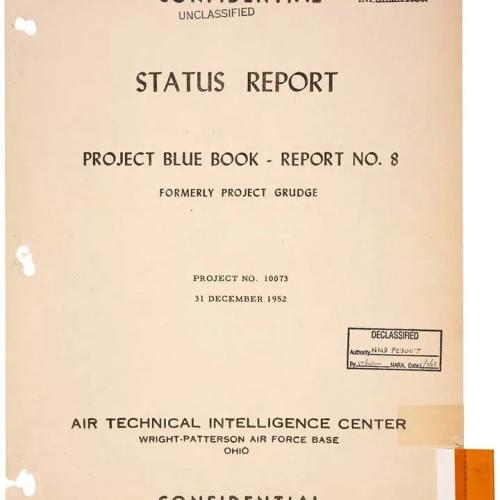
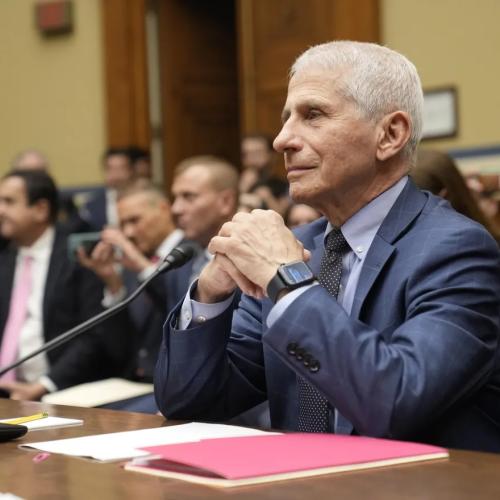
The U.S. has funded over 120 biolabs in 30-plus countries, according to declassified documents released by outgoing Director of National Intelligence Tulsi Gabbard. “Many of these U.S. government-funded biolabs are currently or have previously engaged in research using hazardous and highly contagious pathogens, in some cases to include dangerous Gain-of-Function research, with very little visibility or oversight,” Gabbard’s office said in a statement. About a third of the biolabs are located in Ukraine and are “vulnerable to longstanding threats of Russian attack, seizure, or damage,” Gabbard stated. Gain-of-function research, which increases the transmissibility or virulence of viruses, has been linked to the development of COVID-19. Gabbard targeted Dr. Anthony Fauci, whom she said “lied to the American people about the existence of U.S.-funded and supported biolabs.” The document release drew the ire of virologists linked to Fauci and gain-of-function research, including Peter Daszak, Ph.D., former president of the Bill Gates-funded EcoHealth Alliance. Stephanie Weidle, executive director of Feds for Freedom, said the release “represents the first time a U.S. official has formally acknowledged the existence of the labs and the threat posed by the scientific work being conducted.” Gabbard said the Office of the Director of National Intelligence (ODNI) will work to identify the labs and to “end dangerous Gain-of-Function research.”
Note:The lab-leak hypothesis was censored on social media and labeled a conspiracy theory for years. Today, the evidence is overwhelming that the pandemic was manmade. Leaked emails, grant proposals, NIH records, congressional subpoenas, whistleblower testimony, criminal indictments and even emerging discoveries into Dr. Anthony Fauci’s biodefense legacy all indicate that COVID was likely the outcome of risky bioweapons research intentionally operating outside of congressional oversight.
Scientists Thought Parkinson’s Was in Our Genes. It Might Be in the Water
December 10, 2025, Wired
https://www.wired.com/story/scientists-thought-parkinsons-was-in-our...
Parkinson’s is the second most common neurological disease in the United States. For decades, Parkinson’s research has focused on genetics. Today, published research on the genetics behind Parkinson’s outnumbers all other potential causes six to one. But Parkinson’s rates in the US have doubled in the past 30 years. And studies suggest they will climb another 15 to 35 percent in each coming decade. This is not how an inherited genetic disease is supposed to behave. In a study of half a million Britons, Oxford researchers determined that lifestyle and the environment is 10 times more likely to explain early death than genetics. “I think [the industrial solvent] TCE is the most important cause of Parkinson’s in the US,” says [Parkinson’s expert] Ray Dorsey. Parkinson’s is a growing pandemic, and up to 90 percent of cases are caused by chemicals in our environment. Cut exposures like TCE and pesticides, and we can “end Parkinson’s” as we know it. Since the 1990s, the number of Americans with chronic disease has ballooned to more than 75 percent of adults, per the CDC. Only 1 percent of the roughly 350,000 chemicals in use in the United States have ever been tested for safety. In its 55-year history, the EPA has banned or restricted about a dozen (by contrast, the EU has banned more than 2,000). Paraquat, the pesticide that appears to cause Parkinson’s in farmworkers, has been banned in Europe and China but remains available in the US.
Note: The 1982 neurotoxic contaminant MPTP case was a turning point in showing how a single toxin could instantly trigger Parkinson’s by destroying a specific part of the brain. Scientists later discovered that paraquat — a widely used US pesticide banned in over 70 countries — attacks the brain in much the same way. As rates of Parkinson’s have tragically surged especially among the farming community, neurologists now say the disease is largely environmentally caused, driven by long-term exposure to chemicals like paraquat. A 2024 Politico article put it bluntly: “Parkinson’s is a man-made disease.” Read our concise summaries of news articles on health and toxic chemicals.
Supreme Court blocks thousands of suits claiming Roundup causes cancer
June 25, 2026, Washington Post
https://www.washingtonpost.com/politics/2026/06/25/supreme-court...
The Supreme Court on Thursday restricted a massive wave of lawsuits claiming the chemical giant Monsanto had a duty to warn consumers of alleged cancer risks from the world’s most popular weed killer, Roundup. The justices ruled that federal law preempts cancer victims from bringing lawsuits against Monsanto in state courts, where most such claims are filed. The justices [also] ruled Monsanto was not required to offer a warning because the Environmental Protection Agency holds that Roundup’s active ingredient, glyphosate, is not a cancer risk. “EPA has not required glyphosate-based pesticides like Roundup to include a cancer warning on their labels,” Justice Brett M. Kavanaugh wrote for the majority. “Therefore, as a matter of federal law, Monsanto legally must use a label without a cancer warning unless and until EPA approves or requires a change.” Monsanto has marketed Roundup as safe to spray in a t-shirt and shorts. The EPA has repeatedly found that glyphosate, which was first marketed in the 1970s, does not cause cancer. Glyphosate is used on about 300 million acres of farmland in the United States. In 2015 the International Agency for Research on Cancer, which is associated with the United Nations and World Health Organization, found glyphosate was “probably carcinogenic to humans.” The agency found a likely link between non-Hodgkin lymphoma and glyphosate.
Note: Our Substack, "The Pesticide Crisis Reveals The Dark Side of Science. We Have The Solutions to Regenerate," uncovers the scope of Bayer/Monsanto's media propaganda machine and the widespread conspiracy to poison our food, air, and along with the powerful remedies and solutions to this crisis. For more along these lines, read our concise summaries of news articles on government corruption and toxic chemicals.
Even when EPA finds a pesticide cancer risk, agency rarely requires warnings
March 30, 2026, The New Lede
https://www.thenewlede.org/2026/03/epa-cancer-label-warnings-pesticides/
The US Environmental Protection Agency (EPA) is failing to put warnings on pesticides linked to cancer — even when the agency itself determined a product’s ingredients are carcinogenic, according to two new analyses of federal data. The EPA has put cancer warnings on 1.4% — 69 of 4,919 — of pesticide labels for products that contain an active ingredient that the agency itself has designated “probable” or “likely” to cause cancer, the analyses found. In addition, just 1.1% — 242 of 22,147 — of pesticide labels that contain ingredients with “possible” or “suggestive” links to cancer have cancer warnings from the EPA. The analyses ... come as one of the world’s top pesticide manufacturers, Bayer, seeks to rid itself of costly litigation over whether its glyphosate-based herbicides cause cancer. The company is pushing the US Supreme Court to rule the EPA should have sole authority over pesticide cancer labels — a ruling that would have far-reaching implications for pesticide labeling. For years Bayer, alongside more than a hundred other agricultural organizations, has also been lobbying for state laws that bar people from suing pesticide manufacturers for failing to warn them of health risks, as long as the product labels are approved by the EPA. Two states — Georgia and North Dakota — passed such laws. The 2026 Farm Bill ... would force uniform pesticide labels across the country, which preempts state or local governments from mandating stricter labels.
Note: Read our Substack investigation into the pesticide crisis and how it reveals the dark side of science. For more along these lines, read our concise summaries of news articles on government corruption and toxic chemicals.
Unesco adopts global standards on ‘wild west’ field of neurotechnology
November 6, 2025, The Guardian
https://www.theguardian.com/world/2025/nov/06/unesco-adopts-global...
Unesco has adopted a set of global standards on the ethics of neurotechnology, a field that has been described as “a bit of a wild west”. She said the new standards were driven by two recent developments in neurotechnology: artificial intelligence (AI), which offers vast possibilities in decoding brain data, and the proliferation of consumer-grade neurotech devices such as earbuds that claim to read brain activity and glasses that track eye movements. The standards define a new category of data, “neural data”, and suggest guidelines governing its protection. A list of more than 100 recommendations ranges from rights-based concerns to addressing scenarios that are – at least for now – science fiction, such as companies using neurotechnology to subliminally market to people during their dreams. “Neurotechnology has the potential to define the next frontier of human progress, but it is not without risks,” said Unesco’s director general, Audrey Azoulay. The new standards would “enshrine the inviolability of the human mind”, she said. Advocates for neurotech regulation emphasise the importance of safeguarding personal data. Unesco’s standards highlight the need for “mental privacy” and “freedom of thought”. “What’s happening with all this legislation is fear. People are afraid of what this technology is capable of. The idea of neurotech reading people’s minds is scary,” said Kristen Mathews, a lawyer who works on mental privacy issues.
Note: In 1965, Jose Delgado famously stopped a charging bull with an electronic device implanted in its brain. How far might this technology progressed since then? Read about the Pentagon's plans to use our brains as warfare, describing how the human body is war's next domain. For more along these lines, read our concise summaries of news articles on microchip implants and mind control.
Life-changing brain tech, but with a chilling caveat
March 10, 2025, Harvard Gazette
https://news.harvard.edu/gazette/story/2025/03/hope-for-life...
On Jan. 28, 2024, Noland Arbaugh became the first person to receive a brain chip implant from Neuralink, the neurotechnology company owned by Elon Musk. The implant seemed to work: Arbaugh, who is paralyzed, learned to control a computer mouse with his mind and even to play online chess. The device is part of a class of therapeutics, brain-computer interfaces (BCIs), that show promise for helping people with disabilities. A new discussion paper from the Carr Center for Human Rights welcomes the potential benefits but offers a note of caution. “In the past, there have been actors who were interested in controlling people’s minds,” [said] Lukas Meier, the paper’s author. “It’s not implausible that in the future there will be such actors, at whichever level, state or private sector, who might attempt the same but with improved technology.” Meier speculates that in addition to decoding our thoughts, BCIs could be used to change our behavior. He describes research showing that some patients receiving deep brain stimulation for Parkinson’s disease experience manic symptoms, including a 2006 case in which a patient with no previous criminal record broke into a parked car when the stimulator was activated, then returned to normal when the stimulation stopped. “Making somebody without any criminal record break into a car seems to be a pretty strong interference,” he said. “Technological innovations which are becoming available ... are at high risk of being misused in order to gain an advantage.”
Note: In 1965, Jose Delgado famously stopped a charging bull with an electronic device implanted in its brain. How far might this technology progressed since then? Read about the Pentagon's plans to use our brains as warfare, describing how the human body is war's next domain. For more along these lines, read our concise summaries of news articles on microchip implants and mind control.
Inspiring Articles
Art could save your life! Five creative ways to make 2026 happier, healthier and more hopeful
January 7, 2026, The Guardian
https://www.theguardian.com/lifeandstyle/2026/jan/07/art-could-save...
Ever since our Paleolithic ancestors began painting caves, carving figurines, dancing and singing, engaging in the arts has been interwoven with health and healing. Look through the early writings of every major medical tradition around the world and you find the arts. What is much newer – and rapidly accelerating over the past two decades – is a blossoming scientific evidence-base identifying and quantifying exactly what the health benefits of the arts are. Randomised trials on the mental health benefits of the arts now number in triple figures, with regular singing, dancing, reading, crafts, and cultural pursuits shown to reduce symptoms of anxiety, depression and stress for people of all ages. Some studies suggest that combining creative arts therapies such as music therapy with antidepressants and counselling can nearly double the improvements in depressive symptoms compared with standard treatments alone. But the arts can also be beneficial preventatively. People who regularly go to the theatre, live music events, museums, galleries and the cinema have nearly half the risk of developing depression. People who are regularly engaged in cultural activities perform better on cognitive tests as they age, showing slower rates of decline in ability and a lower risk of developing dementia, and they are on average older if and when they do get that diagnosis than people who aren’t engaged in the arts.
Note: Explore more positive stories like this on the power of art.
Read a book? Join a club? Stare at a wall? Social media alternatives for under-16s
June 19, 2026, The Guardian
https://www.theguardian.com/media/2026/jun/19/social-media...
“Kids don’t go on social media because they love social media per se,” the children’s author and National Year of Reading 2026 ambassador, Rob Biddulph says. “They go there looking for connection and for belonging – and for entertainment and inspiration.” The challenge, he says, is not to replace social media itself, it is to replace the things it provides. At the Scouts, Simon Carter says one of their biggest attractions is that they bring young people into contact with others outside their friendship circles. Film clubs, youth theatres and music projects offer similar opportunities: BFI film clubs bring young people together to make films in teams. Youth Music-supported projects include everything from DJing, podcasting and gaming to organising gigs. Libraries and bookshops can play a similar role: many now host gaming sessions, manga clubs, creative workshops, reading groups and book clubs. Youth organisations are not the only route to connection. Wilson recommends environmental activism for older children. John Glancy, of the National Trust, believes parents should start by asking their children why their favourite social media platform and video game appeals to them. “The answer might reveal they’re searching for a sense of identity, stimulation or a sense of achievement,” he says. “Once you know which it is, it becomes easier to find alternatives.” Joe Doherty, of Outward Bound ... recommends activities that offer rewards – be it novelty, progression or excitement.
Note: A 2025 study found that cutting social media use for just one week significantly reduced symptoms of depression, anxiety, and insomnia in young adults. Explore more positive stories like this on reimagining education and healing social division.
‘A fire, a dog, and the starry sky’: the teens overcoming phone-addiction through Arctic pursuits
November 25, 2025, The Guardian
https://www.theguardian.com/film/2025/nov/25/folktales-film-teens...
Nineteen-year-old Hege is stricken by all the common anxieties of her generation. She spends too much time scrolling through socials on her phone, and as a result she is obsessed with how other people perceive her, and highly stressed when it comes to interacting with real humans in the flesh. Hege and her classmates are packed off to for 12 months: a “folk high school” ... 200 miles above the Arctic circle. Here the students don’t sit in classes, they “wake up their Stone Age brains” by learning how to pitch a tent, keep themselves warm at minus 30C, and drive dog sleds across the icy landscape. Hege may still be overthinking things when she dons a pair of RayBans at her first campfire, but soon she goes hours without even remembering to check her mobile, and eventually there is nothing greater in the world to her than dashing through the snow on the back of a dog sled, her body racing but her mind finally standing still. In a world where there’s great emphasis on individualism, folk high schools stress community and social interaction in a way that often goes under the radar. Do these young people come out of their folk high school experience better equipped to cope with the challenges of the modern world? “It’s a tricky question, because of course part of the point is to evade the modern world,” says Ewing. “They’re definitely not better at managing ChatGPT or using AI. But they’re better equipped to be decent human beings who can maybe not shrink under pressure in the future.”
Note: A 2025 study found that cutting social media use for just one week significantly reduced symptoms of depression, anxiety, and insomnia in young adults. Explore more positive stories like this on reimagining education.
‘Massive boost of serotonin!’: How a dose of nature is treating mental illness
March 13, 2026, The Guardian
https://www.theguardian.com/environment/2026/mar/13/it-has-changed...
What you’ve got there from the sun on your face is a massive boost of serotonin!” says Alison Greenwood, founder of Dose of Nature, the charity successfully prescribing time outside as a treatment for mental health. Dose of Nature has already delivered 1,500 one-to-one courses and is outperforming standard NHS talking therapies, boasting a recovery rate of 64% compared with the health service’s 50%, and a reliable improvement rate of 86% compared with 69%. Unlike most green social prescribing schemes, clients are referred directly by their GPs. “Our nature prescriptions are a genuine alternative to medication and more traditional psychological therapies,” Greenwood says. The key, she says, is the rediscovery of something very old: “The idea that nature is good for our mental health and wellbeing has been around for millennia. We evolved outside, under the sky, [and so] we are animals that are caged most of our time, in schools or cars or offices or homes. As soon as we get outside, we’re free.” There are two key parts to the Dose of Nature prescription: helping people get outside and, once there, to start noticing nature to calm their minds and bodies. As well as the serotonin-boosting sun and the phytoncides that can decrease stress hormones, studies have shown that natural sounds such as water, wind and birdsong improve mood. The fractal patterns of nature have been shown to aid recovery from stress and boost alpha waves in the brain.
Note: In New Zealand, green prescriptions have become a formal part of the healthcare system. Over 4,000 green prescriptions have been written by over 10,000 physicians in all 10 provinces of Canada. Read more about social and green prescriptions. Explore more positive stories like this on healing our bodies and mental health.
NASA scientist claims she died 3 times — revealing her peek at the afterlife: ‘Everything was interconnected’
May 5, 2026, New York Post
https://nypost.com/2026/05/05/lifestyle/ex-nasa-scientist-ingrid...
Ingrid Honkala, a former NASA scientist, claims she is intimately familiar with death after allegedly flatlining a staggering three times. Each time, she had the same revelation. “It felt like entering a deeper layer of reality that exists beyond our physical senses,” Honkala, 55, told Jam Press of her trifecta of near-death experiences. “In that state, consciousness felt vast, intelligent, and interconnected.” When she was just two years old ... Honkala fell into an icy tank of water at home, unbeknownst to the maid who was listening to the radio in another room. Thankfully, the tot’s mother ... was able to resuscitate her. During that brief stint on the other side, however, Honkala said “Something extraordinary happened.” Her fear gave way to a “deep calm.” “The panic disappeared and was replaced by an overwhelming sense of peace and stillness,” recalled Honkala. “It felt as if my awareness separated from my body.” “The experience showed me that what we call the afterlife did not feel like a distant place at all,” she said. “To me, the experience suggested that consciousness may not be produced solely by the brain – it may be something more fundamental.” Honkala would undergo two more near-death experiences: one following a motorcycle accident at 25 and the other at 52, when her blood pressure dropped during surgery. She was able to attain the same serene state each time. She claimed it was this spiritual awakening that inspired her to pursue science.
Note: For more inspiring and credible material on this topic, read our Substack investigations: How Consciousness Research Can Help Heal a Divided World and Insights from Near-Death Experiences Remind Us of Who We Are and What Unites Us. Explore more positive stories like this on inspiring near-death experiences and the mysterious nature of reality.
What I Saw When I Peeked Over the Edge of Consciousness
January 7, 2026, New York Times
https://www.nytimes.com/2026/01/07/opinion/near-death-conference...
Near-death experiencers are the best dancers. I could identify which attendees at the annual conference of the International Association for Near-Death Studies have been to the brink, because they moved their bodies with un-self-conscious abandon, ripping up the floor of a tent on the grounds of a suburban Chicago Hilton. You could walk up to any one of them, and they would matter-of-factly tell you about how they almost died. Facing death, whether your own or a loved one’s, is a core part of making meaning of one’s life. To struggle through this universal contemplation without a community can be brutal. The American religious landscape has become fragmented over the past few decades, and even observant people got out of the habit of going to services in person after 2020. So it makes sense that a group like IANDS could fill a much-needed gap for people who are unsatisfied by the strictures of mainstream observance and who aren’t fulfilled by the loose ties of a virtual and vague spirituality. According to Pew’s huge Religious Landscape Study published last year, almost 80 percent of Americans surveyed said they believed “there is something spiritual beyond the natural world, even if we cannot see it.” “I feel like I found my tribe,” said Maria Small, a Navy veteran who lost her young daughter, Mia, in 2020 and had not been to an IANDS conference before. She was there with her husband, Derek, who is also a veteran.
Note: For more inspiring and credible material on this topic, read our Substack investigations: How Consciousness Research Can Help Heal a Divided World and Insights from Near-Death Experiences Remind Us of Who We Are and What Unites Us. Explore more positive stories like this on inspiring near-death experiences and the mysterious nature of reality.
As a 501(c)(3) nonprofit, we depend almost entirely on donations from people like you.
Your financial support makes a difference.
Donate here.
Our site serves as a research tool and comprehensive archive for educating the public on deep government and corporate corruption. We offer whistleblower reports, declassified government documents, online books and videos, and educational courses on important topics avoided by the mainstream.
- Explore our Youtube and Substack for our latest videos and original investigations.
- Explore our comprehensive news index on a wide variety of topics.
- Explore our Information Centers.
- Explore the top 20 most revealing news media articles we've summarized.
- Check out 10 useful approaches for making sense of the media landscape.
- Share the work of WantToKnow.info with your friends and colleagues.
Finding Balance: WantToKnow.info Inspiration Center
Our Inspiration Center seeks to catalyze new connections and meaningful community action for systemic change. We've summarized over 3,000 inspiring news articles since the beginning of our organization in 2003, focusing on solutions, bridging divides, and unique human stories.
www.momentoflove.org - Every person in the world has a heart
www.personalgrowthcourses.net - Dynamic online courses powerfully expand your horizons
www.WantToKnow.info - Reliable, verifiable information on major cover-ups
www.weboflove.org - Strengthening the Web of Love that interconnects us all
Subscribe here to the WantToKnow.info email list (two messages a week)