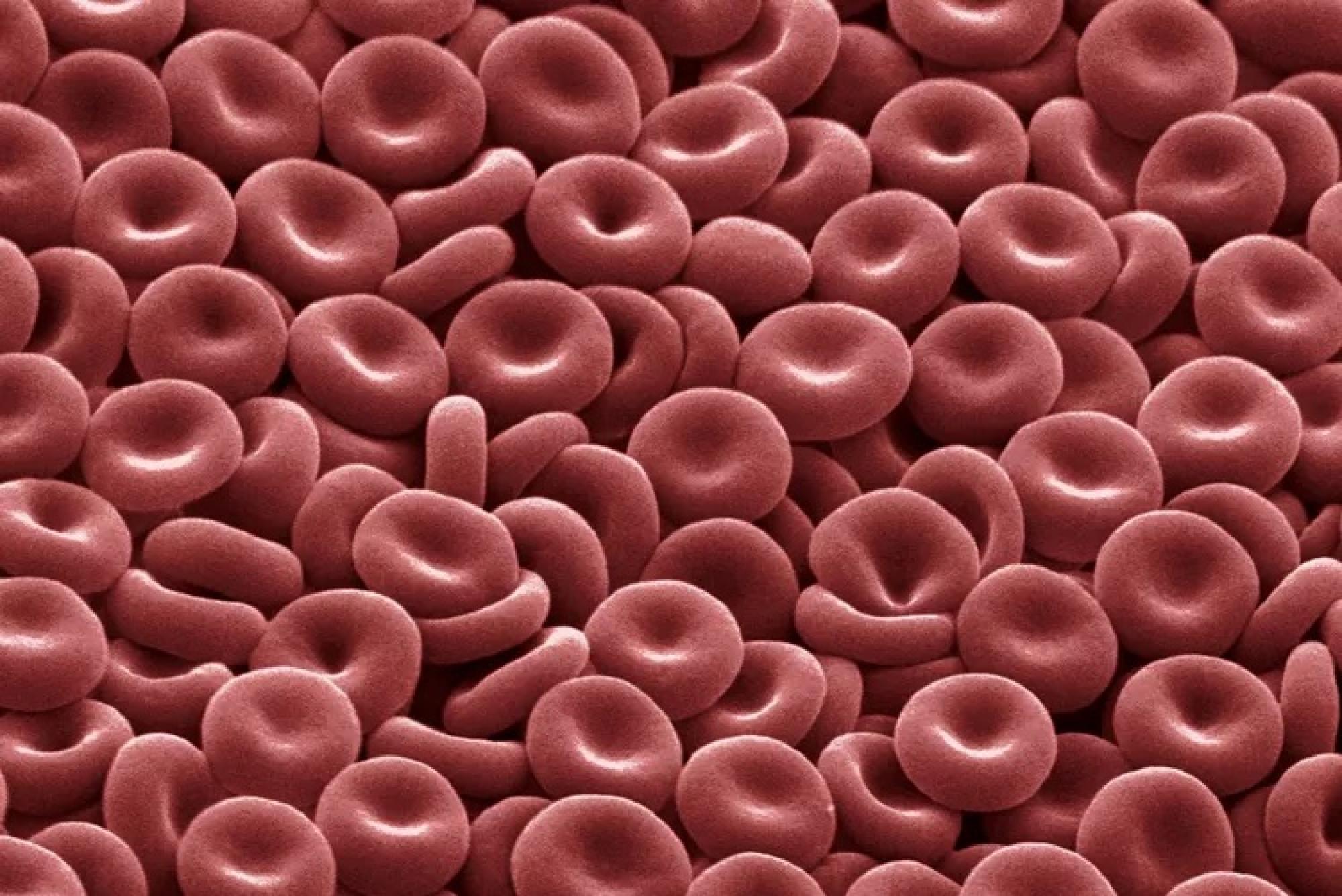
The Defense Advanced Research Project Agency, the Pentagon's top research arm, wants to find out if red blood cells could be modified in novel ways to protect troops. The DARPA program, called the Red Blood Cell Factory, is looking for researchers to study the insertion of biologically active components" or "cargoes" in red blood cells. The hope is that modified cells would enhance certain biological systems, "thus allowing recipients, such as warfighters, to operate more effectively in dangerous or extreme environments." Red blood cells could act like a truck, carrying "cargo" or special protections, to all parts of the body, since they already circulate oxygen everywhere, [said] Christopher Bettinger, a professor of biomedical engineering overseeing the program. "What if we could add in additional cargo ... inside of that disc," Bettinger said, referring to the shape of red blood cells, "that could then confer these interesting benefits?" The research could impact the way troops battle diseases that reproduce in red blood cells, such as malaria, Bettinger hypothesized. "Imagine an alternative world where we have a warfighter that has a red blood cell that's accessorized with a compound that can sort of defeat malaria," Bettinger said. In 2019, the Army released a report called "Cyborg Soldier 2050," which laid out a vision of the future where troops would benefit from neural and optical enhancements, though the report acknowledged ethical and legal concerns.
Latest
Latest News
Each news summary is created according to strict standards. Here's how we do it.
Each summary is created using a consistent editorial procedure. The target length is approximately 16 lines of 11-point Arial text in a 650-pixel-wide column. Up to 25% of a summary may be set in bold to emphasize the most important ideas. Summaries are composed of verbatim excerpts presented in the same sequence as they appear in the original news source, with very minor editorial additions. Where material has been omitted between excerpts, the omission is indicated with ellipses (...). Any words added by an editor for clarity or context appear in [brackets]. Our original news editor was Fred Burks. Tod Fletcher edited most summaries from 2007 through 2014, and Mark Bailey has served as news editor since 2014.