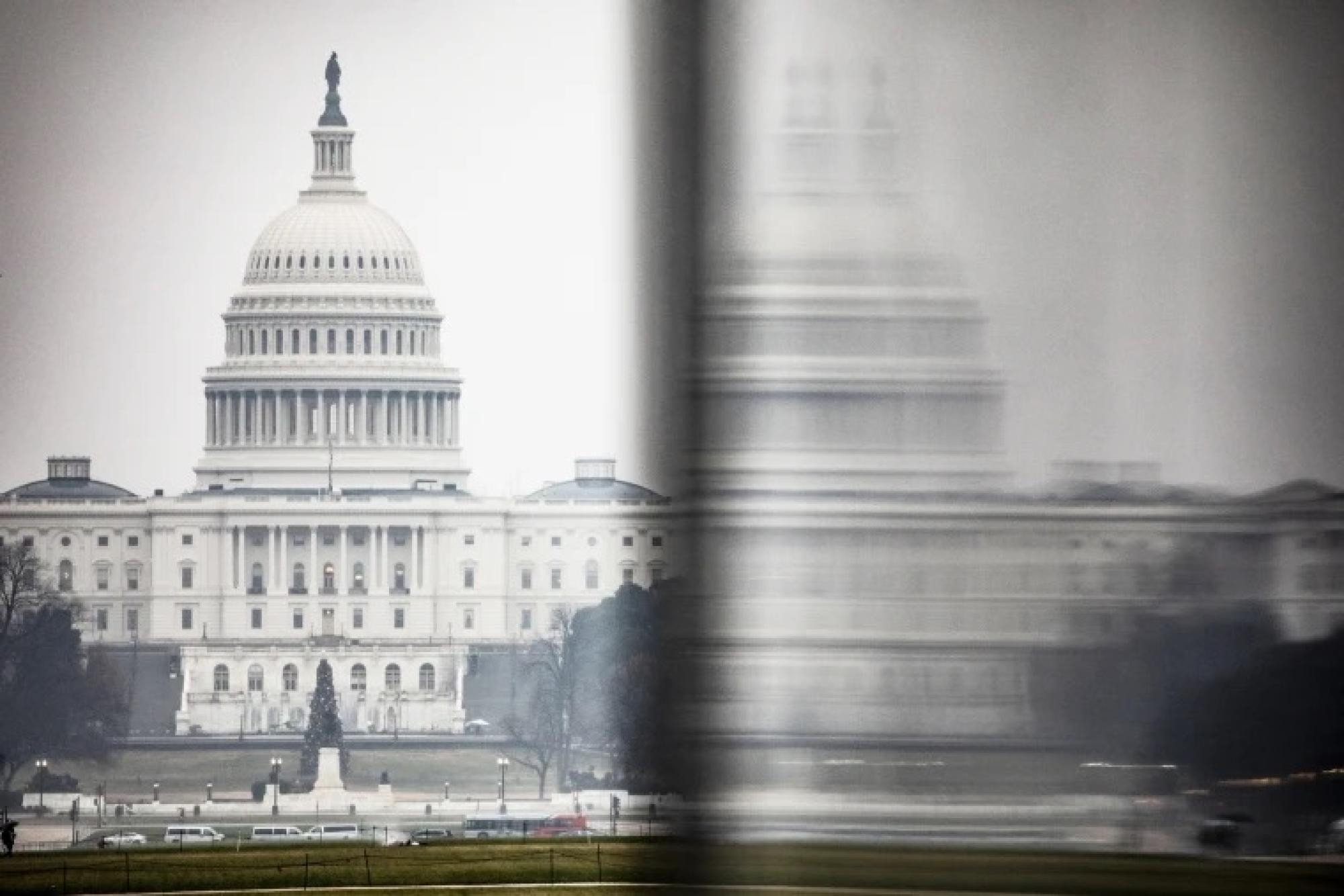
A former C.I.A. officer with experience in Turkey wrote a provocative essay this summer about the deep state. The phrase refers to a parallel secret government embedded in the military and intelligence services, whose purpose is to provide a check on electoral democracy. The essay, written by Philip Giraldi ... called the American deep state of today an unelected, unappointed, and unaccountable presence within the system that actually manages what is taking place behind the scenes. The American deep state of his description consists of ... Capitol Hill aides and legislators who cash in as lobbyists; former politicians who earn millions speaking to banks ... technocrats who ricochet between Goldman Sachs and the Treasury Department; billionaire kingmakers dangling political donations; thinkers whose tanks are financed by corporations with a financial stake in their research. The deep state metaphor seems to be ascendant as a way to explain present American realities. The writer Peter Dale Scott ... last year published a similarly minded book called The American Deep State, which emphasized the role of security contractors, oil companies and financial firms. Meanwhile, Mike Lofgren, a Republican who spent 28 years as a congressional aide before quitting in 2011, has used deep state to describe a subterranean cross-party consensus on issues like financialization, outsourcing, privatization ... from which the public is distracted by above-ground debates over diversionary social issues.
Latest
Latest News
Each news summary is created according to strict standards. Here's how we do it.
Each summary is created using a consistent editorial procedure. The target length is approximately 16 lines of 11-point Arial text in a 650-pixel-wide column. Up to 25% of a summary may be set in bold to emphasize the most important ideas. Summaries are composed of verbatim excerpts presented in the same sequence as they appear in the original news source, with very minor editorial additions. Where material has been omitted between excerpts, the omission is indicated with ellipses (...). Any words added by an editor for clarity or context appear in [brackets]. Our original news editor was Fred Burks. Tod Fletcher edited most summaries from 2007 through 2014, and Mark Bailey has served as news editor since 2014.