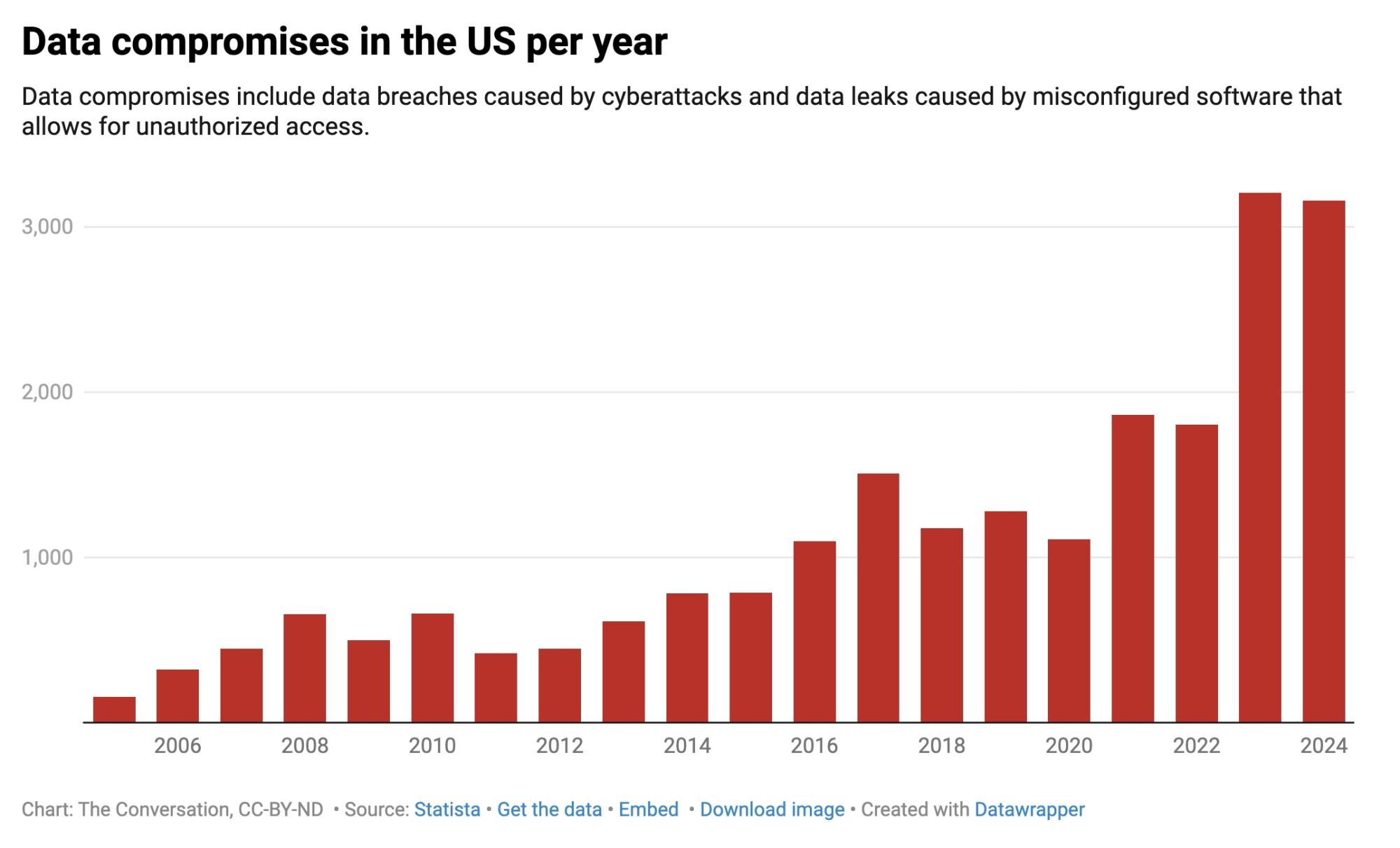
When National Public Data, a company that does online background checks, was breached in 2024, criminals gained the names, addresses, dates of birth and national identification numbers such as Social Security numbers of 170 million people in the U.S., U.K. and Canada. The same year, hackers who targeted Ticketmaster stole the financial information and personal data of more than 560 million customers. In so-called stolen data markets, hackers sell personal information they illegally obtain to others, who then use the data to engage in fraud and theft for profit. Every piece of personal data captured in a data breach " a passport number, Social Security number or login for a shopping service " has inherent value. Offenders can ... assume someone else's identity, make a fraudulent purchase or steal services such as streaming media or music. Some vendors also offer distinct products such as credit reports, Social Security numbers and login details for different paid services. The price for pieces of information varies. A recent analysis found credit card data sold for US$50 on average, while Walmart logins sold for $9. However, the pricing can vary widely across vendors and markets. The rate of return can be exceptional. An offender who buys 100 cards for $500 can recoup costs if only 20 of those cards are active and can be used to make an average purchase of $30. The result is that data breaches are likely to continue as long as there is demand.
Latest
Latest News
Each news summary is created according to strict standards. Here's how we do it.
Each summary is created using a consistent editorial procedure. The target length is approximately 16 lines of 11-point Arial text in a 650-pixel-wide column. Up to 25% of a summary may be set in bold to emphasize the most important ideas. Summaries are composed of verbatim excerpts presented in the same sequence as they appear in the original news source, with very minor editorial additions. Where material has been omitted between excerpts, the omission is indicated with ellipses (...). Any words added by an editor for clarity or context appear in [brackets]. Our original news editor was Fred Burks. Tod Fletcher edited most summaries from 2007 through 2014, and Mark Bailey has served as news editor since 2014.