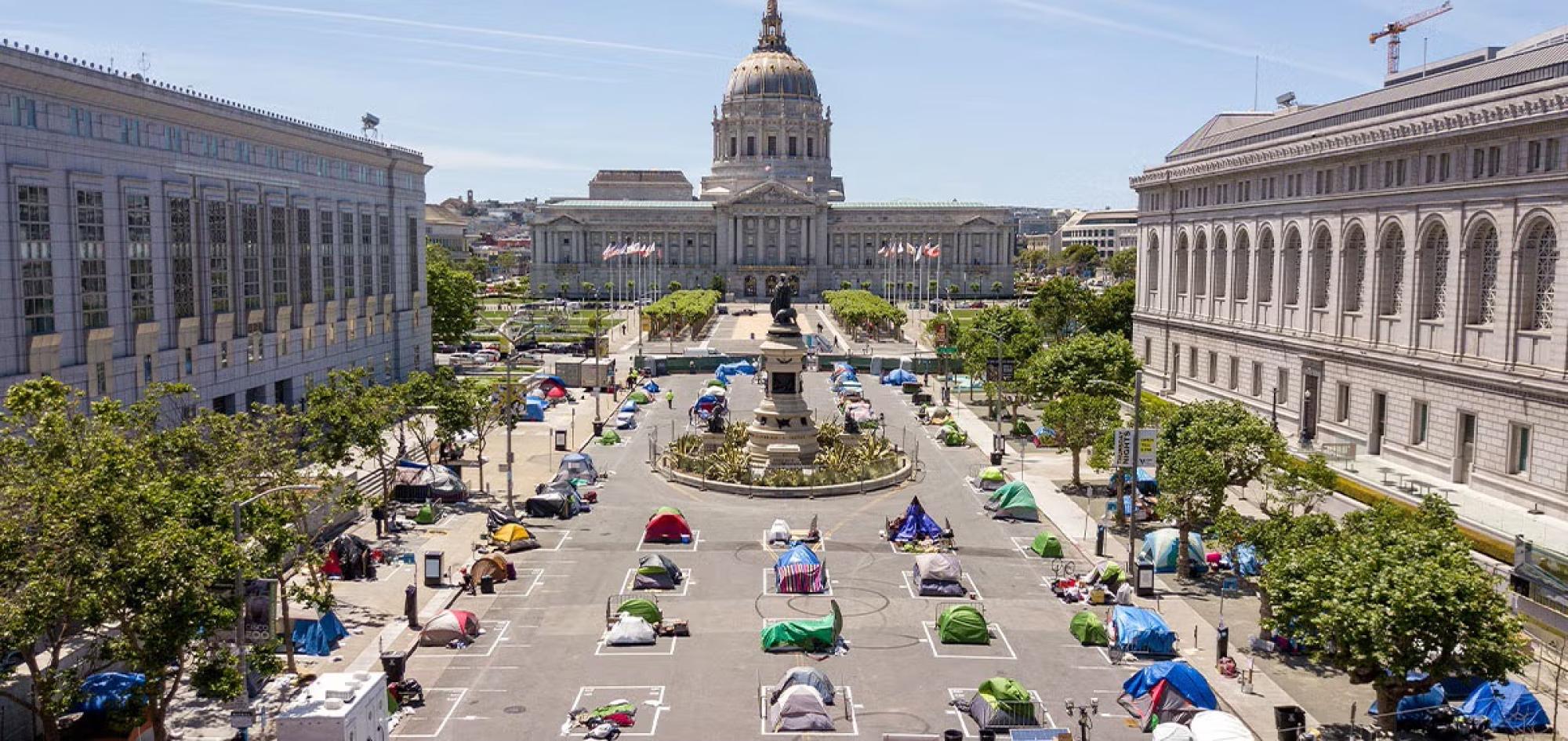
Five years ago, at the urging of federal officials, much of the United States locked down to stop the spread of COVID a decision that, over time, polarized the country and changed the relationship between many Americans and their government. Now, two prominent political scientists are making the case that there's no clear evidence that those lockdowns saved lives and that it's time for a national reckoning about the decision-making that led to those lockdowns in the first place. Stephen Macedo and Frances Lee [wrote] about [it in] their new book "In COVID's Wake." The biggest theme that runs through the book [is that] truth-seeking institutions did not function as well as they should have during COVID. There was a premature policy consensus. And there was an intolerance of criticism and divergent points of view that emerged fairly quickly in the pandemic, and that hurt us, that hurt our policy responses, that hurt our ability to course correct over the course of the pandemic as we learned more and had greater reason to course correct. There wasn't enough public deliberation about these matters. Too much power was accorded to narrow experts in public health and epidemiology, in particular. There should have been a wider conversation simply involving many more people with broader expertise. But it also should have involved ordinary people in the public, who after all, were being the ones asked to make sacrifices.
Latest
Latest News
Each news summary is created according to strict standards. Here's how we do it.
Each summary is created using a consistent editorial procedure. The target length is approximately 16 lines of 11-point Arial text in a 650-pixel-wide column. Up to 25% of a summary may be set in bold to emphasize the most important ideas. Summaries are composed of verbatim excerpts presented in the same sequence as they appear in the original news source, with very minor editorial additions. Where material has been omitted between excerpts, the omission is indicated with ellipses (...). Any words added by an editor for clarity or context appear in [brackets]. Our original news editor was Fred Burks. Tod Fletcher edited most summaries from 2007 through 2014, and Mark Bailey has served as news editor since 2014.