










Censorship News Stories
The open flow of information is crucial to a free society. Silencing alternative voices and views through media manipulation and censorship makes it easy for the powerful to hide exploitation and injustice. Below are key excerpts of revealing news articles on media censorship from reliable news media sources. If any link fails to function, a paywall blocks full access, or the article is no longer available, try these digital tools.
For further exploration, delve into our comprehensive Media Manipulation Information Center.

Former Meta employee Sarah Wynn-Williams [was] silenced by Meta’s legal threats to bankrupt her if she spoke. Wynn-Williams has written a book, Careless People, about her time at Meta (then Facebook), where she was an early director of global public policy. But Meta does not like the book. It has done everything in its power to stop it, including seeking an emergency arbitration order that prevents Wynn-Williams from promoting the book, and threatening punitive damages. These serve both to punish Wynn-Williams for writing it, and to send a warning to any future critic. A certain kind of libertarian responds by saying that Meta is not “censoring” Wynn-Williams, because only governments can censor. A certain kind of lawyer may say she brought this on herself by signing a contract agreeing not to criticise Meta. Private censorship is real and, in the time we live in, often more impactful than the public kind. Not all contractual provisions are, or should be, enforceable. You cannot write an enforceable contract to sell a child, to bind someone never to marry or to give up other fundamental rights. Why should the right to speak critically be any different? A contract in which someone agrees never to criticise their employer should be void and unenforceable. That is why we need legislation that makes clear a simple principle: that the free-speech right to criticise your employer is important, fundamental and cannot be sold.
Note: Meta whistleblower Sarah Wynn-Williams once told US senators that the company targeted teenage girls with beauty and weight-loss advertisements during moments of heightened vulnerability such as after deleting a selfie. According to her testimony, Meta could detect when users were feeling "worthless," "helpless," or like a "failure," and then make that information available to advertisers. For more along these lines, read about a new nonprofit called Psst, which is designed to make it safer for Big Tech whistleblowers to report wrongdoing without immediately exposing themselves to retaliation.
Twenty-five years ago, I co-founded Wikipedia, arguably the most important encyclopedia in human history. On Monday, I was indefinitely banned from the site. In early 2000, the internet was ... much freer. But it was also harder to use, and finding information took much longer. We needed a free, fair storehouse of knowledge: an encyclopedia built by, and open to, the public. It was exhilarating to build Wikipedia at that time. I watched in dismay as the site I’d created began to drift from its founding mission. Wikipedia has, over time, become decidedly globalist, academic, secular, and progressive. Important contributors have been blocked; facts censored in the name of “undue weight” and avoiding “fringe views”; and left-leaning outlets overwhelmingly favored. The Republican Party, for instance, is classified as being on the “right-wing to far-right” of the political spectrum. And the Democratic Party? “Center to center-left.”. All this transpires with no mechanisms for real accountability. I was blocked from the site by one Wikipedia admin who declared that the consensus of the mob (the “community”) favored my banning. Information is the most valuable currency in any society, and the ability of citizens to access, evaluate, and learn from a diversity of viewpoints is essential to a free civilization. Yet Wikipedia’s yearslong shift away from that principle—toward ideological gatekeeping and narrative control—undermines the very purpose for which it was created. So, now that I am powerless to try to fix the platform from the inside, what should I do?
Note: Read how Wikipedia, one of the primary sources for AI chatbots and search summaries, is vulnerable to systematic manipulation by powerful PR firms, intelligence agencies, and billionaires seeking to suppress damaging information and shape public narratives. For more along these lines, read our concise summaries of news articles on censorship and media manipulation.
Jeffrey Epstein appears to have been googling himself regularly. We see Epstein shoot off emails to associates, complaining that his digital footprint includes factual information about his crimes. Epstein regularly directed his gripes at Al Seckel, a fixer type who appears over and over in Epstein files and promises to bury news articles and other content that mentions his abuse. SEO consultants, contacts in the sciences, and even unrelated acquaintances helped to obscure Epstein’s past. In October 2010, Seckel laid out an overview of the group’s plan of attack to defend Epstein’s reputation online. The situation, as Seckel described it, was that a search surfaced “over 75+ pages of derogatory material,” and that someone would be “very hard pressed to find any ‘positive’ references.” To “balance the only one-sided negative opinion that has been spread over a wide birth on the Internet,” Seckel said, the team would need to flood the zone with content they can control, specifically pointing to spinning up websites with original content related to Epstein’s connections to science and charities. A “Phillipine Crew” ... would spread flattering links around the web, and other tasks. Part of how Google decides which pages to rank highly in search results is by looking at whether other sites link to a page; Epstein’s camp appears to have been trying to push down negative search results by securing valuable links from outside entities.
Note: Another email shows Al Seckel reporting to Jeffrey Epstein that they have successfully manipulated Google search results to bury negative news articles about Epstein, making it difficult to find information about him, even when searching terms like "pedophile." Read our latest in-depth Epstein files investigation, titled "Beyond Sex Trafficking—Zorro Ranch and a Darker Scientific Agenda." For more along these lines, read our concise summaries of news articles on Jeffrey Epstein's crime ring and Big Tech.
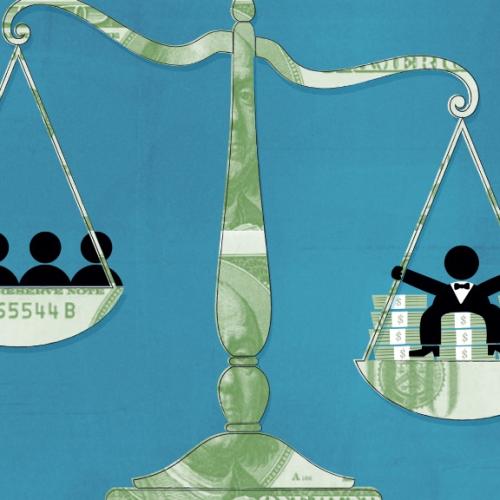
Trump loyalist and CIA contractor Larry Ellison’s purchase of CNN appears imminent, and marks the latest venture into media for the world’s second-richest individual. The world’s seven richest individuals are all now powerful media barons, controlling what the world sees, reads, and hears, marking a new chapter in oligarchical control over society and striking another blow at a free, independent press and diversity of opinion. In September, President Trump signed an executive order approving a proposal to force through the sale of social media platform TikTok to an American consortium led by Ellison-owned tech company, Oracle. Under the planned arrangement, Oracle will oversee the platform’s security and operations, giving the world’s second-richest man effective control over the platform that more than 60% of Americans under thirty years of age use for news and entertainment. No other period in history has seen such a rapid and overwhelming buy up of our means of communications by the billionaire class – a fact that raises tough questions about freedom of speech and diversity of opinion. Today, the world’s seven richest individuals are all major media barons, giving them extraordinary control over our media and public square, allowing them to set agendas, and suppress forms of speech they do not approve of. This includes criticisms of them and their holdings, the economic system we live under, and the actions of ... governments.
Note: For more along these lines, read our concise summaries of news articles on financial inequality and media manipulation.
Senior officials in the Biden administration, including some White House officials, "conducted repeated and sustained outreach" and "pressed" Google- and YouTube parent-company Alphabet "regarding certain user-generated content related to the COVID-19 pandemic that did not violate [Alphabet's] policies," the company revealed yesterday. While Alphabet "continued to develop and enforce its policies independently, Biden Administration officials continued to press [Alphabet] to remove non-violative user-generated content," a lawyer for Alphabet wrote in a September 23 letter to House Judiciary Committee Chairman Jim Jordan. Administration officials including Biden "created a political atmosphere that sought to influence the actions" of private tech platforms regarding the moderation of misinformation. This is what has come to be known as "jawboning," and the fact that it doesn't involve direct censorship may make it even more insidious. Direct censorship can be challenged in court. This sort of wink-and-nod regulation of speech leaves companies and their users with little recourse. What's more, each time authorities stray from the spirit of the First Amendment, it makes it that much easier for future authorities to do so. And each time Democrats (or Republicans) use government power to try and suppress free speech, it gives them even less standing to say it's wrong when their opponents do that.
Note: Read more about the sprawling federal censorship enterprise that took shape during the Biden administration. For more along these lines, read our concise summaries of news articles on censorship and government corruption.
Wikipedia was founded on an idealistic mission to provide all the world’s information for free—and to do so democratically. But, as we’ve reported before in these pages, the site has been hijacked by ideologues. One of the site’s founders, Larry Sanger ... has been a vocal critic of what the site he built has become. At present, Wikipedians offer their own well-managed, curated perspective on global opinion. But any opinion outside of that perspective is an unwelcome “minority or fringe view”—as global opinion usually is. They will be silenced, should they have the audacity to speak for themselves. To better record the chorus of worldwide voices, Wikipedia should permit multiple, competing articles per topic, written within explicitly declared frameworks, each aiming at neutrality within its own framework. Wikipedia’s editorial work is self-managed by a group of volunteers. But things are not as democratic as they seem. There are 62 accounts with the most authority, who have the ability to install and remove administrators or check the IP addresses of problem users. But only 14.5 percent of these accounts reveal a full, real name. The vast majority of Wikipedia’s top editorial leadership is anonymous. These accounts are the people who are ultimately responsible for Wikipedia’s content. There is no legitimate, well-established way to ratify significant reforms. There have been few, if any, significant changes since 2006. Wikipedia needs an editorial legislature chosen by fair elections.
Note: For more along these lines, read our concise summaries of news articles on censorship and media manipulation.
Larry Sanger appeared on Tucker Carlson's podcast to claim Wikipedia had lost its way and began censoring accounts which held right-wing or conservative views. 'There is a whole army of administrators - hundreds of them - who are constantly blocking people that they have ideological disagreements with,' he said. Sometime between 2006 and 2007, he began asking questions about intelligence agencies interfering with the entries. 'Virgil Griffith did Master’s research,' he revealed, speaking of the American programmer who served a five year prison sentence for North Korea with evading sanctions. 'He came up with a tool called Wiki Scanner that enabled people to look up the IP addresses of people who had done edits and like, who had edited which articles. And so they were able to find a whole bunch of edits coming from Langley.' Langley is often a term used to describe the CIA, the unincorporated community of Langley in Virginia, where the headquarters is based. 'A large part of the remit of intelligence today is to manipulate public opinion in various ways,' Sanger said. 'Wikipedia is like just a gold mine for the intelligence agencies of the world because it’s like a one stop shop. You can just like type in the things that you want people to believe.' Carlson had claimed Wikipedia has become 'a weapon of ideological, theological war, used to destroy its enemies.' Sanger said he first recognized and began to describe Wikipedia as 'propoganda' in 2020.
Note: Read more about how the CIA, FBI, and the Pentagon secretly edited entries in Wikipedia, including removing references to CIA illegal rendition and torture, downplaying US involvement in Iraqi civilian deaths, and rewriting the definition of “terrorism” to expand its political use. For more, read our concise summaries of news articles on censorship and intelligence agency corruption.
Bernadette Spofforth [was] detained for 36 hours in July 2024. Three girls had just been murdered in Southport, England, at a Taylor Swift-themed dance party. But Spofforth was not under suspicion for the crime. Instead, horrified, and in the fog of a developing tragedy, she’d reposted on X another user’s content blaming newly arrived migrants for the ghastly crime — clarifying in her retweet, “If this is true.” Hours later she realized she may have received bad information and deleted the post — but it had already been seen thousands of times. The murders resulted in widespread civil unrest in the UK, where mass migration is a central issue for citizens. Four police vehicles arrived at her home days later. Spofforth, 56, a successful businesswoman from Chester, was placed under arrest. Her story is one repeated almost hourly in the UK, where data suggests over 30 people a day are arrested for speech crimes, about 12,000 a year, under laws written well before the age of social media that make crimes of sending “grossly offensive” messages or sharing content of an “indecent, obscene or menacing character.” Social media continues to be flooded with videos of British cops banging on doors in the middle of the night and hauling parents off to jail—all over mean Facebook posts. On Tuesday, the US State Department’s annual Human Rights Report slammed British authorities’ “serious restrictions on freedom of expression.”
Note: For more along these lines, read our concise summaries of news articles on government corruption and censorship.
The picture many people have of nongovernmental organizations (NGOs) is overwhelmingly positive. And yet there is now overwhelming evidence that governments have funded and in some cases created NGOs to demand politically-motivated, unconstitutional, and dangerously ideological censorship. Other journalists, researchers, and I have documented how government intelligence and security agencies have done this in the US, Europe, and Brazil. Those agencies work with existing or new NGOs to circumvent free speech protections, including the First Amendment, and legitimize what is politically and ideologically motivated as apolitical and non-ideological. This can accurately be described as “censorship-by-proxy.” Censorship by proxy operates similarly in every nation. NGOs claiming to be independent of governments, but funded by, created by, and working with government agencies, demand censorship based on their “independent reports,” “fact checks,” and “analyses.” Often, the NGO “fact checks” are themselves misinformation, including misrepresentations of opinions as facts. Twitter and Facebook created special “portals” for government-funded NGOs to “flag” posts they wanted censored. The NGOs, staffed with ostensibly former military and intelligence employees, sought and won mass censorship with an aim at promoting the narratives they wanted and stomping out narratives they didn’t want.
Note: For more along these lines, read our concise summaries of news articles on government corruption and censorship.
There’s a revolving door of talent between the country’s premiere intelligence agency and its entertainment industry, with inspiration and influence often working both ways. The agency is targeting professionals at the intersection of arts and technology for recruitment ... and continues to cooperate with entertainment giants to inspire the next generation of creative spies. Creative minds in Hollywood and the entertainment industry have long had a role at the Central Intelligence Agency, devising clever solutions to its most vexing problems, such as perfecting the art of disguise. In the 1950s, a magician from New York named John Mulholland was secretly contracted with the agency to write a manual for Cold War spies on trickery and deception. These days, the officers said, creative skills are more valuable than ever. “You’re only limited by your own imagination — don’t self-censor your ideas,” said Janelle, a CIA public affairs officer. “We’re always looking for partners.” Some of the CIA’s most iconic missions — at least the declassified ones — document the agency’s rich history with Hollywood, including Canadian Caper, when CIA operatives disguised themselves as a film crew to rescue six American diplomats in Tehran during the Iran hostage crisis, an operation moviegoers will recognize as the plot of “Argo.” CIA analysts have also been known to leave the agency for opportunities in the entertainment industry, writing books and scripts drawing from their experiences.
Note: Learn more about the CIA’s longstanding propaganda network in our comprehensive Military-Intelligence Corruption Information Center. The US Department of Defense has had a hand in more than 800 top Hollywood films. For more along these lines, read our concise summaries of news articles on censorship and intelligence agency corruption.
On Tuesday, July 1, 2025, African Stream published its final video, a defiant farewell message. With that, the once-thriving pan-African media outlet confirmed it was shutting down for good. Not because it broke the law. Not because it spread disinformation or incited violence. But because it told the wrong story, one that challenged U.S. power in Africa and resonated too deeply with Black audiences around the world. In September, U.S. Secretary of State Antony Blinken made the call and announced an all-out war against the organization, claiming, without evidence, that it was a Russian front group. Within hours, big social media platforms jumped into action. Google, YouTube, Facebook, Instagram, and TikTok all deleted African Stream’s accounts, while Twitter demonetized the organization. The company’s founder and CEO, Ahmed Kaballo ... told us that, with just one statement, Washington was able to destroy their entire operation, stating: “We are shutting down because the business has become untenable. After we got attacked by Antony Blinken, we really tried to continue, but without a platform on YouTube, Instagram, TikTok, and being demonetized on X, it just meant the ability to generate income became damn near impossible.” Washington both funds thousands of journalists around the planet to produce pro-U.S. propaganda, and, through its close connections to Silicon Valley, has the power to destroy those that do not toe the line.
Note: Learn more about the CIA’s longstanding propaganda network in our comprehensive Military-Intelligence Corruption Information Center. For more, read our concise summaries of news articles on censorship.
The CIA is so known for its unabashed secrecy that, when it joined Twitter in 2014, its first tweet was: “We can neither confirm nor deny that this is our first tweet.” This non-response response is known as a “Glomar,” and while the intelligence community likes to poke fun at how often they invoke it, this inane phrase has allowed the CIA to skirt meaningful transparency and accountability for decades. In the post-9/11 era, we’ve repeatedly seen the CIA use the Glomar response to evade responsibility. We’re even seeing state agencies attempt to use the CIA’s non-response to circumvent local public records requests. For example, in 2017, the New York Civil Liberties Union filed a public records request seeking documents regarding the NYPD’s monitoring of protesters’ social media activity. The NYPD initially responded with a blanket statement that it could “neither confirm nor deny” whether such records existed, saying that even revealing the existence of records could harm national security. A New York court rejected this argument. And the CIA’s penchant for secrecy continues to expand, with the agency using Glomar to obstruct attempts to obtain records that would publicly shine a light on the agency’s failures and abuse, even when that abuse is well documented. Take, for instance, the CIA’s torture program. Public evidence ... has left no doubt of CIA involvement. And yet, the CIA continues to avoid its legal obligations under FOIA through gaslighting and Glomar.
Note: Learn more about the CIA’s longstanding propaganda network in our comprehensive Military-Intelligence Corruption Information Center. For more, read our concise summaries of news articles on intelligence agency corruption.
Careless People [is] a whistleblowing book by a former [Meta] senior employee, Sarah Wynn-Williams. In the 78-page document that Wynn-Williams filed to the SEC ... it was alleged that Meta had for years been making numerous efforts to get into the biggest market in the world. These efforts included: developing a censorship system for China in 2015 that would allow a “chief editor” to decide what content to remove, and the ability to shut down the entire site during “social unrest”; assembling a “China team” in 2014 for a project to develop China-compliant versions of Meta’s services; considering the weakening of privacy protections for Hong Kong users; building a specialised censorship system for China with automatic detection of restricted terms; and restricting the account of Guo Wengui, a Chinese government critic. In her time at Meta, Wynn-Williams observed many of these activities at close range. Clearly, nobody in Meta has heard of the Streisand effect, “an unintended consequence of attempts to hide, remove or censor information, where the effort instead increases public awareness of the information”. What strikes the reader is that Meta and its counterparts are merely the digital equivalents of the oil, mining and tobacco conglomerates of the analogue era.
Note: A former Meta insider revealed that the company’s policy on banning hate groups and terrorists was quietly reshaped under political pressure, with US government agencies influencing what speech is permitted on the platform. Watch our new video on the risks and promises of emerging technologies. For more along these lines, read our concise summaries of news articles on censorship and Big Tech.
Research institutes and universities may engage in boycotts or divestment to pressure any country or government entity in the world. That right no longer exists when it comes to protests of Israel. Researchers and university employees who engage in certain nonviolent protests or political expression over human rights conditions in Israel may risk civil and criminal penalties, according to a new policy unveiled by the National Institutes of Health yesterday. The agency, the largest public funder of biomedical research in the world, touches virtually every corner of the scientific community. The blanket boycott suppression is a radical expansion of so-called “anti-BDS” rules that restrict Americans from boycotting or simply advocating divestment from Israel-related businesses. The new NIH policy, which mirrors anti-BDS laws applied to contractors in thirty eight states ... applies to all “domestic recipients of new, renewal, supplement, or continuation awards” issued starting April 21. The Trump administration policy reflects a dramatic escalation in speech-policing regarding Israel. Since March 8th, immigration agents have arrested and threatened to deport a number of foreign students who have engaged in protests or criticism of Israel’s government. Rumeysa Ozturk, a 30-year old PhD student at Tufts University caught in the recent sweep, was arrested by U.S. Immigration and Customs Enforcement agents last month. She now resides in an ICE prison cell in Louisiana.
Note: For more along these lines, read our concise summaries of news articles on censorship and government corruption.
In their peer-reviewed book, In Covid’s Wake: How Our Politics Failed Us, [left-leaning political scientists] Stephen Macedo and Frances Lee argue that public health authorities, the mainstream media, and progressive elites often pushed pandemic measures without weighing their costs and benefits, and ostracized people who expressed good-faith disagreement. The book grew out of research Macedo was doing on the ways progressive discourse gets handicapped by a refusal to engage with conservative or outside arguments. “Covid is an amazing case study in groupthink and the effects of partisan bias,” he said. At times, scientific and health authorities acted less like neutral experts and more like self-interested actors, engaging in PR efforts to downplay uncertainty, missteps or conflicts of interest. Reports by Johns Hopkins (2019), the World Health Organization (2019), the state of Illinois (2014) and the British government (2011) had all expressed ambivalence or caution about the kind of quarantine measures that were soon taken. The Johns Hopkins Center for Health Security hosted a wargaming exercise in October 2019, shortly before the pandemic began, to simulate a deadly coronavirus pandemic; the findings explicitly urged that “[t]ravel and trade … be maintained even in the face of a pandemic.” A WHO paper in 2019 said that some measures – such as border closures and contact tracing – were “not recommended in any circumstances”. “In inflation-adjusted terms,” Macedo and Lee write, “the United States spent more on pandemic aid in 2020 than it spent on the 2009 stimulus package and the New Deal combined." The economic strain on poor and minority Americans was particularly severe. Teachers’ unions ... painted school re-openings as “rooted in sexism, racism, and misogyny” ... despite the fact that minority and poor students were most disadvantaged by remote learning.
Note: Pandemic policies led to one of the greatest wealth transfers in history. For more along these lines, read our concise summaries of news articles on COVID corruption and media manipulation.
Starting this week, I once again have the privilege of teaching law students about the First Amendment. I am in the United States on a green card, and recent events suggest that I should be careful in what I say—perhaps even about free speech. The Trump administration is working to deport immigrants, including green-card holders, for what appears to be nothing more than the expression of political views with which the government disagrees. These actions ... make it difficult to work out how to teach cases that boldly proclaim this country is committed to a vision of free speech that, right now, feels very far away. In recent weeks, the Trump administration has been—is there any other way to describe it?—rounding up dissidents. To more easily chase down people with ideas it dislikes, the government is asking universities for the names and nationalities of people who took part in largely peaceful protests and engaged in protected speech. Exactly what kind of expression gets you in trouble is not clear—no doubt that’s partly the point. [Deputy Secretary of Homeland Security Troy] Edgar repeatedly refused to answer [NPR journalist Michel] Martin’s simple question: “Is any criticism of the United States government a deportable offense?” A 2010 Supreme Court decision upheld a law banning certain forms of speech that are classified as “material support” to foreign terrorist groups—in that case, the speech included training designated groups on how to pursue their aims peacefully. But even in that case, which upheld a stunningly broad speech restriction, the Court also insisted that ... advocacy of unlawful action is protected so long as it is not done in coordination with terrorist groups. This ... rests “at the heart of the First Amendment”: “viewpoint discrimination is uniquely harmful to a free and democratic society.”
Note: For more along these lines, read our concise summaries of news articles on censorship and immigration enforcement corruption.
President Donald Trump on Monday signed an executive order banning “federal censorship” of online speech. “Over the last four years, the previous administration trampled free speech rights by censoring Americans’ speech on online platforms, often by exerting substantial coercive pressure on third parties, such as social media companies, to moderate, deplatform or otherwise suppress speech that the federal government did not approve,” the executive order read. The order bans federal officials from any conduct that would “unconstitutionally abridge the free speech of any American citizen.” It also prohibits taxpayer resources from being used to curtail free speech and instructs the Department of Justice and other agencies to investigate the actions the Biden administration took and to propose “remedial actions.” Limiting communication and coordination between Big Tech companies and the federal government could jeopardize public safety in natural disasters and health emergencies, some observers warned. Multiple lawsuits have accused the Biden administration of leaning on social media platforms to take down lawful speech about the COVID-19 pandemic and the 2020 election. Meta CEO Mark Zuckerberg recently backed up those claims, alleging senior administration officials pressured his employees to inappropriately take down or throttle content during the pandemic. The Biden administration has said it was combating the spread of falsehoods to protect the public.
Note: Watch our latest 31-min documentary about moving beyond media polarization, which includes a deeper look into content that was being censored that turned out to be true or worthy of investigation. For more along these lines, read our concise summaries of news articles on censorship.
Forcing a journalist to disclose confidential sources will have a crippling effect on effective investigative journalism in this country. The First Amendment provides protections for the press because an informed electorate is essential for robust debate and a strong democracy. But what happens when you find yourself dragged into a lawsuit, ordered to divulge your sources, and held in contempt when you refuse? It is relatively uncommon for a court or the government to try to force a reporter to divulge sources. But it does happen, and when it does, it has a chilling effect on sources, reporters, and journalism itself. Sources wonder if they can trust a journalist who promises confidentiality, while journalists become less willing to offer that promise. It damages the ability of the press to root out wrongdoing. There is some good news, though. Congress appears poised to make it far more difficult for journalists to be compelled to divulge their sources. In January, in a rare display of bipartisanship, the House unanimously passed the Protect Reporters from Exploitative State Spying Act, or the PRESS Act. The bill, which is now awaiting action in the Senate, would mandate the disclosure of sources only in a limited number of cases. It would also bar the government from surveilling journalists. A recent letter from a coalition of more than 130 civil liberties and journalism organizations ... called the legislation “a rare chance to strengthen freedom of the press.”
Note: The above was written by former CBS News reporter Catherine Herridge, who was fired after reporting on the Hunter Biden laptop scandal—after which CBS seized her confidential reporting files. For more along these lines, read our concise summaries of news articles on censorship and media manipulation.
Secretary of Defense Pete Hegseth’s February memo ordering all diversity, equity and inclusion-related content to be removed from Pentagon websites was so vague that military units were instructed to simply use keyword searches like “racism,” “ethnicity,” “history” and “first” when searching for articles and photos to remove. The implications of Hegseth’s memo were overwhelming, since the Defense Department manages over 1,000 public-facing websites and a huge visual media database known as DVIDS – with officials expected to purge everything relevant within two weeks. As a result, the manual work of individual units was supplemented with an algorithm that also used keywords to automate much of the purge, officials explained. Other keywords officials were instructed to search for included “firsts” in history, including content about the first female ranger and first Black commanding general, as well as the words “LGBTQ,” “historic,” “accessibility,” “opportunity,” “belonging,” “justice,” “privilege,” respect” and “values,” according to a list reviewed by CNN. The department is now scrambling to republish some of the content, officials said. “Of all the things they could be doing, the places they’re putting their focuses on first are really things that just don’t matter ... This was literally a waste of our time,” a defense official said. “This does absolutely nothing to make us stronger, more lethal, better prepared.”
Note: For more along these lines, read our concise summaries of news articles on censorship and military corruption.
In yet another example of Donald Trump announcing new policy via social media, the president has now pledged to crack down on “illegal protests” at universities, warning that “agitators” will be headed to jail or targeted for deportation. On the campaign trail, Trump already pledged to crush pro-Palestinian protests if they ramp up again, including deporting foreign national students who participate. Peaceful protest isn’t illegal. But what many do not realize is that counterterrorism law gives enormously wide-ranging discretionary authority to the president, to law enforcement, and to immigration officials that could be used to squelch free speech and dissent. For example: providing material support for terrorism is a federal crime. The breathtaking scope of this provision becomes more clear once we see how the terms are defined. “Material support” includes the provision of “service,” “expert advice or assistance,” “communications equipment,” or “personnel” (including yourself). And the Supreme Court has confirmed that the support does not actually have to go toward any particular violent act that might be considered terrorism, only to a group that is designated as a Foreign Terrorist Organization (FTO) by the U.S. government, even if that support is otherwise lawful. Hamas is designated as an FTO and those opposing U.S. and Israeli policy are often accused of supporting Hamas. Could peaceful pro-Palestine protesters be charged with materially supporting terrorism?
Note: We have documented decades of free speech repression beginning with COINTELPRO. We support freedom for all peoples including Palestinians, and many of these campus protests have indeed been peaceful. However, we can in no way overlook the disturbing cases of campus protesters glorifying the violent attacks on October 7th and using Hamas symbols in banners and protest signs. Protesters have been caught on film screaming "We are Hamas." At NYU, a sign literally said "Death to Israel" and "Death to America." A University of Michigan pamphlet contained the phrase "Death to America." NBC News reported that the U.S. Treasury Department sanctioned Samidoun Palestinian Prisoner Solidarity Network as a sham charity that allegedly funneled money to a pro-Hamas terrorist organization while also helping organize pro-Palestinian protests on US college campuses. Before October 7th, the human rights abuses and sexual violence Hamas committed against Palestinians were extensively documented. Where is the nuanced dialogue beyond media polarization on this tragic issue?
Important Note: Explore our full index to revealing excerpts of key major media news stories on several dozen engaging topics. And don't miss amazing excerpts from 20 of the most revealing news articles ever published.