















Government Corruption News Articles
Below are key excerpts of revealing news articles on government corruption from reliable news media sources. If any link fails to function, a paywall blocks full access, or the article is no longer available, try these digital tools.

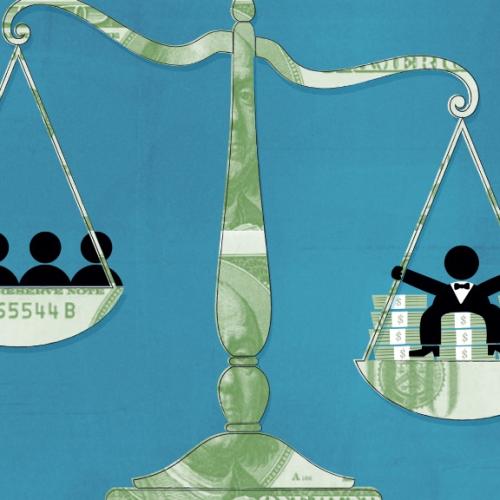
For the first time on record, the 400 wealthiest Americans last year paid a lower total tax rate spanning federal, state and local taxes than any other income group, according to newly released data. Thats a sharp change from the 1950s and 1960s, when the wealthy paid vastly higher tax rates than the middle class or poor. Since then, taxes that hit the wealthiest the hardest like the estate tax and corporate tax have plummeted, while tax avoidance has become more common. President Trumps 2017 tax cut, which was largely a handout to the rich, plays a role, too. It helped push the tax rate on the 400 wealthiest households below the rates for almost everyone else. The overall tax rate on the richest 400 households last year was only 23 percent, meaning that their combined tax payments equaled less than one quarter of their total income. This overall rate was 70 percent in 1950 and 47 percent in 1980. For middle-class and poor families, the picture is different. Federal income taxes have also declined modestly for these families, but they havent benefited much if at all from the decline in the corporate tax or estate tax. And they now pay more in payroll taxes (which finance Medicare and Social Security) than in the past. Over all, their taxes have remained fairly flat. The combined result is that over the last 75 years the United States tax system has become radically less progressive.
Note: For more along these lines, see concise summaries of deeply revealing news articles on government corruption and income inequality from reliable major media sources.
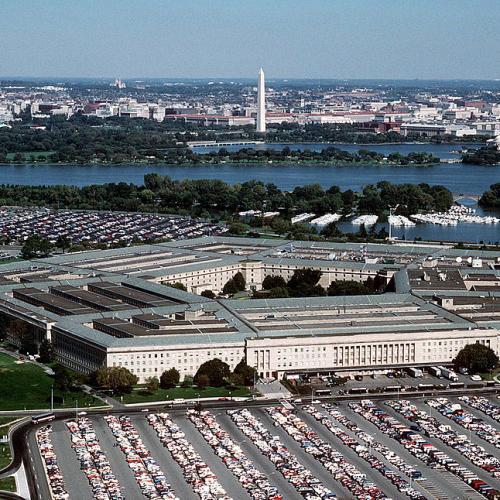
In its latest budget request, the Trump administration is asking for a near-record $750 billion for the Pentagon and related defense activities. If passed by Congress, it will be one of the largest military budgets in American history, topping peak levels reached during the Korean and Vietnam wars. That $750 billion represents only part of the actual annual cost of our national-security state. There are at least 10 separate pots of money dedicated to fighting wars, preparing for yet more wars, and dealing with the consequences of wars already fought. The Pentagons regular, or base, budget is slated to be $544.5 billion in fiscal year 2020. The Pentagons own Defense Business Board found that cutting unnecessary overhead, including a bloated bureaucracy and a startlingly large shadow workforce of private contractors, would save $125 billion over five years. The Pentagon also maintains its very own slush fund, formally known as the Overseas Contingency Operations account, or OCO. In theory, the fund is meant to pay for the War on Terror. Of the nearly $174 billion proposed for the war budget and emergency funding, only a little more than $25 billion is meant to directly pay for the wars in Iraq, Afghanistan, and elsewhere. The rest will be set aside for whats termed enduring activities that would continue even if those wars ended or for routine Pentagon activities. Our final annual tally for war, preparations for war, and the impact of war comes to more than $1.25 trillion, more than double the Pentagons base budget.
Note: Read summaries of several major media articles showing the Pentagon's blatant lies and disregard for accounting. For more along these lines, see concise summaries of deeply revealing news articles on corruption in government and in the military.
It looks like an ordinary commercial warehouse, only much bigger. When the lights come on, hundreds of thousands of shrink-wrapped boxes of medicines emerge from the gloom, stacked on shelves nearly five stories high. This [warehouse] and several others across the country are part of the $7 billion Strategic National Stockpile, a government repository of drugs and supplies ready for deployment in a bioterrorism or nuclear attack, or ... other major public health emergency. For nearly two decades, the repository has been almost exclusively managed by the Centers for Disease Control and Prevention. That will change under a Trump administration plan to shift oversight of the $575 million program. Public health officials and members of Congress ... worry the move will disrupt a complex process that relies on long-standing relationships. Experts also question whether the administrations plan will politicize decision-making about products bought for the stockpile. The office of the assistant secretary for preparedness and response (ASPR) oversees the process by which the government awards contracts to private biotechnology companies that develop and manufacture medicines. The CDC then is responsible for buying and replenishing the materials. Come October, however, the ASPR will be in charge of choosing the products and then purchasing them for the stockpile. Critics say it will allow biotech companies to lobby for more of their specialized, and often more expensive, drugs to be included.
Note: With a $7 billion price tag, big Pharma is making money hands over fist on this repository which is almost never used. Most of these drugs have a shelf life of well under 10 years, so major parts of this huge inventory go to waste every year and have to be disposed of. For more along these lines, see concise summaries of deeply revealing news articles on government corruption and Big Pharma profiteering from reliable major media sources.
The United States today has by far the world’s largest incarceration rate, with nearly two million people living in prisons and jails. The conditions in those facilities are often substandard, with Amnesty International criticizing the dehumanizing practice of holding prisoners in prolonged solitary confinement. Assistant professor of history [Benjamin] Weber writes of an “unspoken doctrine of prison imperialism” by which U.S. policy makers sought to “govern the globe through the codification and regulation of crime.” Weber adds that, “as prison imperialism expanded outwards, it always returned home producing new forms of social control over the growing number of people ensnared in prison in the United States. The forms of policing and record keeping that gave rise to the surveillance state between World War II and the Cold War were pioneered through overseas colonialism, covert operations and military interventions.” When the U.S. colonized the Philippines at the turn of the 20th century, mass incarceration became a linchpin of counterinsurgency strategy. It was designed to suppress the nationalist rebellion and messianic peasant leaders like Felipe Salvador, a leader of the anti-Spanish resistance. Weber emphasizes that the racial hierarchies and oppressive treatment of captives in colonial wars and inmates in colonial enclaves helped shape the mistreatment of minority groups and left-wing subversives in U.S. jails.
Note: For more along these lines, read our concise summaries of news articles on prison system corruption.
Haiti was born in 1804 out of a 13-year revolution in which the enslaved people of the then French colony of Saint-Domingue dismantled their chains, defeated, in succession, the armies of France, Britain and Spain, and established a new nation. Elites in Europe and America, meanwhile, fearful that the Haitian example might embolden others struggling for freedom, sought to isolate the new nation, refusing for decades even to recognise it. In 1825, France demanded, as the price of recognition, reparations of 150m francs. France was compelling enslaved people and their descendants to pay their former masters ... forcing [Haiti] to take out loans from French banks at exorbitant rates. By 1914, 80% of the government budget went to repaying the debt. Western nations have not only impoverished Haiti, they have also constantly intervened. Jean-Bertrand Aristide [was] a leftwing priest with mass support among Haiti’s working class and poor. Twice, in 1990 and 2001, waves of public support propelled Aristide to the presidency. And twice, in 1991 and 2004, he was ousted in bloody coups. After the first coup, Aristide returned to power with US support. Nevertheless, many of the coup leaders were on the CIA payroll and the agency did not hide its hostility. A decade later, opposition to Aristide’s economic and social policies led America to force him out of office. Today, the Haitian state barely exists.
Note: In 2021, Colombian mercenaries who had received training in the US assassinated Haitian President Jovenel Moïse. For more along these lines, see concise summaries of important news articles on intelligence agency corruption from reliable major media sources.
We celebrate World Press Freedom Day in May as a reminder that the role of news organizations is to speak truth to power. It’s an occasion to remember three people who exemplify the need to speak the truth: Daniel Ellsberg of Pentagon Papers fame and Julian Assange of WikiLeaks; and also of Chelsea Manning, without whom we would not have the proof of what the United States was doing, not only in Iraq and Afghanistan but all across the globe. Ellsberg’s Pentagon Papers were a mere 7,000 pages, and he photocopied them by hand. Chelsea Manning’s “papers”, which Assange outed, earning the U.S. government’s enmity, consisted of about 750,000 documents. Assange and WikiLeaks that made possible for Manning’s information to reach people across the globe. And even when he and Manning have been arrested, jailed and isolated, the information on Wikileaks still continues to be accessible to all of us. Even today the Baghdad video of Collateral Murder, posted on WikiLeaks, was seen across the world and brought home that the United States was lying and involved in a massive cover-up of its war crimes. The Diplomatic Cables on Wikileaks informed the Tunisian people about the kleptocratic rule of the Ben Ali family and started what was later named as Arab Spring. Just as the surveillance state has invaded every nook and corner of our lives, the pathological need of the surveillance state to access and store all this information also makes the state porous and vulnerable.
Note: For more along these lines, see concise summaries of deeply revealing news articles on government corruption and media manipulation from reliable sources.
In early 2018, former National Security Agency chief Keith Alexander worked out a deal with Saudi Crown Prince Mohammed bin Salman and the cyber institute led by one of his closest aides, Saud al-Qahtani, to help the Saudi ruler train the next generation of Saudi hackers. The agreement between IronNet, founded by Alexander, and the cyber school ... faced no scrutiny for its association with Qahtani, after the brutal killing of Jamal Khashoggi he reportedly orchestrated just a few months later. Alexander officially inked the deal with the Prince Mohammed bin Salman College of Cyber Security, Artificial Intelligence, and Advanced Technologies — a school set up to train Saudi cyber intelligence agents — at a signing ceremony in Washington, D.C.. Saudi Arabia’s agreement with IronNet was part of a host of moves to step up its cyber capabilities, coinciding with a campaign against the kingdom’s critics abroad. Khashoggi, then a Washington Post columnist and prominent Salman critic, received a series of threatening messages, including one from Qahtani, warning him to remain silent. Khashoggi, whose family and close associates discovered listening malware electronically implanted on their smartphones, was then lured to the Saudi Embassy in Istanbul. It was there that a team dispatched by Qahtani detained and tortured the Saudi government critic. Qahtani, according to reports, beamed in through Skype to insult Khashoggi during the ordeal. Khashoggi was then dismembered with a bone saw.
Note: For more along these lines, see concise summaries of deeply revealing news articles on intelligence agency corruption from reliable major media sources.
The head of the Centers for Disease Control and Prevention on Wednesday said the agency must make drastic changes to respond better and faster to public health emergencies, following missteps during the Covid pandemic. The agency has faced widespread criticism throughout the pandemic for its slow responses and often confusing messaging on masking and other mitigation measures. "In our big moment, our performance did not reliably meet expectations," [Dr. Rochelle] Walensky said. Dr. Richard Besser, former acting CDC director and current president of the Robert Wood Johnson Foundation, said overhauling the agency's public messaging is "absolutely essential." "A lot of the scientists at CDC are really good at doing science, and a lot of the responders are really good at doing response," he said. "But that doesn't mean they're good at explaining it in ways that will be useful to the general public." That's potentially a lasting problem for an agency that's often been lagging in its public outreach, said Dr. Mario Ramirez, an emergency physician and former pandemic and emerging threats coordinator under President Barack Obama. "The real challenge that faces CDC," Ramirez said on NBC News Now, "is that it is extremely difficult to communicate complex scientific issues at a speed that is so fast, faster than the Twittersphere." "The margin for error is so small. If you make a mistake in public health, it takes a very long time to regain public trust," he said.
Note: For more along these lines, see concise summaries of deeply revealing news articles on government corruption and the coronavirus from reliable major media sources.
Los Angeles jail guards have frequently punched incarcerated people in the head and subjected them to a “humiliating” group strip-search where they were forced to wait undressed for hours, according to a new report from court-appointed monitors documenting a range of abuses. The Los Angeles sheriff’s department (LASD), which oversees the largest local jail system in the country, appears to be routinely violating use-of-force policies, with supervisors failing to hold guards accountable and declining to provide information to the monitors tasked with reviewing the treatment of incarcerated people. The report, filed in federal court on Thursday, adds to a long string of scandals for the department. The monitors [were] first put in place in 2014 to settle a case involving beatings. The monitors, Robert Houston, a former corrections official, and Jeffrey Schwartz, a consultant, alleged that the use of “head shots”, meaning punches to the head, had been “relatively unchanged in the last two years or more, and may be increasing”. They also wrote that deputies who used force in violation of policy were at times sent to “remedial training” but that “actual discipline is seldom imposed.” And supervisors who failed to document violations were also “not held accountable.” The authors cited one incident in which a deputy approached a resident. “With no hesitation ... Deputy Y punched [him] 5-9 times in the head, and Deputy Z punched [him] 6-8 times in the head as they took [him] to the floor.
Note: For more along these lines, see concise summaries of deeply revealing news articles on corruption in policing and in the prison system from reliable major media sources.
The world is spending at least $1.8tn (£1.3tn) every year on subsidies driving the annihilation of wildlife and a rise in global heating, according to a new study, prompting warnings that humanity is financing its own extinction. From tax breaks for beef production in the Amazon to financial support for unsustainable groundwater pumping in the Middle East, billions of pounds of government spending and other subsidies are harming the environment, says the first cross-sector assessment for more than a decade. This government support, equivalent to 2% of global GDP, is directly working against the goals of the Paris agreement and draft targets on reversing biodiversity loss, the research on explicit subsidies found, effectively financing water pollution, land subsidence and deforestation with state money. The fossil fuel industry ($620bn), the agricultural sector ($520bn), water ($320bn) and forestry ($155bn) account for the majority of the $1.8tn, according to the report. No estimate for mining, believed to cause billions of dollars of damage to ecosystems every year, could be derived. Lack of transparency between governments and recipients means the true figure is likely to be much higher, as is the implicit cost of harmful subsidies. Last year, an International Monetary Fund report found the fossil fuel industry benefited from subsidies worth $5.9tn in 2020.
Note: For more along these lines, see concise summaries of deeply revealing news articles on government corruption and climate change from reliable major media sources.
The terrorist attack on the airport in Kabul, Afghanistan’s capital ... killed more than 170 Afghan civilians and 13 U.S. soldiers. Three days later, Biden authorized a drone strike that the U.S. claimed took out a dangerous cell of ISIS fighters. Biden held up this strike, and another one a day earlier, as evidence of his commitment to take the fight to the terrorists in Afghanistan. But the Kabul strike, which targeted a white Toyota Corolla, did not kill any members of ISIS. The victims were 10 civilians, seven of them children. The driver of the car, Zemari Ahmadi, was a respected employee of a U.S. aid organization. Following a New York Times investigation that fully exposed the lie of the U.S. version of events, the Pentagon and the White House admitted that they had killed innocent civilians, calling it “a horrible tragedy of war.” This week, the Pentagon released a summary of its classified review into the attack, which it originally hailed as a “righteous strike” that had thwarted an imminent terror plot. The results were predictable. The report recommended that no personnel be held responsible for the murder of 10 civilians; there was no “criminal negligence,” as the report put it. Daniel Hale, a military veteran who pleaded guilty to disclosing classified documents that exposed lethal weaknesses in the drone program, is serving four years in prison. Hale’s documents exposed how as many as nine out of 10 victims of U.S. drone strikes in Afghanistan were not the intended targets. In Biden’s recent drone strike, 10 of 10 were innocent civilians.
Note: For more along these lines, see concise summaries of deeply revealing news articles on government corruption and war from reliable major media sources.
A bomb hit the house. [Rua Moataz] Khadr and her two daughters were able to free themselves from the rubble that had fallen on them, but her 4-year-old son, Ibrahim Ahmed Yahya, was crushed to death. He was among the 9,000 to 11,000 civilians killed during the yearlong battle for Mosul. Khadr, like most bombing victims in Iraq, has no idea which nation was responsible for the airstrike that killed her son. Was it an American aircraft, British, Dutch? “Even if I found out, what would I do?” she told The Intercept. In its final days in Afghanistan, the U.S. conducted a drone strike that killed 10 civilians in Kabul — seven of them children. Their deaths bring up a thorny question surrounding the frequent U.S. killing of civilians in the 9/11 wars: What would justice look like for the families of civilians who have been wrongfully killed? The media attention generated by the Kabul strike has prompted a rare admission of guilt from the Pentagon and may ultimately lead to monetary compensation for the survivors. But byzantine laws in the U.S. make it all but impossible for foreigners to file for compensation if a relative was killed in combat. The only hope for most survivors is a “sympathy” payment from the U.S. military that does not acknowledge responsibility for causing the deaths. But unsurprisingly, those payments are rare: None were issued in 2020. Meanwhile, U.S. allies involved in bombing campaigns usually hide behind the shield of joint operations to avoid taking responsibility for civilian deaths.
Note: For more along these lines, see concise summaries of deeply revealing news articles on military corruption from reliable major media sources.
Members of the Sackler family who are at the center of the nation's deadly opioid crisis have won sweeping immunity from opioid lawsuits linked to their privately owned company Purdue Pharma and its OxyContin medication. Federal Judge Robert Drain approved a bankruptcy settlement on Wednesday that grants the Sacklers "global peace" from any liability for the opioid epidemic. "This is a bitter result," Drain said. "I believe that at least some of the Sackler parties have liability for those [opioid OxyContin] claims. ... I would have expected a higher settlement." The complex bankruptcy plan ... grants "releases" from liability for harm caused by OxyContin and other opioids to the Sacklers, hundreds of their associates, as well as their remaining empire of companies and trusts. In return, they have agreed to pay roughly $4.3 billion, while also forfeiting ownership of Purdue Pharma. The Sacklers, who admit no wrongdoing and who by their own reckoning earned more than $10 billion from opioid sales, will remain one of the wealthiest families in the world. Critics of this bankruptcy settlement, meanwhile, said they would challenge Drain's confirmation because of the liability releases for the Sacklers. "This order is insulting to victims of the opioid epidemic who had no voice in these proceedings," said Washington state Attorney General Bob Ferguson. The Department of Justice urged Drain to reject the settlement. Attorneys general for nine states and the District of Columbia also opposed the plan.
Note: Purdue Pharma spent $1.2 million on lobbying just before making this deal. For more along these lines, see concise summaries of deeply revealing news articles on Big Pharma corruption from reliable major media sources.
After the remains of more than 1,300 First Nations students were discovered at the former sites of Canada's residential schools earlier this year, the U.S. is now facing its own moment of reckoning with its history of Native American boarding schools. In response to these findings, Secretary of the Interior Deb Haaland (a member of the Pueblo of Laguna) announced a Federal Indian Boarding School Initiative to review "the troubled legacy of federal boarding school policies." In Carlisle, Pennsylvania, efforts have been underway since 2016 to return the remains of Native children to their proper resting places. Carlisle was home to the first off-reservation Indian boarding school in the U.S. — Carlisle Indian Industrial School. Today, it's an army barracks, home to the US Army War college for senior officers. But from 1879 to 1918, it housed Native students from tribes across America, with the express purpose of assimilating them into American culture. upon entering the barracks, the first thing one will notice is the cemetery: rows of white headstones where students are buried. Over four decades, roughly 8,000 students attended the school, and nearly 200 were buried here. The cause was often attributed to disease, although abuse was often rampant at these schools. The entire system of Indian boarding schools has long been condemned by Native Americans as a form of cultural genocide. One researcher, Preston McBride, believes the number of graves discovered could be as many as 40,000 here in the US.
Note: Read about Canada's unmarked graves at residential schools for indigenous kids. For more along these lines, see concise summaries of deeply revealing news articles on government corruption from reliable major media sources.
Detective Michael Pezzelle spent his last seven years on a suburban police force here amassing a body count. He was involved in shootings that wounded two people and killed five. Pezzelle faced no public consequences. He retired in 2018. Today, he trains police officers around the country to follow the kind of advice he shared on Instagram: “Be polite, be professional, have a plan to kill everyone you meet.” During most of the years in question, [Pezzelle] was assigned to task forces run by the U.S. Marshals Service, an arm of the federal Justice Department. In recent years ... marshals have been acting like local police — only with more violence and less accountability, according to an investigation by The Marshall Project and the USA Today Network. In cities and towns across the country, the Marshals Service has set up task forces largely staffed by local law enforcement officers who get deputized as federal agents. About two-thirds of the agency’s arrests since 2014 were of people wanted on local warrants, not federal ones. On average, from 2015 to late 2020, marshals shot 31 people a year, killing 22 of them. By comparison, Houston police reported shooting an average of 19 people a year, killing eight. Philadelphia officers shot an average of nine people a year, killing three. Both departments employ roughly 6,000 officers, about the same number who serve in the Marshals Service and on its task forces. No marshal has ever been prosecuted after a shooting.
Note: For more along these lines, see concise summaries of deeply revealing news articles on corruption in government and in policing from reliable major media sources.
The rally that preceded the storming of the Capitol had been hyped for weeks, including by the president himself. “It definitely shows the ineffectiveness of the intelligence network that we’ve built since 9/11 — that the Capitol Police would not have been prepared for an assault on the Capitol that was planned in public,” Mike German, a fellow at the Brennan Center for Justice and former FBI agent specializing in counterterrorism, [said]. Adam Isacson, the D.C.-based director of the defense oversight program at the Washington Office on Latin America, linked the events to a broader politicization of law enforcement under Trump, reminiscent of the anti-democratic movements the U.S. has historically sponsored in countries around the world. “You don’t get to ransack the Capitol for hours, then calmly walk away, unless law enforcement and its command share your views,” he wrote. “What we saw yesterday was tacit approval of the rioters.” The insurrectionary mob was met with some resistance as they descended on the Capitol — some, but not much. Police did use chemical agents against the crowd, but by and large the response bore little resemblance to the iron-fisted crackdown on racial justice protesters witnessed in Washington, D.C., and cities across the country just months before. When they were through, Trump’s irregular forces walked out of the building triumphant and unmasked, smiling as a law enforcement officer held the door for them. “We love you. You’re very special,” the president said to his supporters.
Note: For more along these lines, see concise summaries of deeply revealing news articles on government corruption from reliable major media sources.
When Chanelle Helm helped organized protests after the March 13 killing of Breonna Taylor, Louisville police responded with batons, flashbang grenades and tear gas. The 40-year-old Black Lives Matter activist still bears scars from rubber bullets fired at close range. So Helm was startled and frustrated Wednesday to see a White, pro-Trump mob storm the U.S. Capitol - breaking down barricades, smashing windows and striking police officers - without obvious consequence. "Our activists are still to this day met with hyper-police violence," Helm said. "And today you see this full-on riot ... with people toting guns, which the police knew was coming and they just let it happen. I don't understand where the 'law and order' is. This is what white supremacy looks like." For veteran social justice demonstrators, the images of men and women wearing red Trump 2020 hats and clutching American and Confederate flags walking through the Capitol building largely unmolested came as shocking yet predictable evidence of their long-held suspicions that conservative, White protesters intent on violence would not be met with any of the strongarm tactics as anti-police brutality demonstrators. Lezley McSpadden, mother of Michael Brown, who died at age 18 in a 2014 police shooting in Ferguson, Mo., [said] that the lack of a police response was stunning. "There was no shooting, no rubber bullets, no tear gas," she said. "It was nothing like what we have seen. Nothing like what we have seen."
Note: For more along these lines, see concise summaries of deeply revealing news articles on police corruption from reliable major media sources.
It began Friday night, when Trump informed Congress that he was firing Michael Atkinson, the Intelligence Communitys inspector general. This was nothing more than a vile act of political retribution. Atkinson fulfilled his legal responsibilities by informing Congress about a whistleblower complaint that exposed Trumps impeachable crimes. What everyone else recognizes as following the letter of the law, the president views as cause for termination. On Monday, Trump turned his attention to the inspector general who oversees the Department of Health and Human Services, who had just released a report revealing the extent to which hospitals were struggling to meet the health care demands associated with treating COVID-19 patients. Trump labeled the report a Fake Dossier and suggested politics influenced it. On Tuesday, the president removed Pentagon Inspector General Glenn Fine. He had just been designated to oversee the newly created Pandemic Response Accountability Committee, a watchdog panel authorized by Congress to conduct oversight of the $2.2 trillion coronavirus relief bill. The same day, Trump said he had seven IGs in his sights. In the course of three days, Trump fired an IG for telling the truth, attacked another for exposing the totality of a health care pandemic, and removed another in a brazen effort to avoid being held accountable for how trillions of taxpayer dollars will be allocated. The sum of these actions is nothing short of blatant corruption.
Note: For more along these lines, see concise summaries of deeply revealing news articles on government corruption and the coronavirus pandemic from reliable major media sources.
Julian Assange, the WikiLeaks founder, was charged last year by the Trump administration in connection with the publication of secret United States government documents. On Tuesday, Glenn Greenwald, an American journalist living and working in Brazil, was charged, in a criminal complaint brought by Brazilian prosecutors, with cybercrimes in connection with his stories on private messages among Brazilian officials that revealed corruption and abuses at the highest levels of the government. The case against Mr. Greenwald is eerily similar to the Trump administrations case against Mr. Assange. Last April, the Justice Department charged Mr. Assange with aiding a source, the former Army intelligence analyst Chelsea Manning, to gain access to a United States military computer database. In May 2019, the charges against him were broadened, and he was indicted under the Espionage Act in connection with the publication of American military and diplomatic documents by WikiLeaks. Both cases are based in part on a new prosecutorial concept that journalism can be proved to be a crime through a focus on interactions between reporters and their sources. Prosecutors are now scrutinizing the processes by which sources obtain classified or private information and then provide it to journalists. Since those interactions today are largely electronic, prosecutors are seeking to criminalize journalism by turning to anti-hacking laws to implicate reporters in the purported criminal activity of their sources.
Note: For more along these lines, see concise summaries of deeply revealing news articles on judicial system corruption and media manipulation from reliable major media sources.
40 years ago, a worn-out white Gulfstream II jet descended over Fort Lauderdale, Fla., carrying a regal but sickly passenger almost no one was expecting. Aboard were a Republican political operative, a retinue of Iranian military officers ... and Mohammed Reza Pahlavi, the newly deposed shah of Iran. The only one waiting to receive the deposed monarch was a senior executive of Chase Manhattan Bank, which had not only lobbied the White House to admit the former shah but had arranged visas for his entourage. Less than two weeks later, on Nov. 4, 1979, vowing revenge for the admission of the shah to the United States, revolutionary Iranian students seized the American Embassy in Tehran and then held more than 50 Americans and Washington hostage for 444 days. The shah, Washingtons closest ally in the Persian Gulf, had fled Tehran in January 1979. The shah sought refuge in America. But President Jimmy Carter ... refused him entry for the first 10 months of his exile. Chase Manhattan Bank and its well-connected chairman worked behind the scenes to persuade the Carter administration to admit the shah, one of the banks most profitable clients. For Mr. Carter, for the United States and for the Middle East it was an incendiary decision. The ensuing hostage crisis enabled Ayatollah Ruhollah Khomeini to consolidate his theocratic rule, started a four-decade conflict between Washington and Tehran ... and helped Ronald Reagan take the White House.
Note: More information is available in this 1991 New York Times article and this article. For more along these lines, see concise summaries of deeply revealing news articles on government corruption from reliable major media sources.
Important Note: Explore our full index to revealing excerpts of key major media news articles on several dozen engaging topics. And don't miss amazing excerpts from 20 of the most revealing news articles ever published.