



























Inspiring: Repairing Our Criminal Justice System News Articles
Below are key excerpts of inspiring news articles on repairing our criminal justice system from reliable news media sources. If any link fails to function, a paywall blocks full access, or the article is no longer available, try these digital tools.
For further exploration, delve into our Inspiration Center.

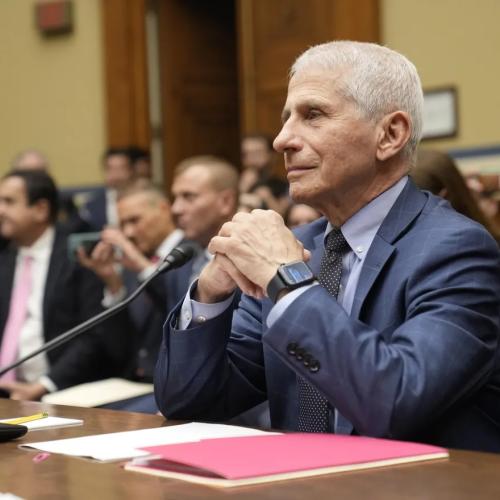
In 2021, Kristen Magnuson had to make a secret deal to continue a staple of her daily routine: swimming at her local outdoor pool. During the pandemic, the state of Washington required a vaccine passport to gain access to public spaces such as restaurants, movie theaters, and gyms. Ms. Magnuson chose not to get vaccinated. So the mother of two made a covert arrangement with gym staff. She could bypass the lobby by sneaking in through a back door. Ms. Magnuson was grateful, but she felt like a second-class citizen. Now she has a plea: Can we talk about what we went through? She isn’t opposed to vaccines – her husband and children got them. She and others are asking: What would America do differently if the country could have a do-over, or faced a similar challenge in the future? Ms. Magnuson ... isn’t ready to absolve top officials until they show “a recognition of harms.” “I was surprised when some politicians and doctors said that those who remain unvaccinated should not be treated if they fall ill. People were not ‘bad’ or ‘COVidiots’ if they contracted COVID-19; they were human,” [Dr. Monica] Gandhi wrote. “There is absolutely no place for stigma, judgment, and a shame-based approach in public health.” The former NIH director [Dr. Francis Collins] proposed, instead, a reckoning modeled on South Africa’s Truth and Reconciliation Commission in the aftermath of apartheid. “That means people coming forward and confessing what they did that was harmful in public and asking for forgiveness,” said Dr. Collins, who was appointed by President Obama and served as a science adviser to Biden. “That’s very different than just amnesty.”
Note: Read NIH director Jay Bhattacharya's powerful call for forgiveness despite being cancelled for having dissenting views on COVID policies. Explore more positive stories like this on healing social division.
Trista Egli was standing in a greenhouse, tearing up strips of plantain and preparing to feed them to butterfly larvae. Egli is one of seven women incarcerated at the Mission Creek correctional facility, located a two-hour drive from Seattle, who are part of a year-long program that takes captured butterflies, harvests their eggs, and oversees the growth of the larvae before they are released into the wild where they will turn into adults. Last year, scientists working with the team released more than 10,000 larvae. Many of the women speak of their pride working on a project that feels like it is making a positive contribution to the world. Lynn Cheroff, 42, said she had been thrilled to talk about it with her two young children when they come to visit. Another woman, Jennifer Teitzel, appreciates the sense of order and discipline the program demands. Every detail about the eggs and larvae has to be collated and recorded. It is the women’s responsibility, and nobody else’s, seven days a week. The program run by Washington state department of corrections (DOC), is part of an effort to prepare the women for life once their sentences are over and to smooth the path to work or college. Kelli Bush, the co-director of Sustainability in Prisons Project, [says] the program also gives them confidence. “They reconnect with their own brilliance, they reconnect with their own intelligence,” she says. “It’s routine to hear people say ‘I didn’t think I was smart and I’m realising I’m doing science’.
Note: Explore more positive stories like this on repairing criminal justice.
People experiencing mental or behavioral health crises and addiction have often been subject to police use of force, arrest and incarceration. [There are] efforts around the country to change that. One of the most common new approaches ... are civilian co-responder programs, in which behavioral health specialists, often social workers, show up to certain emergency calls alongside police. These can include situations like suicide threats, drug overdoses, and psychiatric episodes. Typically, the officers on the team have special training in crisis intervention. Generally, these teams aim to de-escalate any crisis or conflict, avoiding arrest and solving the reason for the emergency call, especially if it’s a simple one. This week, the New Jersey Monitor reported that one call “for a welfare check on a woman with anxiety ended with the [state] trooper picking up her new cell phone from the post office and fixing a broken toilet” and the emergency call screener setting up her new phone. The Monitor also found that the program avoided arrests or police use of force in 95% of responses. The B-HEARD program in New York City, which is just three years old in a diverse city of 8.5 million, responded to roughly a quarter of mental health calls in precincts where it operated in the first half of 2023. Mental health calls make up 10% of all 911 calls in the city. In Denver, a study of the city’s STAR program found the alternative response model reduced low-level crime.
Note: Explore more positive stories about repairing the criminal justice system.
Northwestern University's Prison Education Program welcomed its inaugural graduating class of incarcerated students on Wednesday, marking the first time a top-ranked U.S. university has awarded degrees to students in prison. Evanston, Illinois-based Northwestern ... runs the program in partnership with Oakton College and the Illinois Department of Corrections. It was a moving commencement ceremony for the 16 graduating men and their loved ones at the Stateville correctional facility in Crest Hill. "I have no words for this, (it's) otherworldly. Coming from where I came from, the things that I've been through and to be here is indescribable," said graduate Michael Broadway after the ceremony. Broadway attained his degree despite several setbacks, including battling stage 4 prostate cancer. "I'm just so proud of him," said his mother Elizabeth. "I really am. He looks so good in that gown." Due to ill health, she had not seen Broadway since ... 2005. Professor Jennifer Lackey is the program's founding director. "Twenty years ago, some of these guys were in rival gangs, and here they are swapping poetry with each other and giving critical engagements on sociology assignments," said Lackey. "The love and growth that we see in the community is really unlike anything I've experienced at the on-campus commencements." Around 100 students are enrolled in the Northwestern program across Stateville and the Logan Correctional Center, a women's prison.
Note: Explore more positive stories like this in our comprehensive inspiring news articles archive focused on solutions and bridging divides.
“Nelson Mandela – I’d never heard the name before in my life,” a former prison guard to the South African icon recalls. Christo Brand casts his mind back to 1978, and his first night guarding one of the most influential people of the past century. He was just 19 years old. A sergeant informed him the ageing man sleeping uncomfortably on the floor of the Robben Island jail cell was “a terrorist trying to overthrow your country”. Mr Brand ... soon became close with Mandela. He began to spend days and nights with Mandela, who he says remained charming even after some 16 years as prisoner 466/64. In time he saw virtue in the older man’s crimes. Reflecting after years at Mandela’s side, years in which he saw his friend slowly but surely topple the old order, Mr Brand says: “Mandela was fighting for the freedom of the country, he was prepared to go to the gallows for freedom for his people”. “When Mandela was in prison,” Mr Brand says, “he studied Martin Luther King and Gandhi, he tried to follow their footsteps and try to bring a change.” In his memoir Long Walk to Freedom, Mandela hints at why he kept his prison officer at his side even after being freed. Mr Brand, he writes, “reinforced my belief in the essential humanity even of those who had kept me behind bars”. Mandela emerged from prison in 1990 already negotiating with South Africa’s leadership for the changes that would see the country’s first democratic election a few years later.
Note: Read more on Nelson Mandela's powerful capacity for empathy, and how he served as a striking role model for addressing the hearts, not minds, of people we deem as opponents or oppressors.
Correctional systems throughout much of Scandinavia are guided by a general set of philosophical principles. In Norway, core values of safety, transparency and innovation are considered fundamental to the idea of creating normality in prison, the feeling that life as part of a community continues. Incarcerated people can wear their own clothes, work in jobs that prepare them for employment and cook their own meals. Cells in Norway are also for a single person – not multiple people, as in most cases in the U.S. Importantly, correctional officers have at least a two-year, university-level education and are directly involved in rehabilitation and planning for the incarcerated person’s re-entry into the world outside of prison. In the U.S., most officers receive just a few weeks of training. Recidivism rates in Scandinavia are low. In Norway ... less than half of people released from prison are rearrested after three years. In Pennsylvania, that figure is closer to 70%. In State Correctional Institution Chester, known as SCI Chester, a medium-security prison located just outside of Philadelphia, a correctional officer-guided team has worked since 2018 to incorporate Scandinavian penal principles into its own institution. Six men in SCI Chester – each sentenced to life in prison – were selected to participate. They then moved on to the new housing unit, which had come to be known as “Little Scandinavia.” SCI Chester shows that it is, in fact, possible to adapt Scandinavian-style penal philosophies.
Note: Explore a treasure trove of concise summaries of incredibly inspiring news articles which will inspire you to make a difference.
[Captain Emada] Tingirides, 50, is only the second Black female officer in Los Angeles to reach the position of Deputy Chief. Since September 1, 2020, she has been in charge of the Department’s new Community Safety Partnership Bureau (CSP). “It’s about trust,” Tingirides says when asked to describe CSP. “The community has to hold law enforcement accountable, and law enforcement has to hold communities accountable. We ask the communities what they expect from us, and we take their goals seriously.” CSP represents a major shift in L.A.’s notoriously hardline approach to policing. But there’s reason to believe it could stick — independent studies have shown that the CSP has increased trust in police, reduced violent crime and saved the city millions of dollars. Under the CSP concept, police officers are stationed in an area for at least five years. They become part of the community, attend neighborhood meetings, organize soccer tournaments, hand out “Donuts for Dads,” and “Muffins for Moms.” They work closely with gang intervention workers, social workers, non-profits and, most important, neighborhood residents. “I thought all cops were bad,” a nine-year old boy admits. But now, he says, he loves Community Officer Jeff Joyce, who started “Nicks Kids,” a soccer club for youths. “Our methods are unconventional, and we are adaptable,” Tingirides says. “Each neighborhood is different.”
Note: Explore more positive stories like this on repairing criminal justice.
An African American family of six sits inside the Nissan Quest in this first-ring suburb of St. Paul. The car tells a story of poverty: Plastic covers a broken window; rust lines the wheel wells. Officer Erin Reski pulled the vehicle over for a burned-out taillight, a problem similar to the one that led an officer to stop Philando Castile in the Twin Cities two years ago. That incident ... ended with Castile fatally shot. This situation ends very differently. Reski walks back to the minivan ... hands over a sheet of paper and offers a brief explanation. The response is swift and emphatic. Oh, thank you! the driver says. Scenes like this have been taking place across the Twin Cities thanks to the Lights On program, believed to be the first of its kind in the country. Instead of writing tickets for minor equipment problems, police officers are authorized to issue $50 coupons so motorists can have those problems fixed at area auto shops. Twenty participating police departments have given out approximately 660 coupons in a little more than a year. For motorists such as Sandy Patterson, another African American resident who was pulled over for a burned-out headlight in January, the small gesture of being offered a coupon makes a big difference. I was relieved that I was getting a voucher to purchase a service that couldve been quite expensive, she said. I had an overwhelming feeling of decreased anxiety because of the whole way the communication went, with somebody helping out versus giving a ticket.
Note: Explore a treasure trove of concise summaries of incredibly inspiring news articles which will inspire you to make a difference.
Nico is one of 11 puppies in the Leader Dogs for the Blind Prison Puppies program, trained by 23 inmates at the Macomb Correctional Facility in New Haven. At the ... all-male prison, its common to see inmates toting puppies on leashes through the grounds, eating in the Chow Hall with a lab or golden retriever by their side and passing time with a four-legged cellmate, who takes up a share of the 8-foot-by-11-foot space. Hes with us 24/7, said [Mario] Carines, whos raising Nico with teammate James Fuson. The puppy is a blessing, he said, explaining that since the dogs arrived last summer, the morale of both the inmates and staff has improved. Seeing animals around when the program first began, guys couldnt believe it. I hadnt seen a dog in 22 years, he said. Prison Puppies started in 2002. Leader Dog coordinators noticed a difference in the success rate. Up to 60 percent of puppies raised in prisons become leader dogs, assisting the blind or deaf; the graduation rate of puppies outside prisons is about 45 percent. Many of our dogs raised in correctional facilities go on to ... have long-term successful working careers as guide dogs, said [program coordinator] Melissa Spooner. Prison Puppies is a win-win-win, Spooner said, since it benefits the recipient, Leader Dog and 108 inmates in the voluntary year-long program. In fact, the Bureau of Justice Statistics found only 17 percent of inmates in Prison Puppies return to prison after being released. The national recidivism rate is about 50 percent.
Note: Watch an inspiring short video of this inspiring program.
Most modern justice systems focus on a crime, a lawbreaker and a punishment. But a concept called restorative justice considers harm done and strives for agreement from all concerned the victims, the offender and the community on making amends. And it allows victims, who often feel shut out of the prosecutorial process, a way to be heard and participate. In this country, restorative justice takes a number of forms, but perhaps the most prominent is restorative-justice diversion. There are not many of these programs a few exist on the margins of the justice system in communities like Baltimore, Minneapolis and Oakland, Calif. but, according to a University of Pennsylvania study in 2007, they have been effective at reducing recidivism. Typically, a facilitator meets separately with the accused and the victim, and if both are willing to meet face to face without animosity and the offender is deemed willing and able to complete restitution, then the case shifts out of the adversarial legal system and into a parallel restorative-justice process. All parties the offender, victim, facilitator and law enforcement come together in a forum sometimes called a restorative-community conference. Each person speaks, one at a time and without interruption, about the crime and its effects, and the participants come to a consensus about how to repair the harm done. The methods are mostly applied in less serious crimes, like property offenses in which the wrong can be clearly righted. The processes are designed to be flexible enough to handle violent crime like assault, but they are rarely used in those situations.
Note: This deeply moving and highly educational piece from the New York Times Magazine about the power of restorative justice is well worth reading in its entirety at the link above.
What if someone told you that you could dramatically reduce the crime rate without resorting to coercive policing or incarceration? it sounds too good to be true. But it’s been borne out by the research of Chris Blattman, Margaret Sheridan, Julian Jamison, and Sebastian Chaskel. Their new study provides experimental evidence that offering at-risk men a few weeks of behavioral therapy plus a bit of cash reduces the future risk of crime and violence, even 10 years after the intervention. Sustainable Transformation of Youth in Liberia ... offered men who were at high risk for violent crime eight weeks of cognitive behavioral therapy. [Economist Chris] Blattman wanted to formally study just how effective this kind of program could be. He decided to run a big randomized controlled trial with 999 of the most dangerous men in Monrovia, recruited on the street. The 999 Liberian men were split into four groups. Some received CBT, while others got $200 in cash. Another group got the CBT plus the cash, and finally, there was a control group that got neither. A year after the intervention, the positive effects on those who got therapy alone had faded a bit, but those who got therapy plus cash were still showing huge impacts: crime and violence were down about 50 percent. 10 years later ... crime and violence were still down by about 50 percent in the therapy-plus-cash group. Blattman estimates that there were 338 fewer crimes per participant over 10 years. [The program] cost just $530 per participant. That works out to $1.50 per crime avoided.
Note: Explore a treasure trove of concise summaries of incredibly inspiring news articles which will inspire you to make a difference.
Tina imagined the sound of Ira’s key in the door, and then she realized she would never hear that sound again. It had all been stolen from her. Someone would have to pay the price. “Whoever killed my son,” she said, “they were gonna get it.” In the days after Ira’s death, there were other things besides retribution to keep Tina busy. Tina had wondered for a while about $50 that disappeared from her bank account. Then a woman approached Tina at a vigil for Ira and told her a story. Her boyfriend had been beating her, and Ira found out, and he gave her $50 for a bus ticket so she could get out of town. Turned out he had his own little ministry. And Tina continued that ministry: listening to Ira’s friends, having them over for lunch or dinner, occasionally giving someone a place to crash. She thought less and less about revenge. That December, a grand jury indicted two men for the murder of Ira Hopkins. On October 27, 2017, following guilty pleas, [Jy’Aire Smith-Pennick] appeared in court for his sentencing. Almost seven years passed from Jy’Aire’s sentencing until the day Tina saw him in person again. “I’m in prison for participating in a murder,” he would later say. “And the mother of this man is here, present, on behalf of me, watching me receive my degree.” When Jy’Aire gets out, he plans to study sociology at the University of Pennsylvania. He and Tina will work together on the IRA Foundation, teaching at-risk kids that there are better options than drugs and violence.
Note: Explore more positive stories like this on healing social division and repairing criminal justice.
All Square in Minneapolis, Minnesota ... with its bright pink neon sign buzzing in the window on Minnehaha Avenue, is serving up much more than gooey sandwiches. Launched in September 2018 by a civil rights lawyer, All Square is a social enterprise that uses its restaurant (and a food truck) to right the wrongs of the American criminal justice system. The staff of All Square “fellows” is a rotating cohort of formerly incarcerated people. During the nine-month fellowship, employees receive not only a living wage, but also wraparound services like therapy sessions, professional development support and access to funding opportunities. To date, All Square has provided 48 fellowships, $2.8 million in wages ($1.6 million of which has gone directly to formerly incarcerated Minnesotans), 400 therapy sessions, and more than $60,000 in micro-grants for seed capital and debt alleviation. The overarching goal of All Square is to offer a true second chance at life post-incarceration that is otherwise systematically denied through near insurmountable restrictions to necessities like housing and jobs. Leveraging entrepreneurship to sidestep the inability to access traditional employment is just what Onika Goodluck, one of the original 14 fellows, did. Turned onto the program by her probation officer, Goodluck applied and after two interviews, landed the gig. After 10 years of on-and-off incarceration ... she says that therapy has made the biggest difference.
Note: Explore a treasure trove of concise summaries of incredibly inspiring news articles which will inspire you to make a difference.
The turnoff to Norways newest prison was marked by a modest sign. There were no signs warning against picking up hitchhikers, no visible fences. Halden Fengsel ... is often called the worlds most humane maximum-security prison. To anyone familiar with the American correctional system, Halden seems alien. Its modern, cheerful and well-appointed facilities, the relative freedom of movement it offers, its quiet and peaceful atmosphere these qualities are so out of sync with the forms of imprisonment found in the United States that you could be forgiven for doubting whether Halden is a prison at all. It is, of course, but it is also ... the physical expression of an entire national philosophy about the relative merits of punishment and forgiveness. The treatment of inmates at Halden is wholly focused on helping to prepare them for a life after they get out. Not only is there no death penalty in Norway; there are no life sentences. Norwegian Correctional Service ... works with other government agencies to secure a home, a job and access to a supportive social network for each inmate before release; Norways social safety net also provides health care, education and a pension to all citizens. If inmates are having problems with one another, an officer or prison chaplain brings them together for a mediation session that continues until they have agreed to maintain peace and have shaken hands. Even members of rival gangs agree not to fight inside.
Note: Watch a great, short video on this model prison.
Since June 2020, the mental health clinicians and paramedics working for Denver’s Support Team Assisted Response program have covered hundreds of miles in their white vans responding to 911 calls instead of police officers. They’ve responded to reports of people experiencing psychotic breaks. They’ve helped a woman experiencing homelessness who couldn’t find a place to change, so she undressed in an alley. They’ve helped suicidal people, schizophrenic people, people using drugs. They’ve handed out water and socks. They’ve helped connect people to shelter, food and resources. The program, known as STAR, began 20 months ago with a single van and a two-person team. More than 2,700 calls later, STAR is getting ready to expand to six vans and more than a dozen workers — growth the program’s leaders hope will allow the teams to respond to more than 10,000 calls a year. The Denver City Council last week voted unanimously to approve a $1.4 million contract with the Mental Health Center of Denver for the program’s continuation and expansion. The contract means the program that aims to send unarmed health experts instead of police officers to certain emergency calls will soon have broader reach and more operational hours. “STAR is an example of a program that has worked for those it has had contact with,” Councilwoman Robin Kniech said. “It is minimizing unnecessary arrests and unnecessary costs — whether that be jail costs or emergency room costs.”
Note: Explore a treasure trove of concise summaries of incredibly inspiring news articles which will inspire you to make a difference.
In the misty hills of southern Haiti, the town of Beaumont sits on a fault line of tension. Yet in this uncertain landscape, a quiet movement has been unfolding, one led not by international nongovernmental organisations (NGOs) or government officials, but by local mediators who believe that peace must begin with conversation. Their work, modest in scale but profound in effect, is helping rebuild what years of unrest have eroded: people’s belief in one another. At the heart of this effort is Médiation Lakay (“community-based mediation”), a grassroots initiative reflecting the work of local community leaders in Haiti who mediate disputes over land and resources. Elders, local officials, and church figures convene to discuss disputes before they escalate. Rather than waiting for formal judicial intervention, these mediators facilitate dialogue between families, helping them reach agreements and restore communication. “It’s not about who wins,” says Wilfrid, a local Haitian pastor. “It’s about whether both sides can share a plate of rice after.” The process blends traditional dispute resolution with restorative justice principles, an exchange of listening, acknowledgment, and reparative action. Disputes that might have lasted years are often resolved in weeks. The team keeps no written records, to preserve confidentiality and community trust. By focusing on rebuilding relationships rather than assigning blame, Médiation Lakay is gradually reweaving the social fabric that conflict had torn apart. “People came to understand that fear had made them cruel,” [school teacher] Josette says. Beyond conflict resolution, the group’s meetings have become spaces for collective healing, where villagers discuss shared trauma from past hurricanes or lost livelihoods. By focusing on rebuilding relationships rather than assigning blame, Médiation Lakay is gradually reweaving the social fabric that conflict had torn apart.
Note: Explore more positive stories like this in our comprehensive healing social division and repairing criminal justice.
Alex Fields had not spoken to his nephew in four years. Not since the killing. But when his nephew Donald Fields Jr finally appeared over Zoom from the county jail, Alex Fields was consumed by the moment. Don Jr was charged with the murder of his father, Donald Fields Sr, in 2016. Today was the first step in a long journey that would see a tragedy transformed into a pioneering case of compassion in America's punitive criminal justice system. It marked the first time that restorative justice – the act of resolving crimes through community reconciliation and accountability over traditional punishment – had been used in a homicide case in the state of North Carolina. And probably the first case of its kind in the US. The DA's office forged a new plea deal, which offered Don Jr the opportunity to plead guilty to voluntary manslaughter, which could see him sentenced to "time served". The family worked on a new repair agreement, which was 13 points long and had conditions facilitating Don Jr's release. There is increasing evidence that use of restorative justice lowers rates of recidivism. Those who are victims of violence are far more likely to become perpetrators of violent acts later on. "Just as we cannot incarcerate our way out of violence, we cannot reform our way out of mass incarceration without taking on the question of violence," [Danielle Sered] writes. "The context in which violence happens matters, as do the identities and experiences of those involved.”
Note: Danielle Sered is the founder of a Brooklyn-based restorative justice organization Common Justice, which is the first alternative-to-incarceration and victim-service program in the United States that focuses on violent felonies in the adult courts. For further reading, explore her book, Until We Reckon: Violence, Mass Incarceration, and a Road to Repair.
If you want to help, you first need to listen. That is a philosophy that Father Greg Boyle, S.J., founder of Homeboy Industries in East Los Angeles, employs. If you're humble, you'll ask the poor, what would help you? But if you're led by hubris, then you tell the poor, here's what your problem is; here's how you fix yourself. Homeboy Industries was founded more than 30 years ago as a means of providing employment to gang members in East LA. Few businesses would hire ex-gang members so Fr. Greg, Jesuit pastor of the Dolores Mission the poorest mission in the LA archdiocese, created a business to provide those jobs. Today Homeboy serves not just the neighborhood but all of Los Angeles County with its restaurants, coffee shops, bakery and even a tattoo removal clinic. Homeboy has ... listened to the formerly gang-involved. It asks the question: what can we do that is concretely helpful? Fr. Greg [said] on NPRs Fresh Air. No one likes to be told how to get better; they want to participate in the process. That begins with conversation, a discovery of what the other is feeling and how he or she can help in his own improvement. Often the best answers come from the people you serve, as it does with Homeboy Industries. Its tattoo removal clinic came about because ex-gang members wanted to remove tattoos no longer relevant to their current lives, and which in some instances may prevent them from getting hired. Removing a tattoo is a long and painful process but it can serve as a kind of rebirth.
Note: Watch an inspiring video on this program which has transformed the lives of thousands of gang members. Readers interested in learning more about Father Greg Boyle and his work can check out his new memoir, Barking to the Choir: The Power of Radical Kinship.
Dozens of adults and children, all clad in white, stood in a line. A holy man handed each a cup of ayahuasca, a muddy-looking hallucinogenic brew. Among those imbibing from the holy mans decanter were prison inmates, convicted of crimes such as murder, kidnapping and rape. Im finally realizing I was on the wrong path in this life, said Celmiro de Almeida, 36, who is serving a sentence for homicide. Each experience helps me communicate with my victim to beg for forgiveness, said Mr. de Almeida. The provision of a hallucinogen to inmates ... reflects a continuing quest for ways to ease pressure on Brazils prison system. The countrys inmate population has doubled since the start of the century ... straining underfunded prisons rife with human rights violations. Around [2002], Acuda, a pioneering prisoners rights group in Porto Velho, began offering inmates therapy sessions in yoga, meditation and Reiki. Two years ago, the volunteer therapists at Acuda had a new idea: Why not give the inmates ayahuasca as well? Acuda had trouble finding a place where the inmates could drink ayahuasca, but they were finally accepted by an offshoot here of Santo Daime, a Brazilian religion founded in the 1930s. Many people in Brazil believe that inmates must suffer, said Euza Beloti, 40, a psychologist with Acuda. This thinking bolsters a system where prisoners return to society more violent than when they entered prison. At Acuda, she said, we simply see inmates as human beings with the capacity to change.
Note: Read more about emerging research into ayahuasca in Brazil. Articles like this suggest that the healing potentials of mind-altering drugs are gaining mainstream credibility.
There are few people who can say their job saved them, but former gang member Rafael Jimenez says he's one of them. "If I wasn't working here I'd be on the streets looking for problems or, even worse, selling drugs," Jimenez told CNN en Espaol. The 44-year-old works as a baker at Homeboy Bakery, part of Homeboy Industries in East Los Angeles, the largest gang rehabilitation program in the country. The program was founded in 1992 by Father Greg Boyle, who has counseled and mentored thousands of gang members. This month marks Jimenez's one-year anniversary of getting off of drugs and out of the 4th Street Flats gang in East L.A. "I knew if I kept going at it, I would be dead or in jail. I can't believe I wasted all that time," Jimenez said. "And, now I'm baking pastries with rivals that I would've never spoken to just last year." Homeboy Industries' program has been so successful that other gang rehabilitation programs around the country are now looking to them as a model. Ex-gang member Mario Lundes, weary of being in and out of jail, decided to make a positive change and seek out a regular job. But extensive tattoo removal from his forehead, cheeks and neck -- a service Homeboy Industries offers -- would be a vital part of the process. Homeboy Industries has helped thousands of high-risk youths with a variety of free programs: mental health counseling, GED classes, job training and legal services. The program's motto: "Nothing stops a bullet like a job."
Note: Watch an inspiring video on this program which has transformed the lives of thousands of gang members.
Important Note: Explore our full index to revealing excerpts of key major media news articles on several dozen engaging topics. And don't miss amazing excerpts from 20 of the most revealing news articles ever published.