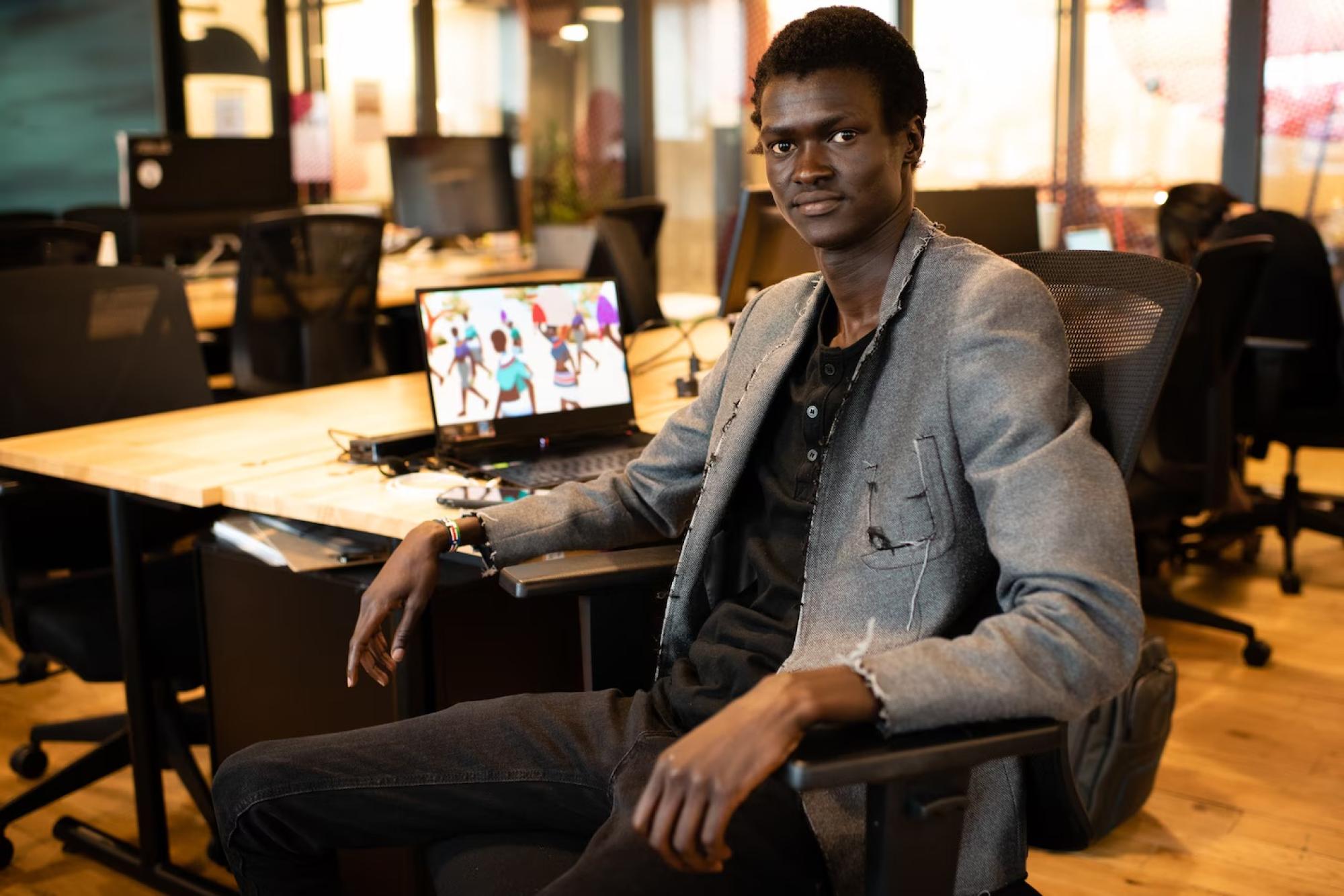
Lual Mayen sits in a modern office space, set in a trendy Washington, D.C., neighborhood. As a newborn in his parents arms, Mayen endured a 225-mile trek from his war-torn home in South Sudan to a refugee camp in Northern Uganda. Mayen was born into war, but his mission is peace. Now 24 years old, he is a video game developer residing in the United States, leading his own company and using the experiences from his past to inform his products: games aimed at peace-building and conflict resolution. He created the first version of Salaam, which means peace in Arabic, while still living as a refugee. In the games new version, players adopt the role of a refugee who must flee falling bombs, find water and gain energy points to ensure the characters survival as the players country journeys from a war-torn present into a peaceful existence. If the players character runs out of energy, the player is prompted to purchase more food, water, and medicine for their character with real-world money. The funds go beyond the game to benefit a living refugee through Junubs partnerships with various NGOs. Mayen is aiming to have Salaam ready to launch in December, determined to grow the category of social impact gaming to give back to his community. Peace is something that is built over time, Mayen said. Its not about people coming together and signing cease-fires and so on. Its a generation of change. Its a change of mindset. Its a change of attitude toward each other.
Latest
Latest News
Each news summary is created according to strict standards. Here's how we do it.
Each summary is created using a consistent editorial procedure. The target length is approximately 16 lines of 11-point Arial text in a 650-pixel-wide column. Up to 25% of a summary may be set in bold to emphasize the most important ideas. Summaries are composed of verbatim excerpts presented in the same sequence as they appear in the original news source, with very minor editorial additions. Where material has been omitted between excerpts, the omission is indicated with ellipses (...). Any words added by an editor for clarity or context appear in [brackets]. Our original news editor was Fred Burks. Tod Fletcher edited most summaries from 2007 through 2014, and Mark Bailey has served as news editor since 2014.