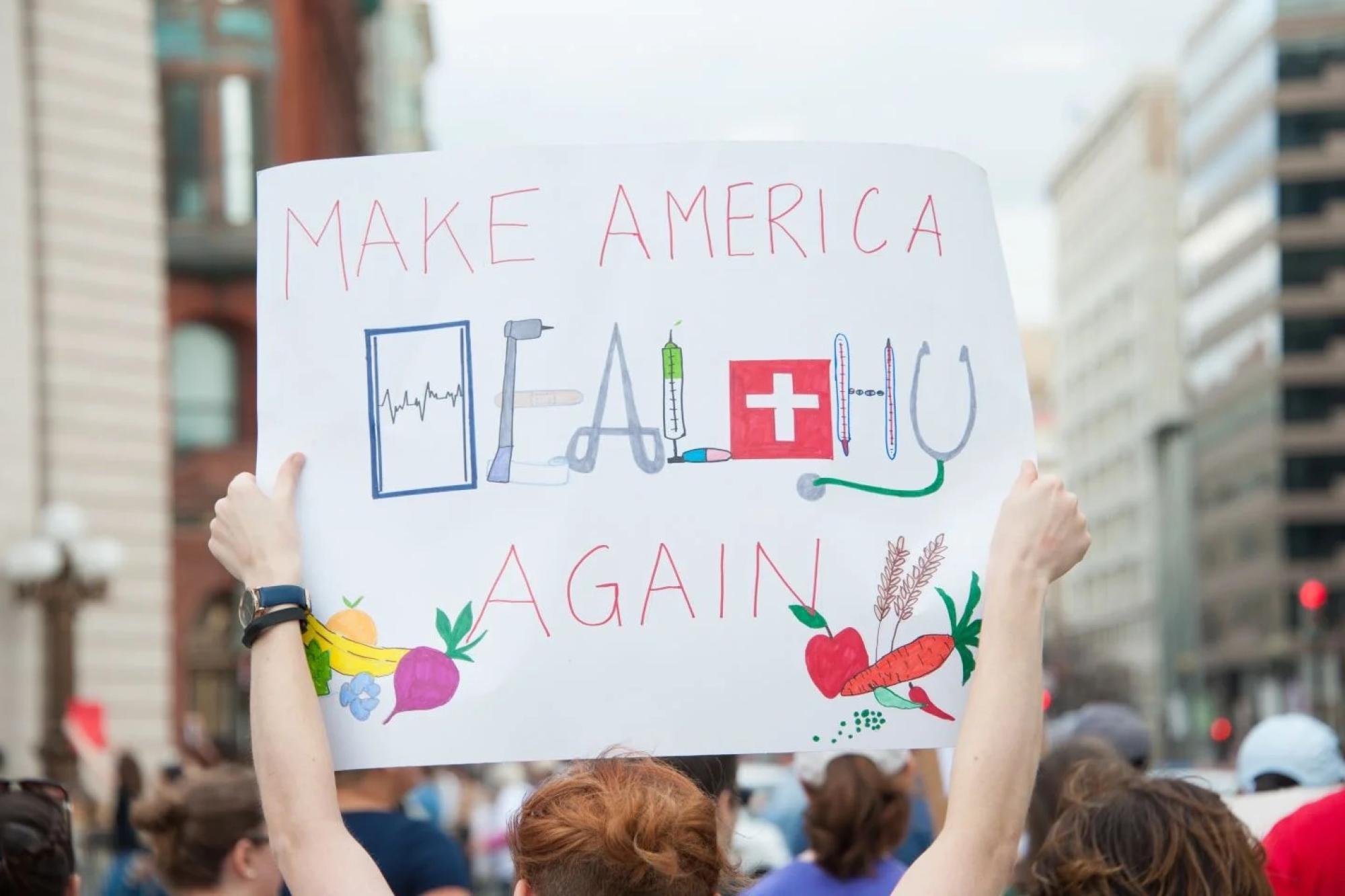
Last week, I was on the path to publishing a piece in a major legacy media outleta name all of you would instantly recognize"about Trump's bold appointment of RFK Jr. as head of the Department of Health and Human Services (HHS). For weeks, I had been in discussions with an editor about publishing this article, which argued that Trump appears to be genuinely signalling toward transformative health policy reform. After submitting the piece late Tuesday night to meet a Wednesday deadline, I received a surprising email from my editor the following morning: "Appears we don't approve." She linked to a new editorial board piece labeling RFK Jr. a "fringe conspiracy theorist" likely to harm public health. Her follow-up message read, "We have come out aggressively against Kennedy." Just like that, my piece was axed. My commitment to honest reporting and ideological independence opened many doors. Until it didn't. I discovered that hot-button topics I tackled like identity politics and police brutality were actually far less contentious than the third rail of Big Pharma and government health policies. Wokism is a far less pernicious, gargantuan force in American politics and media than Pfizer, Merck, and Moderna. By 2021, as the pandemic and vaccine mandates became politically charged, my pitches began to hit a wall. Outlets that once published polarizing takes now resisted anything questioning mainstream pandemic narratives.
Latest
Latest News
Each news summary is created according to strict standards. Here's how we do it.
Each summary is created using a consistent editorial procedure. The target length is approximately 16 lines of 11-point Arial text in a 650-pixel-wide column. Up to 25% of a summary may be set in bold to emphasize the most important ideas. Summaries are composed of verbatim excerpts presented in the same sequence as they appear in the original news source, with very minor editorial additions. Where material has been omitted between excerpts, the omission is indicated with ellipses (...). Any words added by an editor for clarity or context appear in [brackets]. Our original news editor was Fred Burks. Tod Fletcher edited most summaries from 2007 through 2014, and Mark Bailey has served as news editor since 2014.