



























Corporate Corruption News Stories
Below are key excerpts of revealing news articles on corporate corruption from reliable news media sources. If any link fails to function, a paywall blocks full access, or the article is no longer available, try these digital tools.

In a landmark decision, a Los Angeles jury has found that social media company Meta and video streaming service YouTube harmed a young user with addictive design features that led to mental health distress, including body dysmorphia, depression and suicidal thoughts. Commentators have referred to this as social media’s “Big Tobacco” moment and further lawsuits are pending. Neuroscience shows that heavy social media use can overstimulate the teen brain’s still-developing reward pathways in ways similar to addictive behaviours like gambling. This immature system also makes teenagers more sensitive to social feedback and less able to cope with rejection. Many Canadian teens describe [being] constantly connected online, yet increasingly disconnected in real life. They report pressure to present idealized versions of themselves and to keep up with peers. Trial data in a case between the U.S. Federal Trade Commission and Meta show that only a small fraction of time on Meta platforms involves engaging with friends — about seven per cent on Instagram and 17 per cent on Facebook. The rest is mostly scrolling and watching rather than interacting. This results in an illusion of connection while deepening a sense of isolation. Research involving more than 9,000 adolescents across eight countries found a strong association between problematic social media use and higher rates of depression and anxiety. Large studies across high-income countries consistently link heavy social media use to poorer physical health outcomes too, including shorter sleep and higher rates of obesity.
Note: Former Facebook executive Tim Kendall told Congress that the company intentionally made its product as addictive as cigarettes. Meta whistleblower Sarah Wynn-Williams told US senators that the company targeted teenage girls with beauty and weight-loss advertisements during moments of heightened vulnerability such as after deleting a selfie. According to her testimony, Meta could detect when users were feeling "worthless," "helpless," or like a "failure," and then make that information available to advertisers. For more along these lines, read our concise summaries of news articles on Big Tech and mental health.
The construction of ... hyperscale data centers — giant facilities that house servers and computing resources — is booming nationwide. President Donald Trump’s AI action plan and related executive orders have recently facilitated their speedy approval, in part by loosening environmental regulations. As the facilities have spread into suburbs and farmland, they’ve drawn pushback from dozens of communities concerned by how they could upend daily life. Data centers often draw enormous amounts of water and electricity, causing residents to complain about rising power bills and water shortages. The confidentiality behind some of the projects has only added to the level of concern. An NBC News review of over 30 data center proposals across 14 states found that in a majority of cases, local officials signed NDAs and worked with what appeared to be shell companies that can conceal visibility into the project developers. Five elected officials in different counties said the agreements barred them from sharing information with their constituents. Some local officials ... said they felt pressured to sign NDAs to keep their communities in the running. Data center NDAs can extend years beyond the initial proposal dates. Many of them also include clauses requiring local jurisdictions to limit disclosure of records as much as legally possible under Freedom of Information Act laws and notify the companies first so they have a “reasonable opportunity to prevent disclosure.”
Note: Read about a small Wisconsin city that successfully defeated a giant data center. For more along these lines, read our concise summaries of news articles on AI and Big Tech.
Tech mogul Peter Thiel ... is more entwined in the Middle East than he is in most other regions of the world. Thiel’s firm, Palantir, has a strategic partnership with the Israel Ministry of Defense to supply its artificial intelligence tools and other technology to the Israeli military. As the United States and Israel wage war on Iran, Palantir is now providing one of the AI tools being used by the Pentagon for the war effort, which kicked off with the mass slaughter of Iranian schoolchildren. The germ of Palantir’s involvement in the region may well have had its origins with Epstein, according to documents released earlier this year by the Department of Justice. Emails show Epstein connected Thiel with another friend, former Israeli defense minister and prime minister Ehud Barak, on account of their mutual interest in leveraging the tech sector for national security. That Epstein was the point of connection between the two men ... was suggested by a February 2013 audio recording unearthed last month. But emails show that Epstein’s efforts to connect the two went much further than this conversation, including arranging multiple meetings between them across several years and ensuring that one of Thiel’s investment vehicles financed one of Barak’s security-related ventures. As Epstein quietly advised Barak on his private sector ventures, many of which involved Israeli tech firms, emails show that both he and Barak leaned on Thiel for his expertise.
Note: Watch a 7-min video of WTK Director Amber Yang and Joe Martino from Collective Evolution discussing the links between Epstein, Thiel, Palantir, the Rothschild banking family, and intelligence agency operations. According to a former CIA officer, "It is inconceivable given Jeffrey Epstein’s travel record and associations that he was not approached by the [CIA] at some point before his death." Don't miss part one and part two of our investigations into the Epstein files so far.
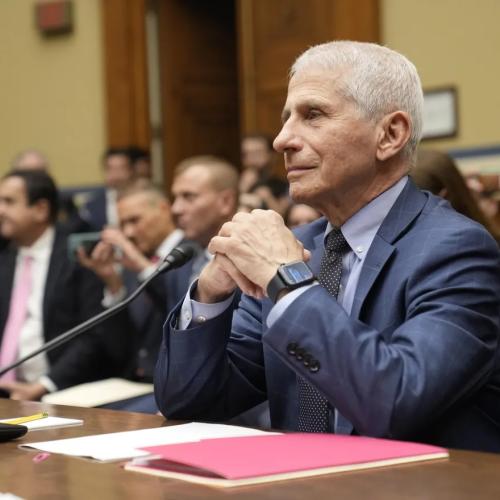
The former chief investigations counsel for the House Oversight Committee has been helping to prepare Bill Gates, the billionaire co-founder of Microsoft, to testify privately in the panel’s Jeffrey Epstein investigation on Wednesday. Representative James R. Comer of Kentucky, the Republican chairman of the committee, formally requested in March that Mr. Gates appear before the committee for a transcribed interview. His request came after files released by the Justice Department showed that Mr. Gates met with Mr. Epstein, the convicted sex offender, multiple times and that his closest advisers were in frequent contact with the disgraced financier until 2019, the year of his death in prison. In preparing for the deposition, Mr. Gates has turned to Jake Greenberg, who until December was spearheading the oversight panel’s Epstein inquiry in his role as the committee’s top investigative official. Mr. Gates’s close relationship with Mr. Epstein has roiled his foundation, which has authorized an outside review of its ties to Mr. Epstein. Representative Suhas Subramanyam, Democrat of Virginia, said in an interview that he wanted to know what Mr. Gates “knew of Epstein’s crimes, and the nature and extent of their relationship.” He added, “Epstein was known for befriending and even blackmailing rich and powerful men, and I want to know if Gates was one of them.” Mr. Gates has sought out powerful inside players to help him weather the scrutiny. He hired John Moran, a former lawyer for the Justice Department, who helped him secure an agreement with the committee for him to appear off camera, The Wall Street Journal reported.
Note: Don't miss part one and part two of our investigations into the Epstein files so far. For more along these lines, read our concise summaries of news articles on Big Tech and Jeffrey Epstein.
Because defense contracts often prevent the military from repairing its own equipment, critics say weapons companies are price-gouging the Pentagon at every turn. The military’s lack of a “right to repair” doesn't just allow defense contractors to charge thousands of dollars, for fixes that could be done for free or very cheaply. Rather, the Pentagon’s dependence on weapons makers for maintenance undermines military readiness. Namely, contractors’ extensive repair delays and sweeping decisions about whether to service gear routinely leave warfighters without critical equipment and weapons systems — even while deployed. Many DoD contracts now leave repair and maintenance, which can make up as much as 70% of a military program’s lifetime cost, to the vendors. “It's a cash-cow for them,” Ben Freeman, director of the Quincy Institute’s Democratizing Foreign Policy Program, tells RS. “They can charge literally thousands of dollars to replace things that service members could replace for pennies.” Take the RQ-11 Raven drone, for example. After hard landings, it often has trouble starting back up again. But due to contractual restrictions, the military is barred from making repairs and must ship the drone to the contractor at a cost of $26,000, regardless of the issue. When an extensive repair backlog meant service members were temporarily allowed to fix the drone themselves, however, they found they could solve the problem — a broken connector — for free with hot glue.
Note: Read more on how congress has prevented the military from repairing its own equipment. For more along these lines, read our concise summaries of news articles on military corruption.
For decades, Congress has tried and failed to give Americans control over their own personal data: the right to see it, correct it, and delete it at will. This inaction has left Americans with no recourse against misuse of their own data, while the data broker industry quietly continues to collect and sell the personal information of millions, operating in a largely unchecked gray market. Now, two new bills, the SECURE Data Act and the GUARD Financial Data Act, offer the latest test of whether Washington can step up and finally pull data brokers out of the shadows and into the reach of the law. Efforts to prevent the SECURE Data Act — or any federal protections — from being enacted are currently on full display. Exacerbating the situation and further endangering consumers, there is an entire category of companies that have deliberately avoided being classified as data brokers in an effort to skirt even the patchwork of state-level regulations. Unlike traditional data brokers, massive data aggregators don’t sell your name and address to the highest bidder. Instead, they operate quietly, harvesting your data from across the internet, then assembling it into risk scores, behavioral profiles, and assessments of your creditworthiness. These opaque calculations increasingly govern your real-world outcomes, including whether you’re approved for a mortgage, the interest rates on your auto loan, and what services or products are marketed to you.
Note: For more along these lines, read our concise summaries of news articles on Big Tech and the disappearance of privacy.
AI is projected to generate nearly unfathomable amounts of revenue. Any mention of AI tends to be accompanied by warnings that deeper jobs cuts across many more industries are coming for us all. Jensen Huang, CEO of chip giant Nvidia, said in 2025: “Every job will be affected, and immediately. It is unquestionable. You’re not going to lose your job to an AI, but you’re going to lose your job to someone who uses AI.” Increasingly, people young and old flock to a new gold rush in Silicon Valley to toil away on AI-fueled startups. If AI’s worst-case scenario for tech jobs plays out ... that’s still nowhere near the apocalyptic future of labor that many fear. “Is it, in fact, going to destroy all of the jobs?” Naidu asked. “I’m not convinced. Even take software. Software is only about 4 to 6% of GDP. So it’s a lot, but it’s not like the whole economy can be replaced by Claude Code.” Convincing people that AI will replace human workers in droves is a clever marketing tactic. Not only does it stoke rabid investor speculation, but it distracts from a more realistic application of AI: to surveil and micromanage employees to squeeze yet more productivity out of them, all the while pressuring them to feel grateful that they have any kind of work. Gig workers, the people who pick you up in Ubers and deliver your food on platforms like DoorDash, have already been the guinea pigs for this kind of algorithmic management, and labor experts predict it will spread.
Note: For more along these lines, read our concise summaries of news articles on AI and media manipulation.
Some of the largest data-collecting companies in the United States—including major AI vendors, data brokers, defense contractors, and dating apps—rely on deceptive methods to keep consumers from opting out of the sale and sharing of their personal information. Researchers at [the Electronic Privacy Information Center] audited the opt-out processes of 38 major data companies and documented at least eight distinct categories of manipulative design: Opt-out forms that don't actually let users opt out of the sale of their data. Links that are buried in fine print and missing from homepages. Consumers routed through multiple separate forms to complete a single request. And requirements that users create accounts or pay for subscriptions before opting out at all, among others. Major companies offering large language models, such as Google, Meta, and OpenAI, fail to clearly link their opt-out forms from their homepages or privacy policies, according to the report, and several require consumers to submit multiple separate forms to complete a single request. OpenAI's form, when a consumer finds it, does not offer a way to opt out of the sale or transfer of personal data. What it offers instead is an option to “remove personal information from ChatGPT responses,” which EPIC says is a filter on the chatbot's output, not the removal of any underlying data. Researchers found that the people-search brokers they audited—Spokeo, Whitepages, and National Public Data—do not offer consumers a way to opt out of the sale or transfer of their data at all. Instead, the companies offer a process for removing individual listings by URL, one at a time, with no commitment to stop selling that same person's information in the future.
Note: The owner of a data broker company once bragged about having highly detailed personal information on nearly all internet users. For more along these lines, read our concise summaries of news articles on Big Tech and the disappearance of privacy.
A push to restrict agricultural pesticides appears to be stalling, and a draft of a report obtained by ABC News does not signal any intention to eliminate them. This comes as a separate landmark study links negative effects of certain pesticides on children's brains. Pesticides are ubiquitous in our food supply. Numerous studies over the years have shown the detrimental effects of various chemicals on neuro development, but this is the first study to follow a large sample of children from pregnancy and get precise brain measurements. For the first time, researchers can tell you exactly how pesticides can cause harm in the offspring of exposed pregnant women. CHLA and Columbia University researchers said pesticides trigger inflammation and oxidative stress, which harms neurons and slows down how energy flows through the brain. "So that would be evident in things like penmanship, and spelling, and motor speed, performance," said [study author Dr. Bradley] Peterson. Researchers studied 270 children from birth up to 14 years old. Their mothers had been exposed to pesticides from having their homes fumigated and from using commercial sprays, but researchers say these moms were also exposed to chemicals in the produce and grains they ate. Peterson ... recommends more eco-friendly ways to eliminate pests and eating organic produce and grains when possible. "If you're able to afford it and can find it, we would recommend that," he said.
Note: Our Substack, "The Pesticide Crisis Reveals The Dark Side of Science. We Have The Solutions to Regenerate," uncovers the scope of the widespread conspiracy to poison our food, air, and along with the powerful remedies and solutions to this crisis. For more along these lines, read our concise summaries of news articles on government corruption and toxic chemicals.
Jacquie Sullivan, the longest serving member of the City Council in Bakersfield history, is now in retirement, battling a foe tougher than any she faced in seven elections: Parkinson’s disease. Kern County [is] the largest consumer of the deadly herbicide Paraquat in California. Over a five year period, 2017 to 2021, Kern County farmers sprayed 1.2 million pounds of the stuff on local ag land, along with tons of other herbicides. No wonder Kern County is also No. 1 in the state for Parkinson’s disease, an incurable neurodegenerative disorder. Loss of smell and shoulder pain are among the early symptoms. Tremors, slowing of movement, difficulty sleeping and stiffness can come later. Then in more advanced stages, loss of cognitive ability. An estimated 117,000 Californians are living with the disease — the highest per capita level in the country. Those who work directly with certain chemicals, including herbicides, face even higher risks, up to 400% higher. But you don’t have to be in direct contact with the spray to suffer harmful exposure. Drinking well water in certain agricultural areas increases risk by 70 to 90%. In 2024, the State Assembly approved a “moratorium” on paraquat use that would have taken effect this past January, giving state regulators an opportunity to reevaluate paraquat and potentially reapprove the chemical with or without new restrictions. But state Senate amendments killed all the restrictions.
Note: The 1982 neurotoxic contaminant MPTP case was a turning point in showing how a single toxin could instantly trigger Parkinson’s by destroying a specific part of the brain. Scientists later discovered that paraquat — a widely used US pesticide banned in over 70 countries — attacks the brain in much the same way. As rates of Parkinson’s have tragically surged especially among the farming community, neurologists now say the disease is largely environmentally caused, driven by long-term exposure to chemicals like paraquat. A 2024 Politico article put it bluntly: “Parkinson’s is a man-made disease.”
Vermont is the first US state to ban the weedkilling pesticide paraquat, backed by lawmakers who cited concerns about research showing the chemical substantially increases the risk of the incurable brain ailment known as Parkinson’s disease. Phil Scott, the governor, signed the legislation on Tuesday. The new law takes effect on 1 November, though it contains a provision allowing state regulators to issue special permits for paraquat use on fruit-producing tree orchards, berries and other “small fruit” crops up until 31 December 2030. Early versions of the law pointed to multiple studies by the National Institutes of Health have demonstrated that paraquat exposure substantially increases the risk of Parkinson’s disease in those exposed to the herbicide. Lawmakers also noted that other NIH studies have linked paraquat to non-Hodgkin lymphoma and childhood leukemia. Ray Dorsey, a neurologist who directs research into environmental causes of brain diseases at Atria Health and Research Institute, said Vermont’s action was “another step toward preventing this largely man-made disease”. He said that many countries had banned paraquat and said it “is long overdue for the US to do the same”. Numerous scientific studies have found that paraquat damages cells in the brain in ways that can lead to Parkinson’s, and more than 8,000 lawsuits are pending in US courts over the Parkinson’s allegations.
Note: The 1982 neurotoxic contaminant MPTP case was a turning point in showing how a single toxin could instantly trigger Parkinson’s by destroying a specific part of the brain. Scientists later discovered that paraquat — a widely used US pesticide banned in over 70 countries — attacks the brain in much the same way. As rates of Parkinson’s have tragically surged especially among the farming community, neurologists now say the disease is largely environmentally caused, driven by long-term exposure to chemicals like paraquat. A 2024 Politico article put it bluntly: “Parkinson’s is a man-made disease.”
This interim report highlights records the Subcommittee has reviewed regarding HHS’s awareness of and response to cases of myocarditis—a type of heart inflammation—following COVID-19 vaccination. [Some] documents ... have remained hidden from the public and Congress for years. U.S. health officials knew about the risks of myocarditis; Those officials downplayed the health concern; and U.S. health agencies delayed informing the public about the risk of the adverse event. The records [show]: The Israeli Ministry of Health notifying officials at the CDC in late February 2021 of “large reports of myocarditis, particularly in young people, following the administration of the Pfizer vaccine.” Discussions among CDC officials in May 2021 on whether to issue a HAN [Health Alert Network message] on myocarditis, noting that health care professionals across the nation may not be aware of the risk because “providers aren’t reporting these cases to VAERS [Vaccine Adverse Event Reporting System].” A CDC official providing up-to-date information on the status of the HAN to Pfizer Inc. (“Pfizer”) and Moderna, Inc. (“Moderna”) representatives, indicating CDC’s preference to keep the vaccine companies more informed about vaccine adverse events, rather than the American people. Draft meeting notes from late May 2021 exchanged between U.S. public health officials which included the question: “Is VAERS signaling for myopericarditis now?”; and the answer: “For the age groups 16-17 years and 18-24 years, yes.”
Note: Our Substack investigation, The Nuanced View on COVID Vaccine Injuries and Lawsuits, examines how whistleblowers, FDA advisers, and vaccine-injured people exposed irrefutable evidence of COVID vaccine harms, data integrity issues, and failures within the VAERS reporting system. The investigation also explores how Big Tech platforms, pharmaceutical companies, and health organizations engineered the information environment around COVID through censorship and media manipulation.
Federal lawmakers on Thursday passed the House version of the Farm Bill, removing controversial language that would have provided some protections for pesticide companies facing lawsuits over alleged health harms. Members of the US House of Representatives voted 280-142 to pass an amendment to the bill striking sections that would have established “nationwide uniformity for pesticide labeling” effectively preventing states from leveraging labeling requirements aimed at protecting consumers. The provisions were aimed at blocking “failure to warn” claims against pesticide manufacturers like Bayer, which has been sued by more than 100,000 people around the US alleging the company failed to warn that glyphosate herbicides could cause cancer. The amendment ... also eliminates language that would have prevented states and local communities from establishing no-spray zones near schools, as well as a mandate that would have weakened protections from pesticide discharge for waterways. Even with the removal of pesticide preemption language ... the House Farm Bill includes the Ending Agricultural Trade Suppression Act (EATS or Save our Bacon Act), a measure that would prevent state and local governments from “interfering” with interstate commerce by blocking their ability to pass ag policies. These include laws such as California’s Prop 12, which promotes humane treatment of livestock.
Note: Our Substack, "The Pesticide Crisis Reveals The Dark Side of Science. We Have The Solutions to Regenerate," uncovers the scope of Bayer/Monsanto's media propaganda machine and the widespread conspiracy to poison our food, air, and along with the powerful remedies and solutions to this crisis. For more along these lines, read our concise summaries of news articles on factory farming and toxic chemicals.
The Modern Ag Alliance, launched by Bayer in 2024, enables the company to lobby and campaign through an entity that looks like a coalition of farm organizations, not a single giant chemical corporation. MAA represents itself as a “diverse coalition, founded by Bayer, that today represents more than 110 agricultural organizations.” But public records suggest it functions as a front group for Bayer’s interests. Tax records reveal that a Bayer vice president sits on the board of directors, and nearly all of its budget has gone to a public relations firm that also works for Bayer. Bayer itself describes the MAA as a key part of its lobbying. The company has portrayed the MAA – whose tagline is “Pesticides power America’s ag” – as its strategy for “fighting back” against glyphosate concerns and lawsuits. MAA is a 501(c)(4) nonprofit organization, a structure that allows it to raise unlimited funds for advocacy or lobbying while keeping donors secret. Disclosed members of the Modern Ag Alliance include large agribusiness trade groups, and national and state commodity crop growers’ groups. Many of these groups have financial relationships with Bayer and other pesticide firms, via sponsorships, partnerships or direct funding, though these ties are often opaque. The MAA lobbies for legislation that ... would make it harder for Americans to use state-law failure-to-warn claims to sue pesticide manufacturers for cancer and other injuries.
Note: Our Substack, "The Pesticide Crisis Reveals The Dark Side of Science. We Have The Solutions to Regenerate," uncovers the scope of Bayer/Monsanto's media propaganda machine and the widespread conspiracy to poison our food, air, and along with the powerful remedies and solutions to this crisis. For more along these lines, read our concise summaries of news articles on corporate corruption and toxic chemicals.
A new study suggests a common weed killer may be linked to the mysterious global rise of young colorectal cancer. The first-of-its kind study published Tuesday in the journal Nature Medicine, suggests that picloram — a herbicide used globally to kill woody plants and shrubs while keeping grasses intact — could explain the rising incidence of colon and rectal cancer cases in people under 50. [Senior study author Jose] Seoane's team found that certain "fingerprints" appeared in the DNA of young colorectal cancer tumors they studied, and those fingerprints were linked back to exposures, including: Smoking; Poor diets, lacking fresh vegetables, beans, nuts and other "Mediterranean" staples; Obesity; Educational attainment (which is also linked to poorer diets); and finally, the weed killer picloram. His team checked to see if this same pattern persisted across populations, comparing the incidence of young colorectal cancer in seven US states, including California, Connecticut, Georgia, Iowa, New Mexico, Utah, and Washington, to the level of county-wide pesticide use. The strongest pesticide signal of all tied to higher rates of young colon cancer was for picloram. (In second place was glyphosate.) Picloram, which was developed in the 1960s, was one of many herbicides used in the "agents" the US Military used to clear forest during the Vietnam War. It works by disrupting the way plant hormones normally function, and can persist in the soil for years.
Note: Our Substack, "The Pesticide Crisis Reveals The Dark Side of Science. We Have The Solutions to Regenerate," uncovers the scope of the widespread conspiracy to poison our food, air, and along with the powerful remedies and solutions to this crisis. For more along these lines, read our concise summaries of news articles on health and toxic chemicals.
A major new study published in Nature Health has found a strong connection between environmental exposure to agricultural pesticides and an increased risk of cancer. Pesticides are commonly found in food, water, and the surrounding environment, often as complex mixtures rather than single substances. This has made their health effects difficult to measure. Most previous research has focused on individual chemicals in controlled settings, which does not reflect how people are exposed in real life. By combining environmental monitoring, national cancer registry data, and biological research, scientists from the IRD, Institut Pasteur, University of Toulouse, and the National Institute of Neoplastic Diseases (INEN) in Peru provide new insight into how pesticide exposure may contribute to the development of certain cancers. Peru ... includes regions with intensive agriculture, diverse climates and ecosystems, and significant social and geographic inequalities. "We first modeled the dispersion of pesticides in the environment over a six-year period, from 2014 to 2019, which allowed us to create a high-resolution map and identify areas with the highest risk of exposure," explains Jorge Honles, PhD in epidemiology at the University of Toulouse. The team then compared these exposure maps with health data from more than 150,000 cancer patients recorded between 2007 and 2020. Regions with higher environmental pesticide exposure also had higher rates of certain cancers. In these areas, the likelihood of developing cancer was about 150% greater on average. The research also highlights how pesticide exposure may affect the body long before cancer is diagnosed. Molecular studies conducted at the Institut Pasteur, led by Pascal Pineau, show that pesticides can interfere with processes that maintain normal cell function and identity. These disruptions occur early and may accumulate over time without obvious symptoms. Vulnerable populations, including Indigenous and rural communities, may face the greatest risks.
Note: This landmark study demonstrates a significant link between pesticide exposure on a national scale and biological changes that increase the risk of cancer. Our Substack, "The Pesticide Crisis Reveals The Dark Side of Science. We Have The Solutions to Regenerate," uncovers the scope of the widespread conspiracy to poison our food, air, and along with the powerful remedies and solutions to this crisis. For more along these lines, read our concise summaries of news articles on food system corruption and toxic chemicals.
In Kargi, a remote desert village in the far north of Kenya, cancers of the digestive tract plague the population at unusually high rates. The disease most often attacks the esophagus, though stomach cancer is also common. Some patients think it’s a punishment from God. The evidence on the ground suggests it’s more likely from a multinational oil company. In the 1980s, foreign work crews dressed like astronauts descended on the village of Kargi and the surrounding Chalbi Desert to drill for oil. They spent five unsuccessful years boring nearly a dozen wells thousands of feet into the ground. The men were from Amoco, an American oil company now owned by BP. To mark their presence was a dry white substance scattered on the ground, close to the water wells used by residents and their livestock. The substance the company left behind contained heavy metals and known carcinogens. When locals discovered the flaky substance around the wells, many believed it was natural salt and started using it to cook their food. The water was contaminated. High levels of carcinogenic toxic chemicals, namely nitrates, had seeped into surrounding boreholes and wells — the only water supply in the desert. Animals began dying in the thousands. And people started getting cancer. By the early 2000s, the cancer rate in the community was three times the national average. No official cleanup has ever been done. The community has lost hope in getting answers.
Note: For more along these lines, read our concise summaries of news articles on corporate corruption and toxic chemicals.
Chatbots and AI-generated search summaries – which are rapidly transforming the way people get their information – both use Wikipedia as a key source. Now, we can reveal Wikipedia has been subject to shady, paid-for edits ordered by partners at an elite London PR firm with links to Downing Street. And the clients who benefitted from this “wikilaundering” are some of the world’s richest and most powerful people. The firm in question is Portland Communications. And it has been busted once already for this practice. After the firm was exposed, former employees told us, it simply started hiring middlemen instead. As one of them put it: “No one said, ‘We should stop doing this.’ The question was how we could keep doing it without getting caught.” Portland’s subcontractors have ... obscured mentions of a major terrorist-financing case involving Qatari businessmen; scrubbed evidence that a billion-dollar Gates-funded project failed in its mission; and promoted one side of Libya’s post-Gaddafi government over the other. Often, however, their changes were more subtle: burying bad press under descriptions of a client’s philanthropic work or swapping out critical news references with something more positive. “Small Wikipedia edits punch above their weight,” explained Alberto Fittarelli ... at the University of Toronto’s Citizen Lab. “Small, incremental changes are likely to stick for longer. These kinds of edits make narratives seem credible precisely because they are hardly noticeable. Once that enters the information stream, it becomes really hard to claw it back.”
Note: Read how Wikipedia is systematically manipulated by the military-intelligence complex. The CIA, FBI, and the Pentagon has secretly edited entries in Wikipedia, including removing references to CIA illegal rendition and torture, downplaying US involvement in Iraqi civilian deaths, and rewriting the definition of “terrorism” to expand its political use. For more along these lines, read our concise summaries of news articles on media manipulation.
Powerful institutions are using covert tactics to shape how they are portrayed online. One method involves deploying fake “sockpuppet” accounts to edit Wikipedia pages, enabling interested parties to quietly remove criticism or rewrite how organizations are described on one of the world’s most widely used sources of information. A British investigation found that such tactics were used to remove critical information about AGRA (formerly the Alliance for a Green Revolution in Africa), a controversial initiative backed by the Gates Foundation that seeks to industrialize African food and farming systems. The analysis identified a “network of 26 ‘sockpuppets’ – multiple accounts orchestrated by a single person – that was eventually banned from Wikipedia under suspicion of paid editing,” [investigator Claire] Wilmot wrote. The findings highlight growing concerns about attempts by governments, corporations and philanthropies to influence widely used online information sources that increasingly feed search engines and artificial intelligence systems that summarize information for the public. “Because it’s widely used by search engines and AI systems, efforts to manipulate it can have far-reaching effects,” Wilmot said. Wilmot warned that the network uncovered in the probe likely represents only a small part of broader efforts by powerful institutions to sanitize their online reputations.
Note: Instead of reducing world hunger, the Green Revolution’s legacy has led to soil degradation, inequality, mass farmer suicides, and restrictive seed laws that push farmers into debt and dependency on patented GMO seeds and fossil-fuel fertilizers. Read more about the grave human health and environmental outcomes of the Gates-funded Green Revolution. For more along these lines, read our concise summaries of news articles on food system corruption and media manipulation.
Bill and Melinda Gates ... are deeply invested in American agriculture. The billionaire couple, in less than a decade, have accumulated more than 269,000 acres of farmland across 18 states. The farmland was purchased through a constellation of companies that all link back to the couple’s investment group, Cascade Investments. Their land holdings range from 70,000 acres in north Louisiana, where their farmland grows soybeans, corn, cotton and rice, to 20,000 acres in Nebraska, where farmers grow soybeans. They bought and later sold an additional 6,000 acres in Georgia. In Washington, the Gateses own more than 14,000 acres of farmland that includes potato fields so massive that they are visible from space and some of which are processed into french fries for McDonald’s. These land holdings are separate from their previous investments in companies that support large-scale farming like Monsanto and the tractor manufacturer John Deere. The trend worries young farmers who cannot compete with the likes of Bill Gates when buying land, according to Holly Rippon-Butler, a farmer in upstate New York. “If you’re looking at what this means for farmers on the ground looking to access land, there’s significant competition from nonfarmers, and that really affects young farmers because it means that the price that they’re trying to compete with on the marketplace is driven and determined by people who are not dependent on a farming income,” Rippon-Butler said.
Note: At the same time, traditional seeds passed down for generations that farmers once saved and shared freely are increasingly being brought under corporate control through patents and restrictive licensing systems. Agrochemical giant Monsanto, who is heavily funded by Gates' investments, continues to sue American farmers and small farm business across at least 27 states over alleged seed patent violations. For more along these lines, read our concise summaries of news articles on food system corruption.
Important Note: Explore our full index to revealing excerpts of key major media news stories on several dozen engaging topics. And don't miss amazing excerpts from 20 of the most revealing news articles ever published.



