

















Search 14,310 Media Articles
Air fryers that gather your personal data and audio speakers “stuffed with trackers” are among examples of smart devices engaged in “excessive” surveillance, according to the consumer group Which? The organisation tested three air fryers ... each of which requested permission to record audio on the user’s phone through a connected app. Which? found the app provided by the company Xiaomi connected to trackers for Facebook and a TikTok ad network. The Xiaomi fryer and another by Aigostar sent people’s personal data to servers in China. Its tests also examined smartwatches that it said required “risky” phone permissions – in other words giving invasive access to the consumer’s phone through location tracking, audio recording and accessing stored files. Which? found digital speakers that were preloaded with trackers for Facebook, Google and a digital marketing company called Urbanairship. The Information Commissioner’s Office (ICO) said the latest consumer tests “show that many products not only fail to meet our expectations for data protection but also consumer expectations”. A growing number of devices in homes are connected to the internet, including camera-enabled doorbells and smart TVs. Last Black Friday, the ICO encouraged consumers to check if smart products they planned to buy had a physical switch to prevent the gathering of voice data.
Note: A 2015 New York Times article warned that smart devices were a "train wreck in privacy and security." For more along these lines, read about how automakers collect intimate information that includes biometric data, genetic information, health diagnosis data, and even information on people’s “sexual activities” when drivers pair their smartphones to their vehicles.
Footprints left on a beach. Air breathed in a busy room. Ocean water. Scientists have been able to collect and analyze detailed genetic data from human DNA from all these places, raising thorny ethical questions about consent, privacy and security when it comes to our biological information. The researchers from the University of Florida, who were using environmental DNA found in sand to study endangered sea turtles, said the DNA was of such high quality that the scientists could ... determine the genetic ancestry of populations living nearby. They could also match genetic information to individual participants who had volunteered to have their DNA recovered. Human DNA that has seeped into the environment through our spit, skin, sweat and blood could be used to help find missing persons, aid in forensic investigations to solve crimes, locate sites of archaeological importance, and for health monitoring. However, the ability to capture human DNA from the environment could have a range of unintended consequences — both inadvertent and malicious. These included privacy breaches, location tracking, data harvesting, and genetic surveillance of individuals or groups. [Researchers] retrieved DNA from footprints made in sand by four volunteers. They were able to sequence part of the participants’ genomes. Next, the researchers took samples of air from a ... room in an animal clinic. The team recovered DNA that matched the staff volunteers [and] animal patients.
Note: This research was published in the journal Nature Ecology & Evolution. For more along these lines, see concise summaries of deeply revealing news articles on the disappearance of privacy from reliable major media sources.
The Georgia Army National Guard plans to combine two deeply controversial practices — military recruiting at schools and location-based phone surveillance — to persuade teens to enlist, according to contract documents reviewed by The Intercept. The federal contract materials outline plans by the Georgia Army National Guard to geofence 67 different public high schools throughout the state, targeting phones found within a one-mile boundary of their campuses with recruiting advertisements “with the intent of generating qualified leads of potential applicants for enlistment while also raising awareness of the Georgia Army National Guard.” Geofencing refers generally to the practice of drawing a virtual border around a real-world area. The ad campaign will make use of a variety of surveillance advertising techniques, including capturing the unique device IDs of student phones, tracking pixels, and IP address tracking. It will also plaster recruiting solicitations across Instagram, Snapchat, streaming television, and music apps. The campaign plans not only call for broadcasting recruitment ads to kids at school, but also for pro-Guard ads to follow these students around as they continue using the internet and other apps, a practice known as retargeting. While the state’s plan specifies targeting only high school juniors and seniors ages 17 and above, demographic ad targeting is known to be error prone, and experts told The Intercept it’s possible the recruiting messages could reach the phones of younger children.
Note: For more along these lines, see concise summaries of deeply revealing news articles on military corruption and the disappearance of privacy from reliable major media sources.
Spies for centuries have trained their sights on those who shape destinies of nations: presidents, prime ministers, kings. And in the 21st century, most of them carry smartphones. Such is the underlying logic for some of the most tantalizing discoveries for an international investigation that in recent months scrutinized a list of more than 50,000 phone numbers that included — according to forensic analyses of dozens of iPhones — at least some people targeted by Pegasus spyware licensed to governments worldwide. The list contained the numbers of politicians and government officials by the hundreds. But what of heads of state and governments, arguably the most coveted of targets? Fourteen. Or more specifically: three presidents, 10 prime ministers and a king. Forensic testing that might have revealed infection by NSO’s signature spyware, Pegasus, was not possible. Nor was it possible to determine whether any NSO client attempted to deliver Pegasus to the phones of these country leaders — much less whether any succeeded in turning these highly personal devices into pocket spies capable of tracking a national leader’s nearly every movement, communication and personal relationship. According to NSO marketing materials and security researchers, Pegasus is designed to collect files, photos, call logs, location records, communications and other private data from smartphones, and can activate cameras and microphones as well for real-time surveillance at key moments.
Note: Read how this Pegasus spyware was used to target activists and journalists in Mexico. For more along these lines, see concise summaries of deeply revealing news articles on government corruption and the disappearance of privacy from reliable major media sources.
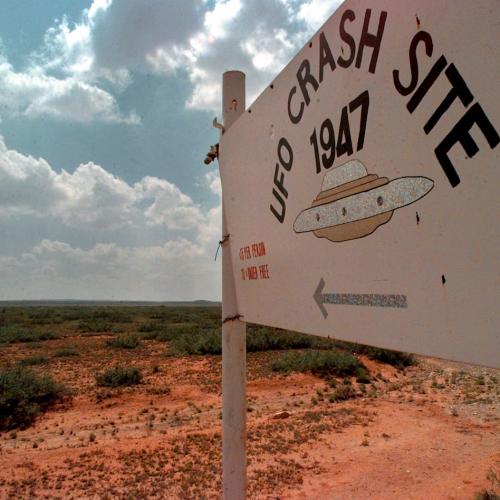
UFOs are swarming Earth’s skies and demonstrating capabilities so astonishing that they must represent technologies that are advanced beyond any available on Earth. Claims of mysterious trespassers in American airspace are taken very seriously by the U.S. government for reasons of national security. That’s why, at Congress’s behest, the U.S. Department of Defense established its All-Domain Anomaly Resolution Office (AARO) in July 2022. This office investigates reports of UFOs under the more generic rebranding of unidentified anomalous phenomena (UAPs). AARO’s work, however, isn’t really about chasing down extraterrestrial invaders so much as it involves standardizing reporting methods, curating and analyzing datasets and assessing possible threats posed by UAPs. AARO has reportedly deployed the Gremlin System—a multisensor networked system for detecting, tracking and characterizing UAPs—in an undisclosed location. What is the status of this project? "Gremlin is envisioned to be a test bed for sensor evaluations and sensor fusion," [said AARO director Jon Kosloski]. "We expect it to be a “living” system, always evolving. We will be swapping in and out new sensors and algorithms for various approaches. We want to document what we learn and share that with the public and other organizations inside the government. The hope is they can take what we have learned and replicate that."
Note: Watch a new video by Amber Yang on recent exciting developments in UFO/UAP disclosure. For more along these lines, read our concise summaries of news articles on UFOs.
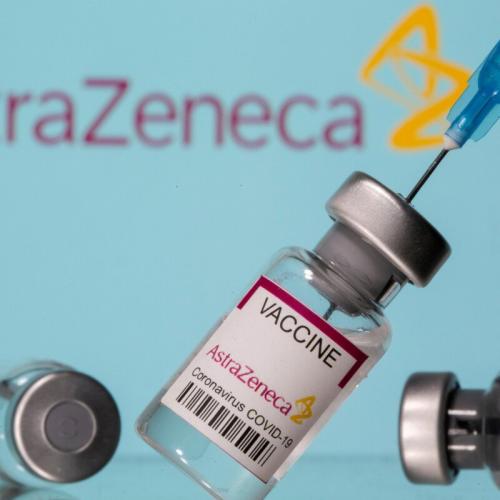
Previous vaccines have taken a decade or more to develop, and more than half of the past 20 years have failed in clinical trials. However, four [COVID-19] vaccine candidates have entered the final phase of clinical trials prior to approval by the Food and Drug Administration. Operation Warp Speed ... organized government agencies and private companies with the goal of developing, manufacturing and distributing hundreds of millions of vaccine doses, with starting doses to be available by early 2021. At the head of the operation is Moncef Slaoui, a Moroccan-born Belgian-American scientist. Operation Warp Speed … has invested in six vaccine candidates (Moderna, Pfizer / BioNTech, Johnson & Johnson, AstraZeneca, Novavax, and Sanofi / GSK) with the hope that at least one ... will prove safe and effective in clinical trials. Four of the six vaccine candidates have already been shown to be safe and effective in the first two test phases, which test whether the vaccinations produce so-called neutralizing antibodies. Serious health problems regularly arise during vaccination attempts. "We know how to distribute vaccines to any location in the US," says Slaoui. "It happens every year for flu and shingles." Tracking systems need to be "incredibly precise" to ensure that patients are each given two doses of the same vaccine and to monitor them for adverse health effects. Operation Warp Speed … has selected medical distributor McKesson and cloud operators Google and Oracle to collect and track vaccine data.
Note: The above article is also available here. Don't miss this excellent article which raises many important questions about this operation. For more along these lines, see concise summaries of deeply revealing news articles on the coronavirus and vaccines from reliable major media sources.
Hundreds of apps can follow your movements and share the details with advertisers, retailers and even hedge funds. Its difficult to know for sure whether location data companies are tracking your phone. Any app that collects location data may share your information with other companies, as long as it mentions that somewhere in its privacy policy. You can head off much of the tracking on your own device by spending a few minutes changing settings. Heres how to limit the snooping. How do I stop location tracking on iOS? Some apps have internal settings where you can indicate that you dont want your location used for targeted advertising or other purposes. But the easiest method is to go through your devices main privacy menu. First, open Settings and select Privacy, which has a blue icon with a white hand. Then select Location Services, which is at the top and has a little arrow. Youll see a list of apps, along with the location setting for each. Tap on apps you want to adjust. Selecting Never blocks tracking by that app. The option While Using the App ensures that the app gets location only while in use. Choosing Always, allows the app to get location data even when not in use. How do I stop it on Android? First, open the Settings on your phone. On the main settings page, tap Security & location. On the next screen, tap Location, which can be found in the Privacy section. On the Location screen, tap App-level permissions. Youll see a list of apps. To turn off location for an app, slide the toggle to the left.
Note: For more details, read the entire article at the link above. For more along these lines, see concise summaries of deeply revealing privacy news articles from reliable major media sources.
Last July, Russian billionaire Yuri Milner announced the launch of a bold $100 million project "to reinvigorate the search for life in the universe." The amplified SETI initiative is "the most powerful, comprehensive and intensive scientific search ever undertaken for signs of intelligent life beyond Earth," according to the project's website. Now, for the first time, a new group of scientists and other professionals [has] formed a non-profit ... called UFO Detection and TrAcking (UFODATA for short), which includes an international team of scientists and engineers with an interest in UFOs. The organization has one goal and one goal only: to design, build and deploy a global network of automated surveillance stations that will monitor the skies full time looking for UFOs. UFODATA has no interest in alleged government conspiracies or adding more witness reports or FOIA documents to the thousands already on file. The idea here is that only a complete change of methodology toward a purely scientific approach to the UFO issue will enable us to move forward. The monitoring stations ... will record numerous physical characteristics of any UFOs that appear in their range. They will all send their data back to a central location. Current projections are that the stations will cost about $10-20,000 each, thanks to the unprecedented convergence of high resolution digital camera technologies, off-the shelf scientific instrumentation, powerful low-cost computing platforms and far-reaching high-speed internet access.
Note: Explore a treasure trove of concise summaries of incredibly inspiring news articles which will inspire you to make a difference.
Four years after the death of Al Qaeda leader Osama bin Laden at the hands of US Navy Seals in Abottabad, Pakistan, a new report ... by journalist Seymour Hersh questions the Obama administrations account of the killing of Osama bin Laden. The report claims that, among the lies, the biggest was the idea that the raid in May 2011 that killed bin Laden was an all-American event. "The most blatant lie was that Pakistans two most senior military leaders General Ashfaq Parvez Kayani, chief of the army staff, and General Ahmed Shuja Pasha, director general of the ISI were never informed of the US mission," the report says. The report also says that Pakistans Inter-Services Intelligence agency had been holding bin Laden as a prisoner since 2006, and that the US learned about the Al Qaeda leaders location through a former senior Pakistani intelligence officer, who gave the information in return for the reward being offered by American officials. The White House has said bin Laden was found through tracking his couriers. Hershs primary US source for his story is "a retired senior intelligence official who was knowledgeable about the initial intelligence about bin Ladens presence in Abbottabad." White House spokesman Josh Earnest ... dismissed the Hersh piece, saying it was "riddled with inaccuracies." Hersh, a longtime contributor to The New Yorker, is an award-winning journalist who has won numerous prizes for his investigative reporting, including the Pulitzer Prize.
Note: There are many big problems with the official story of the killing of bin Laden. For starters, read the review on the London Review of Books website. For more, see this ABC News article, this BBC article and this AP article.
The National Security Agency is using complex analysis of electronic surveillance, rather than human intelligence, as the primary method to locate targets for lethal drone strikes an unreliable tactic that results in the deaths of innocent or unidentified people. According to a former drone operator for the militarys Joint Special Operations Command (JSOC) who also worked with the NSA, the agency often identifies targets based on controversial metadata analysis and cell-phone tracking technologies. Rather than confirming a targets identity with operatives or informants on the ground, the CIA or the U.S. military then orders a strike based on the activity and location of the mobile phone. The former JSOC drone operator ... states that innocent people have absolutely been killed as a result. Some top Taliban leaders, knowing of the NSAs targeting method, have purposely and randomly distributed SIM cards among their units in order to elude their trackers. As a result, even when the agency correctly identifies and targets a SIM card belonging to a terror suspect, the phone may actually be carried by someone else, who is then killed in a strike. The Obama administration has repeatedly insisted that its operations kill terrorists with the utmost precision. Within the NSA ... a motto quickly caught on at Geo Cell: We Track Em, You Whack Em. In December 2009, utilizing the NSAs metadata collection programs, the Obama administration dramatically escalated U.S. drone and cruise missile strikes in Yemen. The first strike in the country known to be authorized by Obama targeted an alleged Al Qaeda camp in the southern village of al-Majala. The strike, which included the use of cluster bombs, resulted in the deaths of 14 women and 21 children.
Note: For an in-depth interview on this important topic, click here. Would anyone in a developed country tolerate their citizens being killed by the drones of a foreign government? Note also that The Intercept is the new media source being funded by Pierre Omidyar and featuring Glenn Greenwald and other top reporters known for the their independence.
The American Civil Liberties Union is warning that law enforcement officials are using license plate scanners to amass massive and unregulated databases that can be used to track law-abiding citizens as their go about their daily lives. In a new report, "You Are Being Tracked: How License Plate Readers Are Being Used to Record Americans' Movements," the ACLU discusses the data culled from license plate scanners - cameras mounted on patrol cars, overpasses and elsewhere to record your license plate number and location at a given time. There are tens of thousands such cameras now in operation, according to the group, with the data in some cases being stored indefinitely. The ACLU report is the result of an analysis of 26,000 pages of documents from police departments around the country, obtained through nearly 600 [FOIA] requests. It finds that while some jurisdictions keep the information gleaned from the scanners for a short time ... many hold onto the data for years. The organization complains that there are "virtually no rules in place" to keep officials from tracking "everybody all the time." The ACLU also warns that the data is being fed into larger databases, with the private National Vehicle Location Service now holding more than 800 million license plate records. The group's database is used by more than 2,200 law enforcement customers. The [ACLU] report warns that the data can be used in an official capacity to spy on protesters or target communities based on their religious beliefs, or unofficially by a police officer who wants to keep an eye on a romantic rival.
Note: For more on privacy, see the deeply revealing reports from reliable major media sources available here.
Protesters at the Standing Rock Sioux Reservation in Cannon Ball, N.D., rallying against the Dakota Access oil pipeline have been calling for reinforcements since summertime. As of this week, about 800 people had come. But in the course of just a few days, more than 1.5 million people marked themselves present at the pipeline protest using Facebook - even though they werent actually there. A recent report by the American Civil Liberties Union revealed that law enforcement agencies across the country use location tracking and social media data to identify activists. Protesters have reported phones turning on on their own, phone calls cutting out and live video streams being interrupted as evidence that theyre being spied on, said Jennifer Cook, the policy director for the ACLU of North Dakota. Law enforcement agencies ... said they are not relying on Facebooks check-in system to track protesters. Last week, video of violent clashes between lines of police and protesters circulated online, showing demonstrators running from officers as 142 people were arrested. Most of them were charged with rioting and criminal trespassing. About 300 people have been arrested since the protests began over the summer. Tensions have intensified in recent weeks as the pipelines construction moves closer to a river crossing that activists view as a critical water source that they fear will be compromised by the oil main, which many Native American tribes have said treads on sacred land.
Note: For more on this under-reported movement, see this Los Angeles Times article and this article in the UK's Guardian. For more, see concise summaries of deeply revealing news articles on government corruption and the erosion of civil liberties.
Your OnStar-equipped car can share an awful lot about your driving habits -- even if you're no longer an OnStar customer. A senator from New York has asked the Federal Trade Commission to open an investigation into vehicle tracking by General Motors' OnStar division. Two other senators issued calls for the company to explain and reconsider its tracking policies. OnStar, which provides a variety of services including vehicle diagnostics, driving directions and automated 911 calls to owners of mostly GM vehicles, recently announced that it reserves the right to track and sell information about vehicles' location and speed even after the driver has stopped subscribing to the service. OnStar, which has around 6 million subscribers, relies on GPS tracking and other systems built into the car. Senator Charles Schumer, a Democrat from New York,... called the tracking "one of the most brazen invasions of privacy in recent memory." Senators Al Franken and Christopher Coons, both Democrats, sent a letter to OnStar last week saying that the company's actions "appear to violate basic principles of privacy and fairness." OnStar reserves the right to sell "anonymized" information collected from vehicles to outside companies. "Anonymized" data is aggregated on cannot be traced back to any individual vehicle or person. But hackers have been able to tease out individual user information from supposedly anonymized data, Schumer noted in his announcement.
Note: For more on corporate and government privacy invasions, see the deeply revealing reports from reliable major media sources available here.
Google processes more than three billion search queries a day. It has altered our notions of privacy, tracking what we buy, what we search for online - and even our physical location at every moment of the day. It is a monopoly. So it matters how this company works - who it hires, who it fires and why. Last week, Google fired a software engineer for writing a memo that questioned the companys gender diversity policies and made statements about womens biological suitability for technical jobs. Portions of the memo violate our code of conduct and cross the line by advancing harmful gender stereotypes, Googles chief executive, Sundar Pichai, wrote. Its impossible to believe that Google or other large tech companies a few years ago would have reacted like this to such a memo. In 2011 when CNN filed a Freedom of Information Act request for the workplace diversity data on big tech companies, Google [asked] for its data to be excluded. Google began to disclose statistics [in 2014] showing that only 17 percent of its technical work force was female. Today Google is under growing scrutiny, and the cognitive dissonance between the outward-facing Dont be evil stance and the internal misogynistic brogrammer rhetoric was too extreme. Google had to fire the offending engineer, James Damore, but anyone who spends time on the message boards frequented by Valley engineers will know that the bro culture that gave us Gamergate - an online movement that targeted women in the video game industry - [remains] prevalent.
Note: For more along these lines, see concise summaries of deeply revealing news articles on corporate corruption and the erosion of privacy.
Federal officials are routinely asking courts to order cellphone companies to furnish real-time tracking data so they can pinpoint the whereabouts of drug traffickers, fugitives and other criminal suspects, according to judges and industry lawyers. In some cases, judges have granted the requests without requiring the government to demonstrate that there is probable cause to believe that a crime is taking place or that the inquiry will yield evidence of a crime. Privacy advocates fear such a practice may expose average Americans to a new level of government scrutiny of their daily lives. The requests and orders are sealed at the government's request, so it is difficult to know how often the orders are issued or denied. "Most people don't realize it, but they're carrying a tracking device in their pocket," said Kevin Bankston of the privacy advocacy group Electronic Frontier Foundation. "Cellphones can reveal very precise information about your location, and yet legal protections are very much up in the air." In a stinging opinion this month, a federal judge in Texas denied a request by a Drug Enforcement Administration agent for data that would identify a drug trafficker's phone location by using the carrier's E911 tracking capability. E911 tracking systems read signals sent to satellites from a phone's Global Positioning System (GPS) chip or triangulated radio signals sent from phones to cell towers. "Law enforcement routinely now requests carriers to continuously 'ping' wireless devices of suspects to locate them when a call is not being made . . . so law enforcement can triangulate the precise location of a device and [seek] the location of all associates communicating with a target," wrote Christopher Guttman-McCabe, vice president of regulatory affairs for CTIA -- the Wireless Association.
Note: For many major media reports on serious new threats to civil liberties, click here.
Two new questions arise, courtesy of the latest advancement in cellphone technology: Do you want your friends, family, or colleagues to know where you are at any given time? And do you want to know where they are? Obvious benefits come to mind. Parents can take advantage of the Global Positioning System chips embedded in many cellphones to track the whereabouts of their phone-toting children. And for teenagers and 20-somethings, who are fond of sharing their comings and goings on the Internet, youth-oriented services like Loopt and Buddy Beacon are a natural next step. But ... if G.P.S. [makes] it harder to get lost, new cellphone services are now making it harder to hide. There are massive changes going on in society, particularly among young people who feel comfortable sharing information in a digital society, said Kevin Bankston, a staff lawyer at the Electronic Frontier Foundation. We seem to be getting into a period where people are closely watching each other, he said. There are privacy risks we havent begun to grapple with. What if a boss asks an employee to use the service? Almost 55 percent of all mobile phones sold today in the United States have the technology that makes such friend- and family-tracking services possible. Consumers can turn off their service, making them invisible to people in their social-mapping network. Still, the G.P.S. service embedded in the phone means that your whereabouts are not a complete mystery. There is a Big Brother component, said Charles S. Golvin, a wireless analyst. The thinking goes that if my friends can find me, the telephone company knows my location all the time, too.
Note: For revealing major media reports of privacy risks and invasions, click here.