





















Search 14,343 Media Articles
Louis Milione retired from the DEA a second time this summer amid reporting by The Associated Press on potential conflicts caused by his prior consulting for the pharmaceutical industry. Less than three months later, Milione again landed a plum job at Guidepost Solutions, a New York-based firm hired by some of the same companies he had been tasked with regulating when he returned to the DEA in 2021. Milione had spent four years at Guidepost prior to his return, leveraging his extensive experience and contacts from a 21-year DEA career. Milione is the most senior of a slew of DEA officials to have traded their badge and gun for a globe-trotting consulting job. His career stands out for two cycles through the revolving door between government and industry, raising questions about the potential impact on the DEA’s mission to police drug companies blamed for tens of thousands of American overdose deaths. Milione’s private-sector clientele also included Morris & Dickson Co., the nation’s fourth-largest wholesale drug distributor, as it tried to stave off DEA sanctions for disregarding thousands of suspicious, high-volume orders. The DEA allowed the company to continue shipping drugs for nearly four years after a judge recommended its license be revoked for “cavalier disregard” of rules aimed at preventing opioid abuse. It was not until AP began asking questions this spring that the DEA moved to finally strip the Shreveport, Louisiana-based company of its license to distribute highly addictive painkillers.
Note: For more along these lines, see concise summaries of deeply revealing news articles on corruption in government and in the pharmaceutical industry from reliable major media sources.
Less than six months into the Biden administration, more than 15 consultants from the firm WestExec Advisors have fanned out across the White House, its foreign policy apparatus, and its law enforcement institutions. Five, some of whom already have jobs with the administration, have been nominated for high-ranking posts, and four others served on the Biden-Harris transition team. Even by Washington standards, it’s a remarkable march through the revolving door, especially for a firm that only launched in 2017. The pipeline has produced a dominance of WestExec alums throughout the administration, installed in senior roles as influential as director of national intelligence and secretary of state. WestExec clients, meanwhile, have controversial interests in tech and defense that intersect with the policies their former consultants are now in a position to set and execute. The creeping monopolization of foreign policymaking by a single boutique consulting firm has gone largely unnoticed. The firm describes one of its chief selling points as its “unparalleled geopolitical risk analysis,” now confirmed by the saturation of its employees in positions of power. WestExec has also succeeded in getting tech startups into defense contracts. Deputy Director of the CIA David S. Cohen was an early member of WestExec’s “core team.” But it’s impossible to know who his clients were, because an exemption for the spy agencies’ officials means that his disclosure is not publicly available.
Note: For more along these lines, see concise summaries of deeply revealing news articles on government corruption from reliable major media sources.
The CIA has a long history of spooking the news, dating back to its earliest days when the legendary spymaster Allen Dulles and his top staff drank and dined regularly with the press elite of New York and Washington, and the agency boasted hundreds of U.S. and foreign journalists as paid and unpaid assets. In 1977, after this systematic media manipulation was publicly exposed by congressional investigations, the CIA created an Office of Public Affairs that was tasked with guiding press coverage of intelligence matters. The intelligence empires efforts to manufacture the truth and mold public opinion are more vast and varied than ever before. One of its foremost assets? Hollywood. The agency has established a very active spin machine in the heart of the entertainment capital, which works strenuously to make sure the cloak-and-dagger world is presented in heroic terms. Since the mid-1990s, but especially after 9/11, American screenwriters, directors, and producers have traded positive portrayal of the spy profession in film or television projects for ... favors at CIA headquarters. As Hollywood became increasingly embedded with Langley ... CIA employees often saw their public-affairs colleagues giving various celebrities personalized tours of the headquarters. I cant tell you how many times this happened, recalled the former CIA officer John Kiriakou. Theres a revolving door between the CIA and Hollywood.
Note: Read how the Pentagon controls the script of hundreds of movies, some quite well known. For more along these lines, see concise summaries of deeply revealing news articles on intelligence agency corruption and the manipulation of public perception.
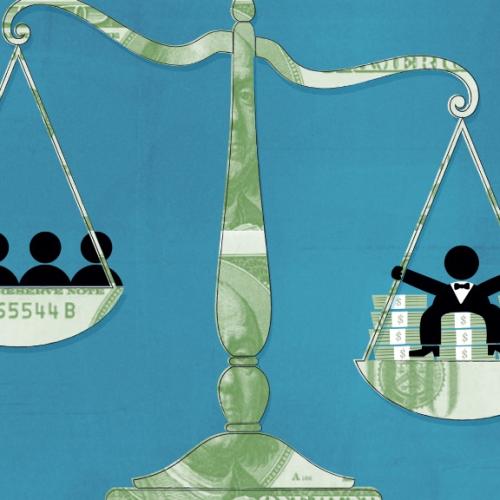
Giant Wall Street banks continue to threaten the well-being of millions of Americans. Back in 2000, before they almost ruined the economy and had to be bailed out, the five biggest banks on Wall Street held about 25 percent of the nation's banking assets. Now they hold more than 45 percent. In 2012, JPMorgan Chase, the largest bank on Wall Street, lost $6.2 billion betting on credit default swaps - and then publicly lied about the losses. It later came out that the bank paid illegal bribes to get the business in the first place. In May, the Justice Department announced a settlement of the biggest criminal price-fixing conspiracy in modern history, in which the biggest banks manipulated the $5.3 trillion-a-day currency market in a "brazen display of collusion," according to Attorney General Loretta Lynch. Wall Street's investment bankers, key traders, top executives, and hedge-fund and private-equity managers wield extraordinary power. They're major sources of campaign contributions to both parties. In addition, a lucrative revolving door connects the Street to Washington. Key members of Congress, especially those involved with enacting financial laws or overseeing financial regulators, have fat paychecks waiting for them on Wall Street when they retire. Which helps explain why no Wall Street executive has been indicted for the fraudulent behavior that led up to the 2008 crash. Or for the criminal price-fixing scheme settled in May. Or for other excesses since then.
Note: Does it at all seem strange that after the bailout in 2008, the percentage of US banking assets held by the big banks has almost doubled? Could this possibly have been planned? For more along these lines, see concise summaries of deeply revealing financial industry corruption news articles from reliable major media sources.
In the 16 months since ... the crash precipitated by the ... failure of Lehman Brothers, most of us are still ignorant about what Warren Buffett called the financial weapons of mass destruction that wrecked our economy. What we dont know will hurt us, and quite possibly on a ... devastating scale. Americans must be told the full story of how Wall Street gamed and inflated the housing bubble, made out like bandits, and then left millions of households in ruin. And without reform, another massive attack on our economic security is guaranteed. Now that it can count on government bailouts, Wall Street has more incentive than ever to pump up its risks secure that it can keep the bonanzas while we get stuck with the losses. The window for change is rapidly closing. [The] voices of Americans who have lost pay, jobs, homes and savings are either patronized or drowned out entirely by a political system where the banking lobby rules in both parties and the revolving door between finance and government never stops spinning.
Note: For many reports from reliable sources which reveal how the biggest Wall Street firms intentionally created and then cashed out on the financial crisis which destroyed the livelihoods and wealth of millions, click here.
Dozens of members of the Bush administration's domestic-security team...are collecting bigger paychecks in different roles: working on behalf of companies that sell security products, many directly to the federal agencies the officials once helped run. At least 90 officials at the Department of Homeland Security or the White House Office of Homeland Security...are executives, consultants or lobbyists for companies that collectively do billions of dollars' worth of domestic-security business. Former Homeland Security Secretary Tom Ridge...stands to profit now that Savi Technology, a maker of radio-frequency-identification equipment that the department pushed while he was secretary, is being bought by Lockheed Martin. He was appointed to the Savi board three months after resigning from the department. Former Homeland Security undersecretary Asa Hutchinson...the biggest potential for profit among Hutchinson's ventures appears to come from his role as an investor in Fortress America Acquisition. Hutchinson, before the [company's] stock was sold publicly, bought 200,000 shares for $25,000. At Friday's trading price the stock was worth more than $1.2 million. More than two-thirds of the department's most senior executives in its first years have moved through the revolving door. Federal law prohibits senior executive-branch officials from lobbying former government colleagues or subordinates for at least a year after leaving public service. But by exploiting loopholes in the law...it is often easy for former officials to do just that.
The Hamblen County Jail has been described as a dangerously overcrowded cesspool of a dungeon, with inmates sleeping on mats in the hallways, lawyers forced to meet their clients in a supply closet and the people inside subjected to horrible conditions every day. Since 2013, the number of people locked up in rural, conservative counties such as Hamblen has skyrocketed. Like a lot of Appalachia, Morristown, Tenn. ... has been devastated by methamphetamine and opioid use. Residents who commit crimes to support their addiction pack the 255-bed jail, which had 439 inmates at the end of October. While jail populations have dropped 18 percent in urban areas since 2013, they have climbed 27 percent in rural areas during that same period. Almost everyone in the county jail is there because of charges related to addiction, said the sheriff, Esco Jarnagin. Defense lawyers have proposed other options to address the crisis, including a pilot program [that] would have allowed some low-risk defendants to avoid having to post bail. But judges rejected the proposal because of fears that defendants would flee, said Willie Santana ... who is now one of four lawyers in the Hamblen County public defenders office. The whole system is geared toward generating pleas and putting people in jail, he said. For many inmates, that means the jail has been a revolving door. More than three-quarters of the 850 new cases that Mr. Santana handled in the past year involved a client who had previously been incarcerated.
Note: For more along these lines, see concise summaries of deeply revealing news articles on corruption in the courts and in the prison system.
U.S. Secretary of Agriculture Brooke Rollins, in a brief announcement unveiling new staff hires on Monday, released a blurb about Kelsey Barnes, her recently appointed senior advisor. Barnes is a former lobbyist for Syngenta, the Chinese state-owned giant that manufactures and sells a number of controversial pesticide products. Syngenta's atrazine-based herbicides, for instance, is banned in much of the world yet is widely used in American agriculture. It is linked to birth defects, low sperm quality, irregular menstrual cycles, and other fertility problems. The leadership of USDA is filled with personnel with similar backgrounds. Scott Hutchins, the undersecretary for research, is a former Dow Chemical executive at the firm’s pesticide division. Kailee Tkacz Buller, Rollins’s chief of staff, previously worked as the president of the National Oilseed Processors Association and Edible Oil Producers Association, groups that lobby for corn and other seed oil subsidies. Critics have long warned that industry influence at the USDA creates inherent conflicts of interest, undermining the agency's regulatory mission and public health mandates. The revolving door hires also highlight renewed tension with the “Make America Healthy Again” agenda promised by Health and Human Services Secretary Robert F. Kennedy, Jr. The 2025-2030 Dietary Guidelines for Americans may serve as a test of whether establishment industry influence at the agencies will undermine MAHA promises.
Note: Read our latest Substack article on how the US government turns a blind eye to the corporate cartels fueling America’s health crisis. For more along these lines, read our concise summaries of news articles on government corruption and toxic chemicals.
It had been 15 years since the U.S. invaded Iraq when, on March 19, 2018, the celebrated Iraqi novelist and poet Sinan Antoon published a blistering op-ed in The New York Times. He took readers through his observations of the steady deterioration of Iraqi society since the war began, but the most scathing words came toward the end. “No one knows for certain how many Iraqis have died as a result of the invasion 15 years ago,” Antoon wrote. “Some credible estimates put the number at more than one million. You can read that sentence again. The invasion of Iraq is often spoken of in the United States as a ‘blunder,’ or even a ‘colossal mistake.’ It was a crime. Those who perpetrated it are still at large.” That the invasion was not just a moral catastrophe but an egregious war crime has been echoed by everyone from United Nations heads to human rights leaders. With the 20th anniversary of the invasion now approaching, the sanitizing of the war’s major culprits — or, at the very least, the soft forgetting of their crimes — continues. As the very top decision-makers faded into retirement, the next layer of war pushers, enablers and overseers — the top defense and national security officials and the celebrity generals — went on to profit immensely following their leadership of an illegal war, darting through the revolving door to snag coveted corporate board seats and prestigious university appointments. Many of them remain in these positions with defense industry giants, tech firms and Wall Street investors today.
Note: For more along these lines, see concise summaries of deeply revealing news articles on military corruption and war from reliable major media sources.
There’s a revolving door of talent between the country’s premiere intelligence agency and its entertainment industry, with inspiration and influence often working both ways. The agency is targeting professionals at the intersection of arts and technology for recruitment ... and continues to cooperate with entertainment giants to inspire the next generation of creative spies. Creative minds in Hollywood and the entertainment industry have long had a role at the Central Intelligence Agency, devising clever solutions to its most vexing problems, such as perfecting the art of disguise. In the 1950s, a magician from New York named John Mulholland was secretly contracted with the agency to write a manual for Cold War spies on trickery and deception. These days, the officers said, creative skills are more valuable than ever. “You’re only limited by your own imagination — don’t self-censor your ideas,” said Janelle, a CIA public affairs officer. “We’re always looking for partners.” Some of the CIA’s most iconic missions — at least the declassified ones — document the agency’s rich history with Hollywood, including Canadian Caper, when CIA operatives disguised themselves as a film crew to rescue six American diplomats in Tehran during the Iran hostage crisis, an operation moviegoers will recognize as the plot of “Argo.” CIA analysts have also been known to leave the agency for opportunities in the entertainment industry, writing books and scripts drawing from their experiences.
Note: Learn more about the CIA’s longstanding propaganda network in our comprehensive Military-Intelligence Corruption Information Center. The US Department of Defense has had a hand in more than 800 top Hollywood films. For more along these lines, read our concise summaries of news articles on censorship and intelligence agency corruption.
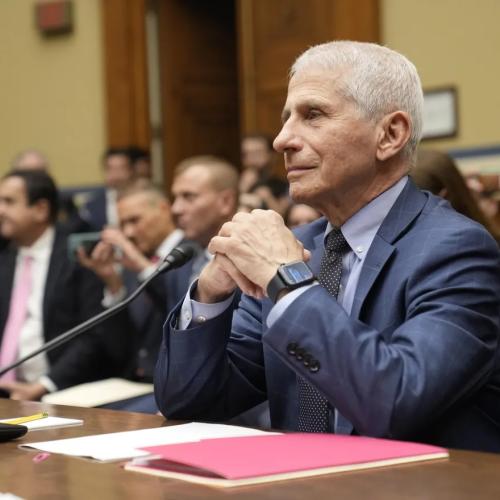
The former head of the Food and Drug Administration’s (FDA) drug division is joining Pfizer as its chief medical officer. Patrizia Cavazzoni was formerly director of the FDA’s Center for Drug Evaluation and Research (CDER) from 2020 until January, when she resigned just ahead of President Trump’s return to office. Cavazzoni previously worked at Pfizer prior to joining the FDA in 2018. The announcement spurred renewed criticisms about the common “revolving door” between the FDA and industry. Critics worry the close relationship leads to a quid pro quo and favoritism toward industry. Scott Gottlieb, FDA commissioner during Trump’s first term, now serves on the board of Pfizer. Health and Human Services (HHS) Secretary Robert F. Kennedy Jr. has long accused the FDA of being corrupt and beholden to industry influence and has pledged to root out supposed conflicts of interest across the agency. Just ahead of the election, while Trump was considering him for HHS secretary, Kennedy posted on social media that FDA employees who are “part of this corrupt system” should “pack their bags.” Watchdog group Public Citizen panned Cavazzoni’s hiring. “Cavazonni’s move demonstrates that the revolving door between the FDA and the industries it regulates is alive and well and continues to undermine the FDA’s credibility as a public health agency,” the organization’s health research group director Robert Steinbrook said.
Note: For more along these lines, read our concise summaries of news articles on corruption in government and in Big Pharma.
After a fuselage panel blew off a 737 in January, Boeing found itself in a familiar place — on Capitol Hill, under Congress’s microscope. In 2008, Congress had found that nearly 60,000 Southwest flights in 2006 and 2007 were allowed even though the airline knew the Boeing planes were out of compliance with Federal Aviation Administration safety standards. A common theme ran through Congress’ findings in those instances: The FAA was often deferential to the manufacturer whose work it was meant to police. Congressional hearings revealed Boeing had been hiring ex-government workers, people with personal connections to and intimate knowledge of Beltway politics, to pressure the agency whose primary purpose is to assure safe air travel. Critics of the practice view the Boeing hearings of 2008 and 2020 as clear evidence that a “revolving door” — when ex-government officials move to jobs in industries they had policed, sometimes returning to government after their stints in the private sector — was undermining oversight. In 2022 alone, the 20 highest-paid defense contractors hired 672 former government officials, military officers, members of Congress and senior legislative staff, according to a report commissioned by Sen. Elizabeth Warren, D-Mass. Boeing hired the most by far, 85. Boeing also hired more former government officials to executive positions than any other Pentagon contractor, the report showed.
Note: For more along these lines, see concise summaries of deeply revealing news articles on corruption in the military and in the corporate world from reliable major media sources.
Alan Davidson currently leads the National Telecommunications and Information Administration, or NTIA, the agency now crafting recommendations on how federal regulators can hold AI companies accountable. But for years, he worked as Google's chief lobbyist in Washington. NTIA's recommendations will help form the basis of the Biden administration's response to AI and machine learning. "People are warning that there are really serious downsides possible to AI, and I would want a hard-headed regulator to run down those concerns," said Jeff Hauser, the executive director of the Revolving Door Project, a watchdog focused on conflicts of interest in government. "Davidson is not likely, based on his CV, to be detached." Rapid advances in AI present a potential turning point for Silicon Valley's dominant tech firms. Notably, the first company to capture national attention with the launch of a new AI product was not a household name, like Google or Microsoft, but the independent research lab OpenAI, with its splashy launch of ChatGPT. Google reportedly sees the AI products it has in the pipeline as so pivotal to the company's future that Sergey Brin, the Google co-founder lately absorbed with outside projects, has returned to company headquarters to work directly with the team building its flagship AI system. "Google is the biggest player who cares about this issue," [said former Hill aide involved in antitrust policy]. "I cannot imagine Google doesn't view Alan Davidson as an asset to them."
Note: For more along these lines, see concise summaries of deeply revealing news articles on corruption in government and in the corporate world from reliable major media sources.
In New Orleans after Hurricane Katrina, I watched hordes of private military contractors descend on the flooded city to find ways to profit from the disaster, even as thousands of the citys residents, abandoned by their government, were treated like dangerous criminals just for trying to survive. I started to notice the same tactics in disaster zones around the world. I used the term shock doctrine to describe the brutal tactic of using the publics disorientation following a collective shock wars, coups, terrorist attacks, market crashes or natural disasters to push through radical pro-corporate measures. As Lee Fang reported ... President Donald Trump [appointed] defence contractors and lobbyists to key government positions as he seeks to rapidly expand the military budget and homeland security programmes At least 15 officials with financial ties to defence contractors have been either nominated or appointed so far. One noticeable thing about Trumps contractor appointees is how many of them come from firms that did not even exist before 9/11: L-1 Identity Solutions (specialising in biometrics), the Chertoff Group (founded by George W Bushs homeland security director Michael Chertoff), Palantir Technologies (a surveillance/big data firm cofounded by PayPal billionaire and Trump backer Peter Thiel), and many more. This creates a disastrous cocktail. Take a group of people who directly profit from ongoing war and then put those same people at the heart of government. Whos going to make the case for peace?
Note: The above article was extracted from bestselling author Naomi Klein's new book, "No Is Not Enough: Defeating the New Shock Politics". For more along these lines, see concise summaries of deeply revealing news articles about corruption in government and in the corporate world.
The secret tax-dodging strategies of the global elite in China, Russia, Brazil, the U.K., and beyond were exposed in speculator fashion by the recent Panama Papers investigation, fueling a worldwide demand for a crackdown on tax avoidance. But there is little appetite in Congress for taking on powerful tax dodgers in the U.S., where the practice has become commonplace ... especially given that some of the largest companies paying little to no federal taxes are among the biggest campaign contributors in the country. But theres another reason to remain skeptical that Congress will move aggressively on tax avoidance: Former tax lobbyists now run the tax-writing committees. Many have stints in and out of government and the lobbying profession, a phenomenon known as the reverse revolving door. In other words, the lobbyists that help special interest groups and wealthy individuals minimize their tax bills are not only everywhere on K Street, theyre literally managing the bodies that create tax law. Barbara Angus, the chief tax counsel of the House Ways and Means Committee ... previously helped lobby lawmakers on tax policy on behalf of clients such as General Electric, HSBC, and Microsoft. Mike Evans became chief counsel for the Senate Finance Committee in 2014 after leaving his job as a lobbyist for ... JP Morgan, Peabody Energy, Brown-Forman, BNSF Railway, and other corporate clients. Verizon, Boeing, and General Electric, to name a few, paid no federal income taxes in recent years.
Note: The US ranks third in the world in financial secrecy. A 2015 Guardian newspaper article further describes how the US helps the super-rich hide assets. For more along these lines, see concise summaries of deeply revealing news articles on corruption in government and in the financial industry.
A group formed this year by executives and lobbyists for the defense contracting industry is taking credit for driving the national debate on foreign policy during the 2016 presidential election, and in particular for getting Republican presidential candidates to call for escalating military action in Syria. In an email to supporters over the weekend, Mike Rogers, the founder of Americans for Peace, Prosperity, and Security, hailed the group for pushing candidates on national security. The email also highlighted a quote from Jeb Bush at an APPS forum calling for the U.S. to be prepared for a long haul war on ISIS, and a similar comment from Sen. Marco Rubio, R-Fla., who said the U.S. should engage ISIS as it had against the Taliban in Afghanistan. APPS was formed by current and former officials from Raytheon, BAE Systems, SAIC, and other major defense contractors. Lobbyists who represent the defense industry are also involved. Rogers, the former House Intelligence Committee chairman who retired from Congress last year, also represents private clients. To help elect a president who supports American engagement and a strong foreign policy, the group spends money on public events in primary states and encourages presidential candidates to take hawkish positions.
Note: For more along these lines, see concise summaries of deeply revealing news articles about government corruption and the manipulation of public perception.
Eric Holder has gone back to work for his old firm, the white-collar defense heavyweight Covington & Burling. Holder will reassume his lucrative partnership (he made $2.5 million the last year he worked there) and take his seat in an office that reportedly was kept empty for him in his absence. At issue is the extraordinary run Holder just completed as one of history's great double agents. For six years, while brilliantly disguised as the attorney general of the United States, he was actually working deep undercover ... as the best defense lawyer Wall Street ever had. After six years of letting one banker after another skate on monstrous cases of fraud, tax evasion, market manipulation, money laundering, bribery and other offenses [by] handing out soft-touch settlements to practically every Too Big to Fail bank in the world, [Holder] returns to a firm that represents many of those same companies: Morgan Stanley, Wells Fargo, Chase, Bank of America and Citigroup, to name a few. Going by the massive rises in share price observed after he handed out these deals, his service was certainly worth many billions of dollars to Wall Street. Now he will presumably collect assloads of money from those very same bankers. It's one of the biggest quid pro quo deals in the history of government service. Holder ... institutionalized a radical dualistic approach to criminal justice, essentially creating a system of indulgences wherein the world's richest companies paid cash for their sins and escaped the sterner punishments the law dictated.
Note: The revolving door between Wall Street and government officials is well known. But in Holder's case, the corporate door remained wide open throughout his time as a public servant. For more along these lines, see concise summaries of deeply revealing news articles about corruption in government and in the corporate world.
Attorneys general are now the object of aggressive pursuit by lobbyists and lawyers who use ... lavish corporate-sponsored conferences and other means to push them to drop investigations, change policies, negotiate favorable settlements or pressure federal regulators, an investigation by The New York Times has found. A robust industry of lobbyists and lawyers has blossomed as attorneys general have joined to conduct multistate investigations. But unlike the lobbying rules covering other elected officials, there are few revolving-door restrictions or disclosure requirements governing state attorneys general. The routine lobbying and deal-making occur largely out of view. The current and increasing level of the lobbying of attorneys general creates, at the minimum, the appearance of undue influence, said James E. Tierney, a former attorney general of Maine. It is undermining the credibility of the office of attorney general. Giant energy producers and service companies ... have retained their own teams of attorney general specialists, including Andrew P. Miller, a former attorney general of Virginia. An attorney general is entrusted with the power to decide which lawsuits to file and how to settle them, and they have great discretion in their work, said Anthony Johnstone, a former assistant attorney general in Montana. Its vitally important that people can trust that those judgements are not subject to undue influence because of outside forces. And from what I have seen ... those forces have intensified.
Note: For more along these lines, see these concise summaries of deeply revealing government corruption news articles from reliable sources.
A massive, $7.2 billion Army intelligence contract signed just 10 days ago underscores the central role to be played by the National Security Agency and its army of private contractors in the unfolding air war being carried out by the United States and its Gulf States allies against the Islamic State in Iraq and Syria. INSCOMs global intelligence support contract will place the contractors at the center of this fight. Under its terms, 21 companies, led by Booz Allen Hamilton, BAE Systems, Lockheed Martin and Northrop Grumman, will compete over the next five years to provide fully integrated intelligence, security and information operations in Afghanistan and future contingency operations around the world. INSCOM announced the global intelligence contract two days after President Obama, in a speech to the nation, essentially declared war on ISIS in Iraq and Syria and outlined a campaign of airstrikes and combat actions to degrade and ultimately destroy the terrorist group. The top contractors on the INSCOM contract are already involved in the war. Lockheed Martin, for example, makes the Hellfire missiles that are used extensively in U.S. drone strikes. Northrop Grumman makes the Global Hawk surveillance drone. Both companies have large intelligence units. 70 percent of the U.S. intelligence budget is spent on private contractors. This spending [is] estimated at around $70 billion a year. [There is a] revolving door between INSCOM and its contractors. The system is corrupted by the close relationships between the companies and their agencies, said [Tom] Drake, who as a whistle-blower was nearly sent to prison for exposing the waste, fraud and abuse in a contracted program at the NSA that ended up losing over $7 billion.
Note: Read a powerful essay written by a top US general showing how he was fooled into supporting wars that were generated by the powerful global elite who want never-ending war in order to keep their profits flowing.
The Pentagon has failed to maintain a complete database of generals and other high-ranking officials who consider joining defense contracting firms after leaving the military. The database was required under a 2008 law passed by Congress because of concerns about a revolving door between the Defense Department and private industry. Despite that mandate, the Pentagons database remains of marginal value, according to [a] report released by the Defense Departments Office of Inspector General, which concludes that the Pentagon may not have fully complied with the intent of this law. The report marks the second time that the IG has raised questions about compliance. In 2008, the Government Accountability Office found that 52 of the biggest defense contractors employed 2,435 former generals, senior executives and acquisition officers. Of those, 422 were in a position to work on defense contracts directly related to their former agencies and at least nine may have been working on the same contracts they previously oversaw. Top Pentagon officials involved in procurements that exceed $10 million are required to seek an ethics opinion from government attorneys before going to work for a defense contractor. Under the 2008 law, the Pentagon is supposed to keep those opinions for five years in a central database. Investigators found that some agencies were not uploading requests for ethics advice to the database. And a review of what was in the system revealed all sorts of problems.
Note: For more along these lines, see concise summaries of deeply revealing news articles about corruption in the military and in the corporate world.