













Search 14,300 Media Articles
Senators, spies and a president spent years in a pitched battle over how the history is told of one of the most controversial chapters of Americas campaign against terrorism, the detention and interrogation of prisoners in secret C.I.A. jails. Congressional officials said on Friday that the [Trump] administration had begun returning to Congress copies of a 6,700-page Senate report from 2014 about the C.I.A. program. The move raises the possibility that most of the copies could be locked in Senate vaults indefinitely or even destroyed. The classified report [tells] the story of how ... the C.I.A. began capturing terrorism suspects and interrogating them ... beyond the reach of the American judicial and military legal systems. The central conclusion of the report is that the spy agencys interrogation methods - including waterboarding, sleep deprivation and other kinds of torture - were far more brutal and less effective than the C.I.A. described to policy makers, Congress and the public. The Senate Intelligence Committee, which was run by Democrats when the executive summary was released, sent copies of the entire report to at least eight federal agencies, asking that they incorporate it into their records a move that would have made the documents subject to requests under the Freedom of Information Act. The agencies all refused to add the report to their records, and instead kept their copies locked up, prompting the American Civil Liberties Union to sue the C.I.A. for access to the full report.
Note: See a revealing New York Times article listing seven key points from this torture report. For more along these lines, see concise summaries of deeply revealing news articles about corruption in government and in the intelligence community.
The days leading up to last Fridays release of director Oliver Stones Snowden looked like one long movie trailer. The American Civil Liberties Union ... announced a campaign to win a presidential pardon for Edward Snowden, the former National Security Agency contract employee who leaked hundreds of thousands of its highly classified documents. The next day, the House Intelligence Committee released a bipartisan letter to the president that advised him against any pardon. The week before, Stone had invited me to a private screening of his movie, [along with] a small group of former government employees who were whistleblowers before Snowden and paid a high price for it. The reason they had been persecuted is that U.S. law makes no distinction between revealing illegal government activity to the press about eavesdropping on Americans or engaging in torture, and betraying the country by passing secrets for money or ideology to foreign governments. The Espionage Act was enacted nearly a century ago following World War One, and has already been amended several times. One key issue confronting the next president ... is whether the law needs to be amended again this time to separate the whistleblowers from the spies. Today ... the battle lines have been drawn between those in government both the executive branch and Congress who view the theft of government secrets as espionage, regardless of the motive, and those in civil-liberties groups and the media who see motive as a critical distinction.
Note: The above was written by James Bamford, whistleblower and author of "The Shadow Factory: The Ultra-Secret NSA From 9/11 to the Eavesdropping on America." For more along these lines, see concise summaries of deeply revealing intelligence agency corruption news articles from reliable major media sources.
For the first time, a federal judge is letting a civil lawsuit proceed against two CIA contract psychologists who designed and supervised brutal interrogation tactics that critics called torture. The ruling allows two former CIA detainees and the family of another who died in agency custody to try to win damages in federal court for the abuse they suffered at then-secret CIA prisons in the early 2000s. According to the lawsuit and a Senate Intelligence Committee report, the mistreatment included waterboarding, sleep deprivation, confinement in small boxes, rectal feeding and beatings. As the lawsuit progresses, it may shed more light on the so-called enhanced interrogation techniques that the CIA used in an effort to collect intelligence ... after the Sept. 11, 2001, attacks. Its unprecedented, [said] Dror Ladin, the American Civil Liberties Union attorney who argued the plaintiffs' case in court. No CIA torture victim has ever taken this step toward accountability. Every previous lawsuit has been shut down before this stage. It gives our clients a chance to ... finally get some justice, he said. The Department of Justice had blocked previous lawsuits aimed at the CIA's now-barred detention and interrogation program on grounds that any case could reveal secrets and compromise national security. That changed after the Senate Intelligence Committee released a report in December 2014 that exposed details about the program, including the role played by [psychologists Bruce] Jessen and [James E.] Mitchell.
Note: Read more in this ACLU article. For more along these lines, read about how the torture program fits in with a long history of human experimentation by corrupt intelligence agencies working alongside unethical scientists. For more, see this list of programs that treated humans as guinea pigs.
The Obama administration has formally endorsed provisions of an international treaty banning torture and cruel treatment of prisoners held by the United States. In a statement Wednesday to a U.N. treaty-monitoring committee in Geneva, Assistant Secretary of State Tom Malinowski said, We believe that torture, and cruel, inhuman and degrading treatment and punishment are forbidden in all places, at all times, with no exceptions. State Department legal adviser Mary E. McLeod affirmed to the committee that the definition covers all areas under U.S. jurisdiction and territory. McLeod also reaffirmed that no statement made by a person as a result of torture is admissible in any legal proceeding. The ... issue is likely to reemerge in the United States with the release of a lengthy summary of the Senate Intelligence Committees classified report on the detention and interrogation program that was put in place following the Sept. 11, 2001, attacks. The release has been held up in a dispute between the committee majority and the CIA over portions of the report the intelligence agency believes should remain secret. In her remarks to the committee, McLeod said that in the wake of the 9/11 attacks, we regrettably did not always live up to our own values. As President Obama has acknowledged, we crossed the line and we take responsibility for that.
Note: Explore a treasure trove of concise summaries of incredibly inspiring news articles which will inspire you to make a difference.
An upcoming Justice Department report from its ethics-watchdog unit, the Office of Professional Responsibility (OPR), clears the Bush administration lawyers who authored the torture memos of professional-misconduct allegations. NEWSWEEK has learned that a senior Justice official who did the final review of the report softened an earlier OPR finding. Previously, the report concluded that two key authors Jay Bybee, now a federal appellate court judge, and John Yoo, now a law professor violated their professional obligations as lawyers when they crafted a crucial 2002 memo approving the use of harsh tactics. But the reviewer, career veteran David Margolis, downgraded that assessment to say they showed poor judgment, say the sources. (Under department rules, poor judgment does not constitute professional misconduct.) The shift is significant: the original finding would have triggered a referral to state bar associations for potential disciplinary actionwhich, in Bybees case, could have led to an impeachment inquiry.
Note: The Obama administration continues to uphold the illegal policies introduced by the Bush/Cheney regime. For lots more on the realities of the fraudulent "war on terrorism", click here.
Two courts, one in Italy and one in the United States, ruled recently on the Bush administrations practice of extraordinary rendition, which is the kidnapping of people and sending them to other countries for interrogation and torture. The Italian court got it right. The American court got it miserably wrong. In Italy, a judge ruled that a station chief for the Central Intelligence Agency and 22 other Americans broke the law in the 2003 abduction of Osama Moustafa Hassan Nasr, a Muslim cleric who ended up in Egypt, where he said he was tortured. Two days earlier, a federal appeals court in Manhattan brushed off a lawsuit by Maher Arar, a Syrian-born Canadian citizen who was seized in an American airport by federal agents acting on bad information from Canadian officials. He was held incommunicado and harshly interrogated before being sent to Syria, where he was tortured. He spent almost a year in a grave-size underground cell before the Syrians let him go. It has long been established that Mr. Arar was not guilty of anything. Canada admitted that it had supplied false information to American authorities, and in 2007, it apologized and offered Mr. Arar $10 million in damages. Written by Chief Judge Dennis Jacobs, the 59-page majority opinion held that no civil damages remedy exists for the horrors visited on Mr. Arar. The ruling distorts precedent and the Constitutional separation of powers to deny justice to Mr. Arar and give officials a pass for egregious misconduct. The overt disregard for the central role of judges in policing executive branch excesses has frightening implications for safeguarding civil liberties, as four judges suggested in dissenting opinions.
Note: For many reports from major media sources of growing government threats to civil liberties, click here.
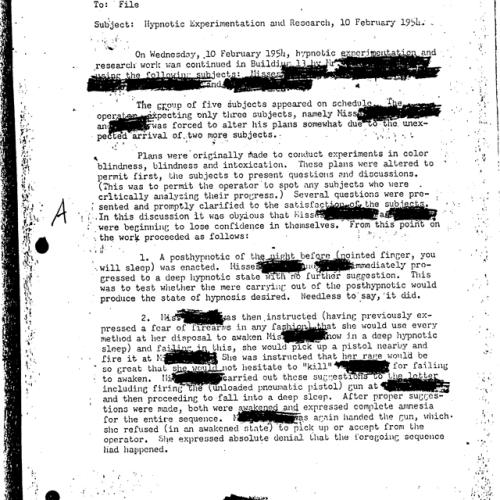
Doctors and psychologists the CIA employed to monitor its "enhanced interrogation" of terror suspects came close to, and may even have committed, unlawful human experimentation, a medical ethics watchdog has alleged. Physicians for Human Rights (PHR), a not-for-profit group that has investigated the role of medical personnel in alleged incidents of torture at Guantnamo, Abu Ghraib, Bagram and other US detention sites, accuses doctors of being far more involved than hitherto understood. PHR says health professionals participated at every stage in the development, implementation and legal justification of what it calls the CIA's secret "torture programme". The most incendiary accusation of PHR's latest report, Aiding Torture, is that doctors actively monitored the CIA's interrogation techniques with a view to determining their effectiveness, using detainees as human subjects without their consent. The report concludes that such data gathering was "a practice that approaches unlawful experimentation". Human experimentation without consent has been prohibited in any setting since 1947 [with] the Nuremberg Code, which resulted from the prosecution of Nazi doctors. In April, a leaked report from the International Committee of the Red Cross found that medical staff employed by the CIA had been present during waterboarding, and had even used what appeared to be a pulse oxymeter, placed on the prisoner's finger to monitor his oxygen saturation during the procedure. PHR is calling for an official investigation into the role of doctors in the CIA's now widely discredited programme. It wants to know exactly how many doctors participated, what they did, what records they kept and the science that they applied.
Note: To watch a video of a Democracy Now! segment on the PHR report, click here. For astounding information on how MDs participated in the CIA's mind control experiments in the past, click here.
The program began with Central Intelligence Agency leaders in the grip of an alluring idea: They could get tough in terrorist interrogations without risking legal trouble by adopting a set of methods used on Americans during military training. How could that be torture? In a series of high-level meetings in 2002, without a single dissent from cabinet members or lawmakers, the United States for the first time officially embraced the brutal methods of interrogation it had always condemned. This extraordinary consensus was possible, an examination by The New York Times shows, largely because no one involved not the top two C.I.A. officials who were pushing the program, not the senior aides to President George W. Bush, not the leaders of the Senate and House Intelligence Committees investigated the gruesome origins of the techniques they were approving with little debate. According to several former top officials involved in the discussions seven years ago, they did not know that the military training program, called SERE, for Survival, Evasion, Resistance and Escape, had been created decades earlier to give American pilots and soldiers a sample of the torture methods used by Communists in the Korean War, methods that had wrung false confessions from Americans. Even George J. Tenet, the C.I.A. director who insisted that the agency had thoroughly researched its proposal and pressed it on other officials, did not examine the history of the most shocking method, the near-drowning technique known as waterboarding.
Note: For powerful revelations of the realities behind the fake "war on terror", click here.
The top Bush administration official in charge of deciding whether to bring Guantanamo Bay detainees to trial has concluded that the U.S. military tortured a Saudi national ... interrogating him with techniques that included sustained isolation, sleep deprivation, nudity and prolonged exposure to cold, leaving him in a "life-threatening condition." "We tortured [Mohammed al-]Qahtani," said Susan J. Crawford, in her first interview since being named convening authority of military commissions by Defense Secretary Robert M. Gates in February 2007. "His treatment met the legal definition of torture. And that's why I did not refer the case" for prosecution. Military prosecutors said in November that they would seek to refile charges against Qahtani, 30, based on subsequent interrogations that did not employ harsh techniques. But Crawford, who dismissed war crimes charges against him in May 2008, said in the interview that she would not allow the prosecution to go forward. The interrogation ... was so intense that Qahtani had to be hospitalized twice at Guantanamo with bradycardia, a condition in which the heart rate falls below 60 beats a minute and which in extreme cases can lead to heart failure and death. At one point Qahtani's heart rate dropped to 35 beats per minute, the record shows.
Note: For many revealing reports on torture and other war crimes committed in the War on Terrorism and in Iraq and Afghanistan, click here.
Red Cross investigators concluded last year in a secret report that the Central Intelligence Agencys interrogation methods for high-level Qaeda prisoners constituted torture and could make the Bush administration officials who approved them guilty of war crimes, according to a new book on counterterrorism efforts since 2001. The book says that the International Committee of the Red Cross declared in the report, given to the C.I.A. last year, that the methods used on Abu Zubaydah, the first major Qaeda figure the United States captured, were "categorically" torture, which is illegal under both American and international law. The book says Abu Zubaydah was confined in a box "so small ... he had to double up his limbs in the fetal position" and was one of several prisoners to be "slammed against the walls," according to the Red Cross report. The C.I.A. has admitted that Abu Zubaydah and two other prisoners were waterboarded, a practice in which water is poured in the nose and mouth to [cause near] suffocation and drowning. The book, The Dark Side: The Inside Story of How the War on Terror Turned Into a War on American Ideals, by Jane Mayer ... offers new details of the agencys secret detention program, as well as the bitter debates in the administration over interrogation methods. Citing unnamed "sources familiar with the report," Ms. Mayer wrote that the Red Cross document "warned that the abuse constituted war crimes, placing the highest officials in the U.S. government in jeopardy of being prosecuted."
Note: For lots more on war and war crimes, click here.
For four decades, the United States has been filling the outer reaches of our atmosphere with 189 reconnaissance satellites. And for several years, artist-geographer Trevor Paglen has been keeping his eye on them. "The Other Night Sky," ... at the Berkeley Art Museum, is a result of Paglen's nocturnal efforts. "When you look at the number of satellites, what they're doing and what they represent, it is really a vision of trying to have the world in your clutches," says Paglen in his disheveled office in UC Berkeley's geography department. "[T]his project is trying to think about what ... looking at the night sky in search of truth means today." "The Other Night Sky" is not Paglen's first foray into extended studies of secret military projects. Six years ago - while working on a project about the California penal system that involved examining satellite photos of prisons - he stumbled on some classified military sites. At the time, the war on terror was in full bloom and a number of rumors about secret sites had begun to circulate. "We knew the CIA had to be running secret prisons around the world," Paglen says. "It was not in the news, but you could tell - people were being rounded up but were not being put in our jails. These hidden military sites I stumbled upon seemed really relevant to the idea that the state was disappearing people." Through numerous information requests at the national and state levels, he generated reams of knowledge about the United States' secret rendition program that was not then making news. That he had time to pursue it gave Paglen a sense of moral responsibility.
Note: Trevor Paglen's new book, I Could Tell You But Then You Would Have to be Destroyed by Me: Emblems from the Pentagon's Black World presents peculiar shoulder patches created for the weird and top secret programs funded by the Pentagon's black budget. His 2006 book, Torture Taxi: On the Trail of the CIA's Rendition Flights, was the first to focus on extraordinary rendition -- when the CIA takes captives to countries where they can be tortured or jailed without due process.
Somehow, the [Supreme Court] could not muster the four votes needed to grant review in the case of an innocent German citizen of Lebanese descent who was kidnapped, detained and tortured in a secret overseas prison as part of the Bush administrations ... anti-terrorism program. The victim, Khaled el-Masri, was denied justice by lower federal courts, which dismissed his civil suit in a reflexive bow to a flimsy government claim that allowing the case to go forward would put national security secrets at risk. Those rulings ... represented a major distortion of the state secrets doctrine, a rule ... that was originally intended to shield specific evidence in a lawsuit filed against the government. It was never designed to dictate dismissal of an entire case before any evidence is produced. The Masri case ... is being actively discussed all over the world. The only place it cannot be discussed, it seems, is in a United States courtroom. In effect, the Supreme Court has granted the government immunity for subjecting Mr. Masri to extraordinary rendition, the morally and legally unsupportable United States practice of transporting foreign nationals to be interrogated in other countries known to use torture and lacking basic legal protections. Its hard to imagine what, at this point, needs to be kept secret, other than the ways in which the administration behaved, ... quite possibly illegally, in the Masri case. The Supreme Court has left an innocent person without any remedy for his wrongful imprisonment and torture. It has ... established [itself] as Supreme Enabler of the Bush administrations efforts to avoid accountability for its actions. These are not accomplishments to be proud of.
In his first major policy address since joining the White House in April, national security adviser John Bolton offered a particularly aggressive demonstration of President Trump's "America First" agenda. He threatened the International Criminal Court, a U.N.-mandated body based in The Hague, with punitive measures should it pursue an investigation into alleged U.S. war crimes in Afghanistan. He warned that the United States would ban ICC judges and prosecutors from entering the country, sanction their funds in the U.S. financial system and punish any company or government that complies with an ICC investigation into Americans. The ICC's chief prosecutor announced last November that she had "reasonable evidence" to investigate allegations regarding the abuse, torture and even rape of at least 88 Afghan detainees, allegedly carried out by U.S. armed forces in Afghanistan and at clandestine CIA interrogation centers in Europe. The ICC is far from a perfect institution. But it still represents a key cog in the international system, and one that could yet provide justice for the hideous crimes of those like ... Myanmar's generals. Instead, it may yet become another casualty of Trump's wider war on liberal internationalism. "It is an all-out bid by Donald Trump to end the ICC, the worlds foremost criminal tribunal, and with it, the very concept of international justice," wrote the Guardian's Simon Tisdall. "Bolton is the man wielding the knife. And there is a strong possibility they will succeed."
Note: For more along these lines, see concise summaries of deeply revealing government corruption news articles from reliable major media sources.
When it comes to torture, no American officials have been more practiced in those heinous dark arts than the officers and employees of the Central Intelligence Agency who applied it to terrorism suspects after 9/11. Few American officials were so directly involved in that frenzy of abuse ... as Gina Haspel. On Tuesday, in announcing that he had dismissed Rex Tillerson as secretary of state and was replacing him with Mike Pompeo, the C.I.A. director, Mr. Trump said that Mr. Pompeos successor would be his deputy, Ms. Haspel. As an undercover C.I.A. officer, Ms. Haspel played a direct role in the agencys extraordinary rendition program, under which suspected militants were ... were tortured by agency personnel. Ms. Haspel ran the first detention site in Thailand and oversaw the brutal interrogation of the Abd al-Rahim al-Nashiri. The sessions were videotaped and the recordings stored in a safe at the C.I.A. station in Thailand until they were ordered destroyed in 2005. Ms. Haspels name was on the cable with the destruction orders. In 2013, these activities were of such concern that Senator Dianne Feinstein of California ... blocked Ms. Haspels promotion to be head of the agencys clandestine service. Senator John McCain ... a former prisoner of war, insisted that during the confirmation process, Ms. Haspel must explain the nature and extent of her involvement in the interrogation program.
Note: Read the thoughts of a former CIA counterterrorism officer on the dangers of this appointment. For more along these lines, see concise summaries of deeply revealing intelligence agency corruption news articles from reliable major media sources.
Im a taxi driver from Karachi, in Pakistan. Fifteen years ago I was sold for a bounty and taken by the U.S. military to a secret prison in Afghanistan. They mistook me for someone called Hassan Gul, and I was tortured for over a year before they flew me to Guantanamo. Theres no disputing thisits in the U.S. Senate report on torture. Ive been held here ever since then, without charge or trial. Ive been through a lot - but a new punitive medical regime at this prison might finally kill me. In May 2013, without any way of defending myself or securing my freedom, I resorted to peaceful protest, and began a hunger strike. On September 20, things abruptly changed. A new senior medical officer (SMO) arrived, bringing in a new Trump administration policy of refusing to tube-feed anyone on hunger strike. They apparently dont mind if people die because of the injustice here, because they figure nobody cares about Guantanmo anymore, and nobody will notice. Ive lost more weight than ever before - Im well under 100 pounds - but they have stopped bringing anyone to check my vitals, weigh me, or force-feed me. They want this peaceful protest over. So they refuse us access to medical care. The doctors here do what the new medical boss tells them. He wants me to beg him for food, but I will not. He is like a dictator. They tell me its my fault if I die. But all I am asking for is basic justice - a fair trial or freedom. I am innocent, but Im not allowed to prove it. I don't want to die, but they will not succeed in breaking my strike.
Note: The horrific treatment of Guantnamo Bay detainees is well documented. For more, read about the 10 Craziest Things in the Senate Report on Torture and many other questionable intelligence agency practices.
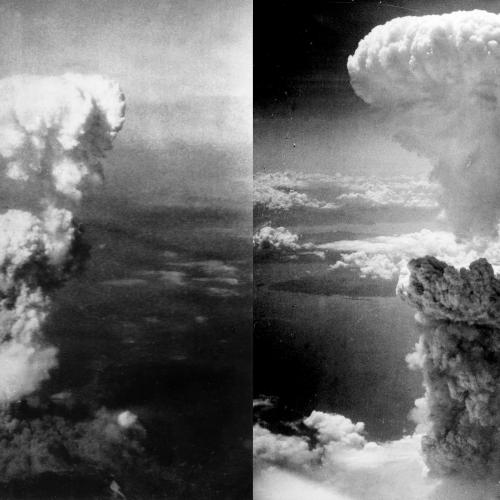
President Obama will become the first sitting U.S. president to visit Hiroshima, the Japanese city that the United States nearly destroyed with a nuclear bomb in 1945. While the bombing ... killed as many as 150,000 people, Obama is not expected to apologize during his visit. After more than 70 years, why not apologize for Hiroshima? Countries in general do not apologize for violence against other countries. What else has America not apologized for? Here are a few ideas. During the Vietnam War, the United States sprayed about 12 million gallons of Agent Orange, a herbicide, over areas of Vietnam, Cambodia and Laos. About 1 million people were disabled or suffered health problems because of contact with the herbicide. There has been no apology for this or for other controversies of the war. In 1953, democratically elected Iranian Prime Minister Mohammed Mossadegh was overthrown in a coup [that] was carried out under CIA direction ... with the aid of the British Secret Intelligence Service. The United States and Britain have never apologized for [this], with the Obama administration recently stating that it had no plans to. The United States is also widely suspected of involvement in a bloody 1973 coup that ousted socialist Chilean President Salvador Allende in 1973 and put dictator Augusto Pinochet in control. In 1977, Brady Tyson, deputy leader of the U.S. delegation to the U.N. Human Rights Commission in Geneva, did ... offer an apology for the U.S. involvement in the coup, but he was quickly disavowed by the State Department.
Note: Read a detailed description of how the New York Times suppressed and skewed the facts about the effects of the atomic bomb in order to forward the war-profiteering agenda. Although CIA involvement in the Iranian coup and the Pentagon's prolonged support for the Pinochet regime's torturers are now well-known, the intelligence community remains unapologetically corrupt.
The CIA can keep secret a nearly 7,000-page Senate report on harsh interrogation methods, as well as an internal agency review. The complete 6,963-page report compiled by the Senate Select Committee on Intelligence [is] exempt from the dictates of the Freedom of Information Act, U.S. District Judge James E. Boasberg concluded. The Senate committee report, he reasoned, remained a document under congressional control, and Congress made sure to exempt itself from FOIA. Congress has undoubted authority to keep its records secret, authority rooted in the Constitution, longstanding practice, and current congressional rules, Boasberg stated. Hina Shamsi, director of the ACLU National Security Project, voiced disappointment in the ruling. The Senate committee released a summary of the $40 million report last December, following years of back-and-forth.
Note: For more along these lines, see concise summaries of deeply revealing news articles about corruption in government and in the intelligence community.
Terror suspects held by the CIA were interrogated on the British owned island of Diego Garcia despite the repeated denials of London and Washington that any such incidents took place, a senior American official said today. Lawrence Wilkerson, who was the chief aide to former US Secretary of State Colin Powell, said the remote UK-administered military base in the Indian Ocean was used as a back-up location for nefarious activities, such as the questioning of prisoners in the wake of the 9/11 attacks. In an interview with the Vice News website, Mr Wilkerson said that Diego Garcia did not host a permanent CIA prison but was used as a back-up location to conduct interrogations. Mr Wilkerson, 70, who served as chief of staff to Mr Powell throughout the Iraq war, said he had not learnt of the CIAs alleged use of Diego Garcia until after he stepped down in 2005. He said that on the basis of his own experience while serving on the island in the 1980s and information from his sources, he believed it to be unlikely that any interrogations could have happened without the knowledge of British liaison staff who are in command of the base. The former Prime Minister Tony Blair and Foreign Secretary Jack Straw have previously denied any use of the coral atoll for rendition. It was reported last year by Al Jazeera that the Senate Intelligence Committee report, which provided an account of torture by the CIA, would confirm Diego Garcia was used for rendition with the full co-operation of the UK. When the document was published the locations of black sites had been redacted.
Note: Diego Garcia has been known to be a center for the CIA's nefarious activities for years. This newspaper article shows how the torture was sometimes done on military "prison ships" near the island to keep it hidden from the people there.
Sharp disagreement over the future of the Guantanamo Bay detention camp dominated the first Senate hearing on the issue in four years. The meeting [on July 24] of a Senate Judiciary Committee subcommittee, held in the wake of a high-profile hunger strike by inmates ... made clear that deep partisan divisions remain over whether keeping the prison open is a threat to national security or a necessity. Opened at a U.S. Navy base in Cuba in the months after the Sept. 11, 2001, terrorist attack, Guantanamo was established by President George W. Bush to hold detainees suspected of connections to global terrorism organizations. Allegations of abuse and torture of inmates have led to repeated calls for Guantanamo's closure, and Obama has campaigned twice on the issue, though Congress has passed repeated measures to keep the prison open. Sen. Richard J. Durbin (D-Ill.), who is chairman of the panel, urged Congress to support Obama's efforts, which would end the indefinite detention of prisoners without trial and either release them or charge them in American courts. "The risk of keeping it open far outranks the risk of closing it." Retired Army Maj. Gen. Paul D. Eaton, who trained the Iraqi armed forces from 2003 to 2004, testified that by continuing to violate human rights and American law, the practices at Guantanamo proved more harmful to the U.S. national security interests. "Guantanamo is a terrorist-creating organization," he said to a reporter after the hearing. "It's a terrific recruiting tool."
Note: Whether or not detainees were truly terrorists before they were imprisoned at Guantanamo, how do you think they feel about the US government after years there? You have to wonder if this isn't being done to create terrorists, just as many prisons become training grounds for criminals.
The Pentagon sent a US veteran of the "dirty wars" in Central America to oversee sectarian police commando units in Iraq that set up secret detention and torture centres to get information from insurgents. These units conducted some of the worst acts of torture during the US occupation and accelerated the country's descent into full-scale civil war. Colonel James Steele was a 58-year-old retired special forces veteran when he was nominated by Donald Rumsfeld to help organise the paramilitaries in an attempt to quell a Sunni insurgency. After the Pentagon lifted a ban on Shia militias joining the security forces, the Special Police Commando (SPC) membership was increasingly drawn from ... Shia groups such as the Badr brigades. A second special adviser, retired Colonel James H Coffman, worked alongside Steele in detention centres that were set up with millions of dollars of US funding. Coffman reported directly to General David Petraeus, sent to Iraq in June 2004 to organise and train the new Iraqi security forces. Steele, who was in Iraq from 2003 to 2005, and returned to the country in 2006, reported directly to Rumsfeld. The allegations, made by US and Iraqi witnesses in the Guardian/BBC documentary ["James Steele: America's Mystery Man in Iraq"], implicate US advisers for the first time in the human rights abuses committed by the commandos. It is also the first time that Petraeus who last November was forced to resign as director of the CIA after a sex scandal has been linked through an adviser to this abuse.
Note: For deeply revealing reports from reliable major media sources on war crimes committed by the US and UK in their post-9/11 wars of aggression, click here.