























Mental Health News Articles
Below are key excerpts of revealing news articles on mental health topics that don't often make mainstream news. If any link fails to function, a paywall blocks full access, or the article is no longer available, try these digital tools.
For further exploration, delve into our comprehensive Health and Food Corruption Information Center.

Lynn and Paul were sitting in their Seattle home one night earlier this year when their son, Michael, a 17-year-old high school football player, burst into the room and made a beeline for his mom’s purse. “I’m being blackmailed,” he said. Michael had fallen prey to what online safety and law enforcement experts call financial sextortion, in which predators befriend victims online under false pretenses, entice them to send incriminating photos and then demand payment under threat that they’ll expose the photos to family and friends. The number of sextortion cases targeting young people “has exploded in the past couple of years,” with teen boys being specific targets, said Lauren Coffren, executive director of the Exploited Children Division at the National Center for Missing and Exploited Children (NCMEC). NCMEC, which serves as a clearinghouse for records of abuse, received more than 10,000 tips of financial sextortion of minors, primarily boys, in 2022 from the public as well as from electronic service providers, such as Facebook, Instagram and Snapchat, which are required by law to report cases. By the end of July 2023, NCMEC had already received more than 12,500 reports. The repercussions of the abuse are devastating: At least a dozen boys died by suicide in 2022, after they were blackmailed, according to the FBI. Meanwhile, social media companies are playing catch up to stem the tidal wave of sextortion scams targeting children.
Note: For more along these lines, see concise summaries of deeply revealing news articles on sexual abuse scandals from reliable major media sources.
There is growing evidence that simple, everyday changes to our lives can alter our brains and change how they work. Our brain has an incredible ability to adapt, learn and grow because by its nature, it is plastic – that is, it changes. This is called neuroplasticity, which simply means the brain's ability to adapt and evolve over time in structure and function. Every time we learn a new skill, our brain adapts. Neuroscientists and psychologists are now finding that we have the power to control that to some extent. And there's good reason to want to boost our brain – an increasing number of studies suggest it can play a role in delaying or preventing degenerative brain diseases. Research has found that after only a few months of mindfulness training, certain depression and anxiety symptoms can ease – though as with any complex mental health problem, this may of course vary depending on individual circumstances. There's more to it. Mindfulness can change the brain. That's because when the stress hormone cortisol increases and remains high, "it can become toxic for your brain", says [psychologist Thorsten] Barnhofer. Stress can also directly inhibit neuroplasticity, so managing it allows the brain to remain more plastic. What's fascinating about this area of research is that mindfulness, which appears to be such a simple process, can have a measurable effect. "What mindfulness does is it can buffer stress, you become aware of challenges," explains Barnhofer.
Note: Explore more positive stories like this in our comprehensive inspiring news articles archive focused on solutions and bridging divides.
President Joe Biden announced that his administration planned to scrutinize a Trump-era decision to allow the continued use of chlorpyrifos, a pesticide that can damage children's brains. The Environmental Protection Agency went on to ban the use of the chemical on food. Yet when officials from around the world gathered in Rome last fall to consider whether to move forward with a proposed global ban on the pesticide, chlorpyrifos had a surprising defender: a senior official from the EPA. Karissa Kovner, a senior EPA policy adviser, is a key leader of the U.S. delegation at a United Nations body known as the Stockholm Convention, which governs some of the worst chemicals on the planet. Kovner made it clear that the U.S. was not ready to support taking the next step through the convention to provide similar protections for the rest of the world. The U.S. is known for throwing a wrench into the international convention's efforts to restrict pollutants. "They're usually seen as a country that raises objections to the regulation of chemicals," said [attorney] David Azoulay. Chlorpyrifos is so harmful that the American government not only banned its use on food but also barred the import of fruits and vegetables grown with it. Persistent organic pollutants ... lodge in fat cells, allowing them to spread from contaminated animals to anything that eats them. Humans sit at the top of this polluted food pyramid, and we can pass the chemicals to our babies through the umbilical cord before birth and through breast milk afterward.
Note: Did you know that chlorpyrifos was originally developed by Nazis during World War II for use as a nerve gas? Read more about the history and politics of chlorpyrifos, and how U.S. regulators relied on falsified data to allow its use for years. For more along these lines, see concise summaries of deeply revealing news articles on corruption in government and in the food system from reliable major media sources.
Nicholas England, a healthy 22-year-old from Virginia, shot himself in the head in 2017, less than two weeks after he started taking an allergy medicine that had been linked for years to episodes of depression and suicidal thinking. His parents soon started exploring a lawsuit against Merck, the developer of the blockbuster asthma and allergy drug, Singulair. Nicholas had no history of mental-health problems, they said. The Englands were shocked to learn from legal advisers that they had no case. Like countless other potential plaintiffs, they had run into one of Corporate America's most effective liability shields: the legal doctrine of preemption, the principle that federal law supersedes state law. Armed with U.S. Supreme Court rulings on preemption starting in the 1990s, companies increasingly argue that federally regulated products or services should be immune from lawsuits alleging state-law violations. State laws historically have provided the legal basis for some of the most common lawsuits against U.S. companies alleging injuries, deaths or illnesses caused by negligence or defective products. Pending lawsuits against Merck allege that the company's own early research indicated the drug could impact the brain but that Merck downplayed any risks in statements to regulators. It wasn't until 2020 that the FDA slapped its most serious warning, called a "black box," on the drug's label. By that time, the FDA had received more than 80 reports of suicides in people taking the medicine.
Note: Read more about Singulair and its dangers to human health, along with the tremendous financial conflicts of interests resulting in the FDA protecting the pharmaceutical industry first, and the health of the people second. For more along these lines, see concise summaries of deeply revealing news articles on pharmaceutical industry corruption from reliable major media sources.
U.S. Surgeon General Vivek Murthy declared loneliness as an epidemic in the country on Tuesday, outlining a series of actions Americans can take to address the growing issue. “Our epidemic of loneliness and isolation has been an underappreciated public health crisis that has harmed individual and societal health. Our relationships are a source of healing and well-being hiding in plain sight — one that can help us live healthier, more fulfilled, and more productive lives,” Murthy said in a statement. Murthy issued an advisory laying out the consequence of loneliness, which can include a 29 percent increased risk of heart disease, a 32 percent increased risk of stroke, a 50 percent increased risk of developing dementia for older adults, and an increased risk of premature death by more than 60 percent. Strengthening social infrastructure, like building more parks and libraries, and enacting pro-connection policies, like having accessible public transportation or paid family leave, are two of Murthy’s pillars he says will help overcome loneliness. He also said reforming digital environments is a pillar of his plan, saying people must be aware of how online environments may negatively affect their social connections. The other pillars of his plan include mobilizing the health care sector, deepening knowledge of loneliness and social connections, and cultivating a culture of connections. The advisory said everyday practices, like acting kind and respectful toward one another, can help strengthen social connections.
Note: For more along these lines, see concise summaries of deeply revealing news articles on health from reliable major media sources.
Psychosis is often thought to be genetic, or a symptom of brain chemistry gone awry, which is what I was led to believe for much of my journey through the traditional mental health system. [My son] Zach’s first diagnosis was psychosis NOS (Not Otherwise Specified). Later ... he was classified with either schizophrenia, paranoid schizophrenia, depression with psychotic symptoms or, more recently, schizoaffective disorder. I craved solutions, and the more I searched the more confused I became. First, I discovered that no disease markers show up in brain scans or blood tests for any of these so-called disorders. Nobody seems to know for sure what is really going on, which feels more like a spin-the-bottle game than science. The effects of the antipsychotic drugs were intolerable for Zach, far worse than the symptoms that they were meant to alleviate. In Finland, a more radical understanding of extreme distress led to a programme called Open Dialogue which aims to avoid hospitalisation and medication with therapy that revolves around families and other networks, and involves contact, preferably in the person’s home. It has contributed to lowering the suicide rate in Finland; one of the highest in the world in the 1990s, it has dropped by 50% since Open Dialogue began. Despite a quarter of a trillion pounds spent on mental health in Britain since the 1980s, it is the only area of medicine where outcomes have stalled, and by some measures are even going backwards.
Note: Explore more positive stories like this in our comprehensive inspiring news articles archive focused on solutions and bridging divides.
A study published Monday ... outlines how expansive the market for people’s health data has become. After contacting data brokers to ask what kinds of mental health information she could buy, researcher Joanne Kim reported that she ultimately found 11 companies willing to sell bundles of data that included information on what antidepressants people were taking, whether they struggled with insomnia or attention issues, and details on other medical ailments, including Alzheimer’s disease or bladder-control difficulties. Some of the data was offered in an aggregate form that would have allowed a buyer to know, for instance, a rough estimate of how many people in an individual Zip code might be depressed. But other brokers offered personally identifiable data featuring names, addresses and incomes, with one data-broker sales representative pointing to lists named “Anxiety Sufferers” and “Consumers With Clinical Depression in the United States.” Some even offered a sample spreadsheet. The Health Insurance Portability and Accountability Act, known as HIPAA, restricts how hospitals, doctors’ offices and other “covered health entities” share Americans’ health data. But the law doesn’t protect the same information when it’s sent anywhere else, allowing app makers and other companies to legally share or sell the data. Some of the data brokers offered ... opt-out forms. But ... many people probably didn’t realize the brokers had collected their information in the first place. Privacy advocates have for years warned about the unregulated data trade, saying the information could be exploited by advertisers or misused for predatory means. The health-data issue has in some ways gotten worse, in large part because of the increasing sophistication with which companies can collect and share people’s personal information — including not just in defined lists, but through regularly updated search tools and machine-learning analyses.
Note: For more along these lines, see concise summaries of deeply revealing news articles on corporate corruption and the disappearance of privacy from reliable major media sources.
Loneliness has become a global public health concern. Countries including Britain and Japan have appointed “ministers of loneliness” to help tackle the problem. In the United States, then-Surgeon General Vivek H. Murthy issued a public health advisory on loneliness, stating that the risk for premature death from loneliness is akin to smoking up to 15 cigarettes a day. What if, instead of trying to “fix” the individual, strategies focused on shaping the environment in a way that facilitates social connection? Recently, researchers have been trying to leverage nature as a way to bring people together and reduce negative feelings about social isolation. They say living in what is known as a “lonelygenic environment” — one dominated by cars and concrete instead of grass and trees — can cause or aggravate loneliness. Even if you live in a lonelygenic environment, experts say, spending just an hour or two in nature per week ... may help people feel less isolated. One proposed approach for tackling loneliness as a public health issue is through social prescribing, where physicians connect their patients with non-medical services in the community similar to how they prescribe medication. Nature comes in many forms. An ongoing study by [Matthew] Browning and his colleagues investigates the amount of time a representative sample of Americans spends outdoors in nature. “What we find is that nature is, for most people ... watching their kids play soccer outside or grilling in the backyard.”
Note: What if the negative news overload on America’s chronic illness crisis isn’t the full story? Check out our Substacks to learn more about the inspiring remedies to the chronic illness and loneliness crisis! Explore more positive stories like this on healing our bodies and mental health.
The average American today spends nearly 90 percent of their time indoors. Yet research indicates that children benefit greatly from time spent in nature; that not only does it improve their cognition, mood, self-esteem and social skills, but it can also make them physically healthier and less anxious. “Outdoor time for children is beneficial not just for physical health but also mental health for a multitude of reasons,” says Janine Domingues, a senior psychologist in the Anxiety Disorders Center at the Child Mind Institute. “It fosters curiosity and independence. It helps kids get creative about what they can do … and then just moving around and expending energy has a lot of physical health benefits.” [A] 2022 systematic review found that time outdoors can improve prosocial behaviors, including sharing, cooperating and comforting others. Research has found that nature can be particularly helpful for those who’ve had adverse childhood experiences. Such experiences can include growing up with poverty, abuse or violence. One 2023 study published in the Journal of Environmental Psychology looked at how making art in nature affected about 100 children in a low-income neighborhood in England. Their confidence, self-esteem and agency all improved. For all these reasons, it’s important for even very young children to have access to nature where they already are, says Nilda Cosco, a research professor.
Note: Explore more positive stories like this about reimagining education.
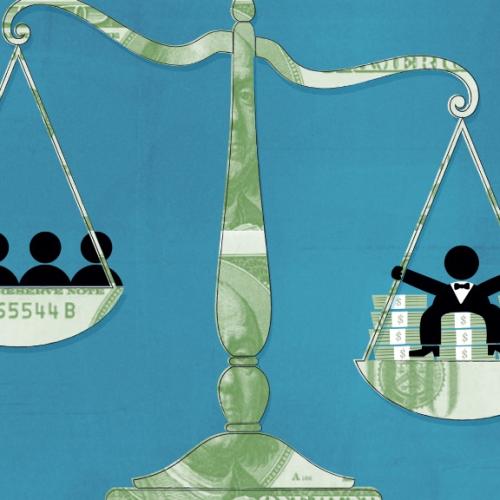
People who live in societies with wide gaps between the wealthy and everyone else turn out to live briefer lives than people who call more equal societies home. People who live in more equal societies, meanwhile, tend to live happier lives than their unequal-society counterparts. They face less crime. Their economies crash less often. Recent studies from Northwestern’s Maryam Kouchaki and her colleagues ... have been illuminating how unequal distributions of income and wealth are serving to increase “the acceptability of self-interested unethical behaviors.” The bottom line: People who live in highly unequal societies feel “a lower sense of control” and look less askance at unethical behaviors, either from others or from themselves, than do people who live in distinctly more equal societies. “Overall,” Kouchaki and her colleagues conclude, “our results suggest inequality changes ethical standards.” Other recent psychological research has come to the same core conclusion. “When are people more open to cheating?” asked the Canadian researchers Anita Schmalor, Adrian Schroeder, and Steven Heine in a paper published earlier this year. “Economic inequality makes people expect more everyday unethical behavior.” The longer we let inequality define our contemporary daily lives, this new research helps us understand, the more the unethical behavior all around us will seem to reflect just the way our world naturally works. Economic inequality, in effect, normalizes unethical behavior.
Note: For more along these lines, see concise summaries of deeply revealing news articles on income inequality and mental health from reliable major media sources.
The number of kids in America living with autism is apparently growing at a considerable rate, according to a new study. Published in JAMA Pediatrics ... the new study reveals a nearly 52% increase in autism spectrum disorder diagnoses among children in the United States between 2017 and 2020. The National Institute of Mental Health says that "autism spectrum disorder (ASD) is a neurological and developmental disorder that affects how people interact with others, communicate, learn, and behave." One out of every 30 kids in America has that developmental disorder. ASD rates in American kids have been rising since 2014, only dipping slightly in 2016 and 2017 before resuming the increasing pattern all the way to 2020. The Centers for Disease Control and Prevention (CDC) conducts the National Health Interview Survey every year. The survey data shows that about 2.24% of kids were diagnosed with ASD in 2014, which climbed all the way to 2.76% before dipping to 2.29% in 2017. As of 2020, the percentage of American youth who have been diagnosed with ASD has reached 3.49%. Around 4.64% of boys were diagnosed with ASD, while only 1.56% of girls received the same diagnosis.
Note: Such a huge problem, yet almost no studies comparing non-vaccinated children with those vaccinated. One of the few studies conducted show unvaccinated children were healthier. An investigation of Amish children found practically no cases of autism. For more along these lines, see concise summaries of deeply revealing news articles on health from reliable major media sources.
For most of his adult life, Aaron Presley, age 34, felt like a husk of a person, a piece of "garbage." Then, all at once, the soul-crushing, depressive fog started to lift, and the most meaningful experience of his life began. The turning point for Presley came as he lay on a psychiatrist's couch at Johns Hopkins University. He had consumed a large dose of psilocybin, the active ingredient in what's more commonly known as magic mushrooms, and entered a state that could best be described as lucid dreaming. Visions of family and childhood triggered overwhelming and long-lost feelings of love, he says. Presley was one of 24 volunteers taking part in a small study aimed at evaluating the effectiveness of a combination of psychotherapy and this powerful mind-altering drug to treat depression—an approach that, should it win approval, could be the biggest advance in mental health since Prozac in the 1990s. Depression ... affects 320 million people around the world. Roughly one-third of those who seek treatment won't respond to verbal or conventional drug therapies. Magic-mushroom therapy is offering some hope for these hopeless cases. In the Hopkins study, published last year in JAMA Psychiatry, the therapy was four times more effective than traditional antidepressants. Two-thirds of participants showed a more-than 50-percent reduction in depression symptoms after one week; a month later, more than half were considered in remission, meaning they no longer qualified as being depressed.
Note: Read more about the healing potentials of mind-altering drugs. Explore a treasure trove of concise summaries of incredibly inspiring news articles which will inspire you to make a difference.
As people across the globe grappled with higher levels of stress, depression and anxiety this past year, many turned to their favorite comfort foods. But ... the sugar-laden and high-fat foods we often crave when we are stressed or depressed, as comforting as they may seem, are the least likely to benefit our mental health. Instead, whole foods such as vegetables, fruit, fish, eggs, nuts and seeds, beans and legumes and fermented foods like yogurt may be a better bet. Historically, nutrition research has focused largely on how the foods we eat affect our physical health, rather than our mental health. But ... a growing body of research has provided intriguing hints about the ways in which foods may affect our moods. A healthy diet promotes a healthy gut, which communicates with the brain through what is known as the gut-brain axis. Microbes in the gut produce neurotransmitters like serotonin and dopamine, which regulate our mood and emotions, and the gut microbiome has been implicated in mental health outcomes. “The gut microbiome plays a shaping role in a variety of psychiatric disorders, including major depressive disorder,” a team of scientists wrote in the Harvard Review of Psychiatry. “Mental health is complex,” said Dr. Jacka ... at Deakin University in Australia. “Eating a salad is not going to cure depression. But there’s a lot you can do to lift your mood and improve your mental health, and it can be as simple as increasing your intake of plants and healthy foods.”
Note: Explore a treasure trove of concise summaries of incredibly inspiring news articles which will inspire you to make a difference.
In a landmark decision, a Los Angeles jury has found that social media company Meta and video streaming service YouTube harmed a young user with addictive design features that led to mental health distress, including body dysmorphia, depression and suicidal thoughts. Commentators have referred to this as social media’s “Big Tobacco” moment and further lawsuits are pending. Neuroscience shows that heavy social media use can overstimulate the teen brain’s still-developing reward pathways in ways similar to addictive behaviours like gambling. This immature system also makes teenagers more sensitive to social feedback and less able to cope with rejection. Many Canadian teens describe [being] constantly connected online, yet increasingly disconnected in real life. They report pressure to present idealized versions of themselves and to keep up with peers. Trial data in a case between the U.S. Federal Trade Commission and Meta show that only a small fraction of time on Meta platforms involves engaging with friends — about seven per cent on Instagram and 17 per cent on Facebook. The rest is mostly scrolling and watching rather than interacting. This results in an illusion of connection while deepening a sense of isolation. Research involving more than 9,000 adolescents across eight countries found a strong association between problematic social media use and higher rates of depression and anxiety. Large studies across high-income countries consistently link heavy social media use to poorer physical health outcomes too, including shorter sleep and higher rates of obesity.
Note: Former Facebook executive Tim Kendall told Congress that the company intentionally made its product as addictive as cigarettes. Meta whistleblower Sarah Wynn-Williams told US senators that the company targeted teenage girls with beauty and weight-loss advertisements during moments of heightened vulnerability such as after deleting a selfie. According to her testimony, Meta could detect when users were feeling "worthless," "helpless," or like a "failure," and then make that information available to advertisers. For more along these lines, read our concise summaries of news articles on Big Tech and mental health.
Loneliness not only affects how we feel in the moment but can leave lasting imprints on our personality, physiology, and even the way our brains process the social world. A large study of older adults [found] that persistent loneliness predicted declines in extraversion, agreeableness, and conscientiousness—traits associated with sociability, kindness, and self-discipline. At the same time, higher levels of neuroticism predicted greater loneliness in the future, suggesting a self-reinforcing cycle. Although social media promises connection, a large-scale study published in Personality and Social Psychology Bulletin suggests that it may actually fuel feelings of loneliness over time. Researchers found that both passive (scrolling) and active (posting and commenting) forms of social media use predicted increases in loneliness. Surprisingly, even active engagement—often believed to foster interaction—was associated with growing disconnection. Even more concerning was the feedback loop uncovered in the data: loneliness also predicted increased social media use over time, suggesting that people may turn to these platforms for relief, only to find themselves feeling even more isolated. Lonely individuals also showed greater activation in areas tied to negative emotions, such as the insula and amygdala. This pattern suggests that lonely people may be more sensitive to social threat or negativity, which could contribute to feeling misunderstood or excluded.
Note: For more along these lines, read our concise summaries of news articles on mental health and Big Tech.
People’s connection to nature has declined by more than 60% since 1800, almost exactly mirroring the disappearance of nature words such as river, moss and blossom from books, according to a study. The study by Miles Richardson, a professor of nature connectedness at the University of Derby, accurately tracks the loss of nature from people’s lives over 220 years by using data on urbanisation, the loss of wildlife in neighbourhoods and, crucially, parents no longer passing on engagement with nature to their children. In the research published in the journal Earth, Richardson also identified the disappearance of natural words from books between 1800 and 2020, which peaked at a 60.6% decline in 1990. The modelling predicts an ongoing “extinction of experience” with future generations continuing to lose an awareness of nature because it is not present. Increasing the availability of biodiverse green spaces in a city by 30% may look like radical positive progress for wildlife and people but Richardson said his study suggested a city may need to be 10 times greener to reverse declines in nature connection. Measures to increase popular engagement with the natural world were not effective at reversing long-term declines in nature connectedness. More effective, according to the study, are measures instilling awareness and engagement with nature in young children and families, such as forest school nurseries.
Note: For more along these lines, read our concise summaries of news articles on mental health and environmental destruction.
Tasha Hedges took Xanax for 20 years to treat her anxiety and panic attacks, exactly as a psychiatrist had prescribed it. Then in 2022, that doctor unexpectedly died. Discontinuing the drug typically requires decreasing the dose slowly over months or even years, a process called tapering. Ms. Hedges stopped cold turkey. Debilitating withdrawal symptoms followed: hot flashes, cold sweats, restless legs, the shakes and teeth grinding. “It was a nightmare,” she said. Two years after discontinuing the medication, she is still dealing with the fallout. “My brain has not been the same.” In 2019, an estimated 92 million benzodiazepine prescriptions were dispensed in the United States. Sometimes patients stay on them for years without regular check-ins to see if the drugs are still needed or well tolerated, said Dr. Edward K. Silberman ... who has frequently written about benzodiazepines. Going off the drugs — even after a short period — requires a gradual process. However, many practitioners are not well trained in tapering the prescriptions. In 2023, advocates for those injured by benzodiazepines gave a name to the varied long-lasting symptoms that may emerge during the use, the tapering or the discontinuation of the drugs: benzodiazepine-induced neurological dysfunction, or BIND. Not everyone will experience BIND, they acknowledge. And with the right tapering plan, experts say, side effects can be minimized.
Note: For more along these lines, read our concise summaries of news articles on Big Pharma corruption and mental health.
Meta whistleblower Sarah Wynn-Williams, the former director of Global Public Policy for Facebook and author of the recently released tell-all book “Careless People,” told U.S. senators ... that Meta actively targeted teens with advertisements based on their emotional state. In response to a question from Sen. Marsha Blackburn (R-TN), Wynn-Williams admitted that Meta (which was then known as Facebook) had targeted 13- to 17-year-olds with ads when they were feeling down or depressed. “It could identify when they were feeling worthless or helpless or like a failure, and [Meta] would take that information and share it with advertisers,” Wynn-Williams told the senators on the subcommittee for crime and terrorism. “Advertisers understand that when people don’t feel good about themselves, it’s often a good time to pitch a product — people are more likely to buy something.” She said the company was letting advertisers know when the teens were depressed so they could be served an ad at the best time. As an example, she suggested that if a teen girl deleted a selfie, advertisers might see that as a good time to sell her a beauty product as she may not be feeling great about her appearance. They also targeted teens with ads for weight loss when young girls had concerns around body confidence. If Meta was willing to target teens based on their emotional states, it stands to reason they’d do the same to adults. One document displayed during the hearing showed an example of just that.
Note: Facebook hid its own internal research for years showing that Instagram worsened body image issues, revealing that 13% of British teenage girls reported more frequent suicidal thoughts after using the app. For more along these lines, read our concise summaries of news articles on Big Tech and mental health.
Oregon has for years struggled with a drug crisis, reporting one of the highest rates of substance use disorders in the US and ranking last in the nation for access to treatment. The problem is systemic, rooted in decades of failure to invest in the level of behavioral health services needed for people with mental illnesses and addiction. The Pacific north-west state’s significant affordable housing shortage has compounded the challenges, as people languish on the streets without care. On 12 November 2024, Cameron Washam, 45, was lying on the street by Portland’s Union Station, on the brink of death. He and his wife, Christina Bell, 47, had long struggled with homelessness and addiction. Workers from a Portland street outreach initiative coordinated by the Mental Health and Addiction Association of Oregon (MHAAO), a non-profit dedicated to peer recovery services, approached and offered help, saying they could immediately take them to a detox program. They entered detox, Washam got emergency surgery for his infection, and after eight days, they were placed in an outpatient program, then a sober recovery home. The outreach effort [is] called the Provider-Police Joint Connection Program. Since its launch, the program has connected 1,005 people to services, including 651 who received access to programs on the same day outreach teams met them and 159 who got into detox and treatment.
Note: Explore more positive stories on healing our bodies and repairing criminal justice.
Logan Sowell’s suicide in July 2021 is one of at least seven in the past five years involving the Marine Corps’ stable of drill instructors, according to military casualty reports obtained through Freedom of Information Act requests. In 2023, three occurred at Parris Island within less than three months. A study completed by the Marine Corps in 2019 found that during the previous decade, 29 drill instructors either ended their lives or openly acknowledged they had contemplated doing so — an aberration the study’s authors characterized as startlingly high compared with the occurrence of suicidal ideation among Marines who had never held that job. Rates of addiction and divorce among drill instructors also were higher, researchers found. Critics and relatives of those who died accuse the Marine Corps of fostering an environment that contributed to their deaths. They describe routine 90-hour-plus workweeks, sleep deprivation and an always-on culture that frequently caused the job’s requisite intensity to seep into their personal lives, igniting disputes with loved ones. Others detailed bouts of depression or alcohol dependency. The Marine Corps lacks adequate services for those who are struggling and need help, and tacitly condones a culture that stigmatizes those who seek it. “We put a drastic expectation on them to act perfect,” said a Marine officer who has supervised dozens of drill instructors. This top-down pressure ... “causes this stress that trickles into their home life.”
Note: Read about the tragic suicides and traumas of military drone operators. For more along these lines, read our concise summaries of news articles on military corruption and mental health.
Important Note: Explore our full index to revealing excerpts of key major media news articles on several dozen engaging topics. And don't miss amazing excerpts from 20 of the most revealing news articles ever published.