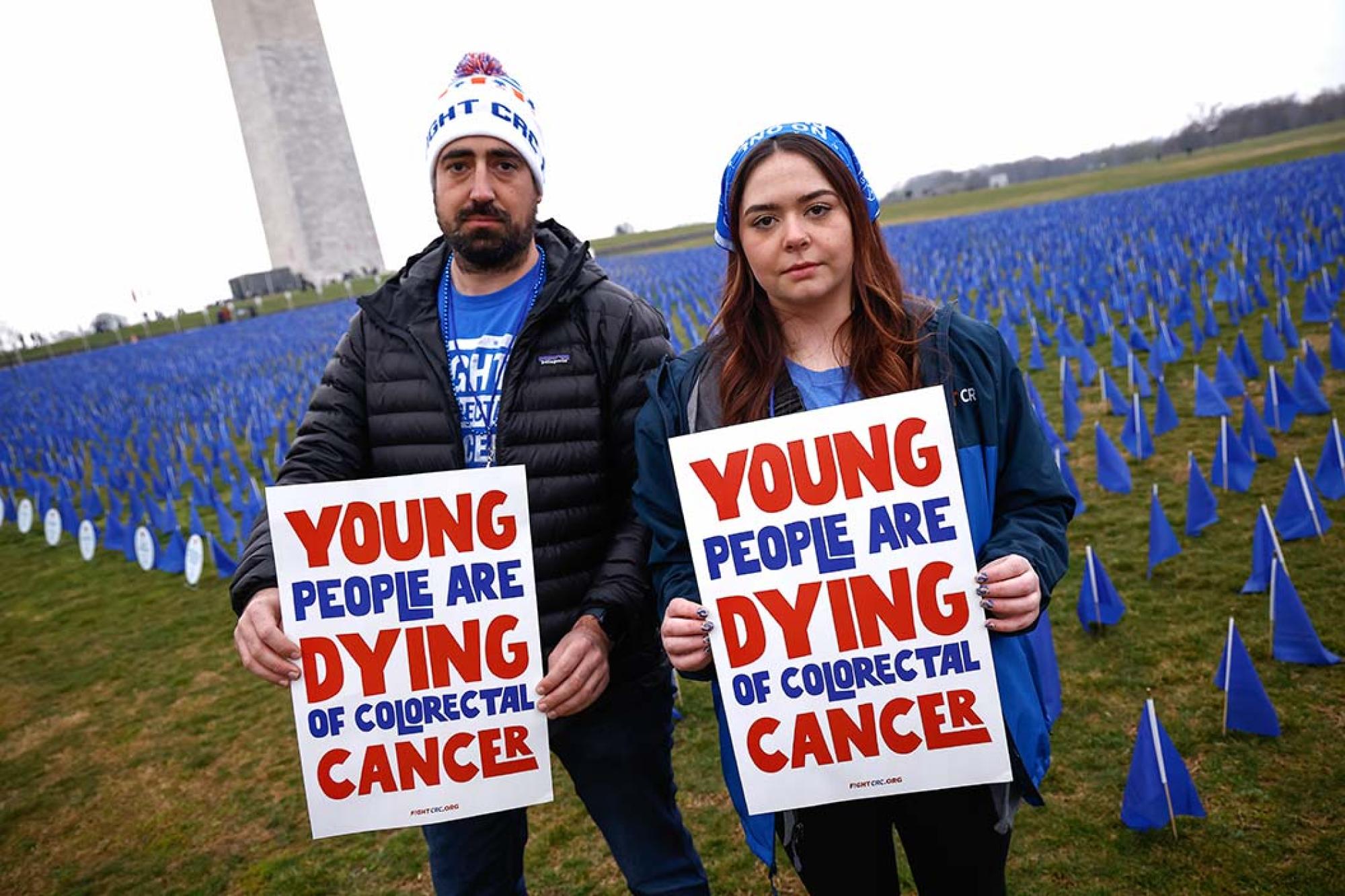
Colon cancer rates are rocketing among athletic young people in their 20s, 30s, and 40s, and survival rates are dropping. The most convenient explanations for the rise in young colon cancer are diet and weight. We know diet can influence colorectal cancer risk, and it's something people can fix, to a degree. Plus, our diets have changed. These days we all consume more sugar, more ultra-processed foods, more oil and butter, while moving less. Still, doctors say the trend we're seeing now defies neat categories of genetics or lifestyle, and it's baffling. Other factors are clearly messing with our digestive systems, but they're tough to pinpoint. Pollution, microplastics, and artificial light " all are pervasive in society, yet very tricky to study. Something shifted in the 1960s. Everyone born after 1960 has a higher colon cancer risk than previous generations. In the US, young colon cancer rates have been rising about 3% every year since the early 1990s, according to National Cancer Institute data. It's hard to dismiss the role our changing food landscape has played. We are undoubtedly eating worse than our grandparents did 100 years ago. Take fiber, for example. Found in abundance in whole plant foods like beans, it is a nutrient clearly associated with lower risk of cancer. Some of the most popular foods in US supermarkets ... have fiber stripped out during processing, and extra salt, sugar, and oils added in to make them more palatable and shelf-stable.
Latest
Latest News
Each news summary is created according to strict standards. Here's how we do it.
Each summary is created using a consistent editorial procedure. The target length is approximately 16 lines of 11-point Arial text in a 650-pixel-wide column. Up to 25% of a summary may be set in bold to emphasize the most important ideas. Summaries are composed of verbatim excerpts presented in the same sequence as they appear in the original news source, with very minor editorial additions. Where material has been omitted between excerpts, the omission is indicated with ellipses (...). Any words added by an editor for clarity or context appear in [brackets]. Our original news editor was Fred Burks. Tod Fletcher edited most summaries from 2007 through 2014, and Mark Bailey has served as news editor since 2014.