



















Media Articles
Below are key excerpts of revealing news articles from reliable news media sources. If any link fails to function, a paywall blocks full access, or the article is no longer available, try these digital tools.
For further exploration, delve into our comprehensive Information Centers.

The U.S. spends more on healthcare than any country in the world [yet] consistently ranks near the bottom of high-income nations for life expectancy, chronic disease burden and preventable deaths. While many drugs are lifesaving and essential, prescription medications are now recognized as the third leading cause of death in industrialized countries, behind only heart disease and cancer. Research consistently shows that up to 80% of chronic conditions, including cardiovascular disease, Type 2 diabetes and certain cancers, could be prevented or significantly reduced through natural health approaches such as nutrition, lifestyle change, supplements and other preventive interventions. If this is the case, why are these approaches not more central to chronic disease prevention and care? Health outcomes ... are shaped by who writes the rules, who controls the market and by whom health information is controlled. Natural health is constrained at the level of evidence, where money determines what qualifies as “science.” In 1991, about 80% of industry-funded clinical trials were conducted in academic medical centers; by 2004, that figure had fallen to 26%, replaced by for-profit research organisations contracted by drug companies. This shift has untold impact: Study designs, publications, regulations and medical education reflect pharmaceutical interests, leaving natural therapies — without comparable capital — unable to produce the forms of evidence regulators, insurers and clinicians are structurally conditioned to demand. Following the Myriad case, naturally occurring substances are largely excluded from patent protection, leaving high research costs with little legal protection. Without intellectual property protection, investors see little upside, research dries up and innovation slows. Combined with regulatory capture and heavy pharmaceutical lobbying, control of money and markets systematically prioritises pharmaceutical over natural health and substances long before consumers are offered a real choice.
Note: Watch an educational presentation by WantToKnow.info director Amber Yang on the deepest challenges facing our media and public health systems today, including real world solutions that move beyond disease-care. For more along these lines, check out our Substack, Inspiring Remedies to the Chronic Illness Crisis.
Despair is nothing more than ... reducing the immense vista of reality to a particular interpretation of a particular moment. While orbiting a war-torn world aboard the International Space Station, astronaut Chris Hadfield took questions from earthlings in a Reddit AMA. Asked for his advice to anyone on the brink of giving up and his own approach to those moments of darkest despair, he offers: "I remind myself that each sunrise is a harbinger of another chance, and to take quiet, unrecognised pride in the accomplishments I get done each day. Each evening my intended list is unfinished, but I celebrate what I’ve done, and resolve to do better tomorrow. Also, nothing is ever as good or as bad as it first seems. Keep at it with optimism — it is your life to tinker with, learn from, live and love." This ongoingness of creation — the fact that this world is unfinished and our story unwritten — is nowhere more visible, life’s ceaseless insistence on itself nowhere more palpable, than when seen on the scale of the entire planet. Hadfield captures this elemental calibration of perspective: "It’s endlessly surprising how continually beautiful our changing, ancient, gorgeous Earth is. Every one of my 1,650 orbits, I saw something new. And I was up long enough to watch the seasons swap ends on the planet, like Mother Earth taking one breath out of 4.5 billion breaths." It is not unimportant that the word “holy” shares its Latin root with “whole” and has its Indo-European origins in the notion of the interleaving of all things.
Note: Former NASA astronaut Ron Garan watched Earth from space for 178 days and came to the realization that we humans are living a lie with our extractive economic systems and how we treat each other and the Earth. Explore more positive stories like this on the mysterious nature of reality.
The Pentagon is building a new team of investment bankers steeped in private equity to invest $200 billion over three years in defense deals, aiming to counter China’s rise, according to a document reviewed by Semafor. The Defense department is specifically going after Goldman Sachs, Morgan Stanley, JPMorgan, and Bank of America as prime recruiting targets for the 30-person team, the headhunter brief outlines, explaining that “this is not a career move, but a two-to-three-year secondment program.” The document, prepared by search firm Heidrick & Struggles, pitches a chance to “serve your country” and deploy “more capital than most investors deploy in their entire careers” (and, ostensibly, an opportunity to sell a bunch of stock tax-deferred). Wall Street ... employs thousands of “coverage bankers” who stay close to companies in specific industries. Forming its own “Sponsor Coverage” unit inside the Pentagon would allow the defense department to have a team of its own bankers that service private-equity firms and pitch deals critical to national security, provide advice, and arrange loans. As part of the agency’s pitch to lure more heavy hitters from Wall Street, it’s deriding the “peak neoliberalism” of the 1990s that invited China into the global economic order, prioritized outsourcing, and, in the Pentagon’s view, left the US vulnerable ... according to the document. “The mission: helping deter our largest adversary from gaining military superiority.”
Note: For more along these lines, read our concise summaries of news articles on corruption in the financial industry and in the intelligence community.
54-year-old fisherman [Ganeshbhai Devjibhai Varidum] was on a trawler off the coast of the western Indian state of Gujarat. They had mistakenly caught a whale shark, the largest fish in the world. Up to 40 feet in length ... the whale shark is as long as a city bus. Twenty-five years ago, the giant animal would have been killed. But Varidum did something extraordinary: He cut the net, which would have cost him upwards of $2,500, to free the shark. “Watching it go free gave me peace of mind.” Found in tropical waters in the Indian, Atlantic and Pacific Oceans, whale sharks ... are known as the sea’s gentle giants. Their interactions with humans are peaceful and curious, but they face a number of manmade threats. Until the late 1990s, the shores of Gujarat were ground zero for whale shark hunting. Their fins, oil and even meat were lucrative commodities. "400 to 500 of these gentle giants were being killed every year in India,” [says Vivek Menon, co-founder of Wildlife Trust of India (WTI)]. In response, the Trust started a conservation program in 2002, and their first breakthrough came about ... thanks to [Hindu spiritual leader Morari Bapu]. When the WTI team told him about whale sharks there, he began urging his listeners to protect the fish in his sermons. The whale shark went from being nameless in the local language to becoming the “vhali,” or beloved one. “Bapu made me realize that the whale shark is the largest fish in the sea but it never harms anyone,” Ratilal Bamaniya, an elected leader of a fisher village on the Gujarat coast, says. “So why should we harm it? The whale shark is like my daughter. If she hurts, I hurt.” In 2006, the forest department introduced a compensation scheme to pay fishers for net repairs after whale sharks have been released unharmed — a simple but vital recognition of the role fishing communities play in protecting whale sharks. To document these releases for compensation, WTI has distributed over 1,500 waterproof cameras to fishers, helping establish a shared data repository. More than compensation ... it seems fishers have come to be motivated by the respect and public attention that each rescue elicits.
Note: Don't miss the incredible pictures of whale sharks and their rescuers at the link above. Explore more positive stories like this on marine mammals.
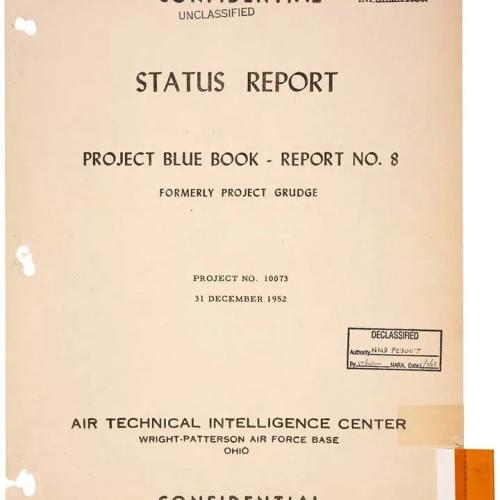
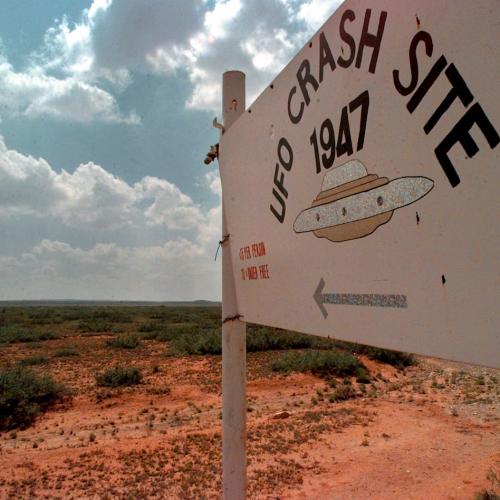
The Feb. 27 disappearance of a retired Air Force major general with a vast institutional knowledge about UFOs is a “grave national security crisis,” says investigative journalist Ross Coulthart. William Neil McCasland, 68, was reported missing after leaving his Albuquerque, N.M., home on foot, according to local authorities, who have teamed up with the FBI to find the former military official. To Coulthart, the way McCasland vanished — reportedly along a running trail without his watch and phone — suggests something nefarious. McCasland ... is also considered a trove of information about whatever secrets the government may be hiding about UFOs, “unidentified anomalous phenomena” (UAPs) and nonhuman intelligent life. During his tenure in the Air Force, McCasland oversaw classified space weapons programs and was head of research at Wright Patterson Air Force Base near Dayton, Ohio, Coulthart notes. That facility has long been rumored to house fragments of extraterrestrial debris from Roswell, N.M. Coulthart said he finds it interesting McCasland’s disappearance comes shortly after President Donald Trump promised disclosure about whatever files the government holds on UFOs and alien life. “The timing is screechingly relevant,” Coulthart said. “The fact that Gen. Neil McCasland has disappeared off the face of the earth is a grave national security crisis. This is a man with some of the most sensitive secrets of the United States in his head.”
Note: Hacked emails released by Wikileaks reveal Tom DeLonge, the founder of To The Stars Academy of Arts & Science, telling former White House chief of staff John Podesta that General McCasland was involved in a project related to extraterrestrial material, having previously led the Wright Patterson Air Force Base lab where the Roswell incident materials were reportedly taken. McCasland allegedly worked with DeLonge and helped assemble his advisory team. In our new 23-minute video UFO Disclosure Explained: New Solutions for Humanity, civil rights advocate and leading attorney for the UFO disclosure movement Daniel Sheehan and WantToKnow.info Director Amber Yang explore how this topic will open the door to technologies and ideas that could transform how we address humanity’s greatest challenges.
The pandemic’s most contentious question: Did SARS-CoV-2 emerge through natural spillover from animals to humans, or through a laboratory incident tied to research intended to anticipate the next outbreak? A flashpoint in that debate has been DEFUSE — a 2018 grant proposal submitted to DARPA, the Defense Department’s advanced research agency. DEFUSE outlined plans to test spike-protein swaps and cleavage-site insertions in bat coronaviruses. Newly obtained NIH records suggest that the experimental concepts later spotlighted in DEFUSE — tuning bat coronavirus infectivity through spike swaps, receptor-binding changes, and cleavage-site insertions— were already embedded in multiple U.S.-funded coronavirus research projects years before the pandemic. NIH ... reviewers saw potential risk. In an internal “biohazard comment,” a grants manager warned that recombinant coronaviruses engineered to enhance spike cleavage or strengthen ACE2 binding “may have novel and unexpected virulence phenotypes” – or, new and unpredictable traits that could make the virus more dangerous. NIH reviewed — and frequently approved — experiments designed to alter receptor-binding domains, swap spike proteins between viruses, or modify cleavage sites that influence how coronaviruses infect cells. American and Chinese researchers shared sequences, experimental ideas and preliminary findings in real time.
Note: Read how the NIH bypassed the oversight process, allowing controversial gain-of-function experiments to proceed unchecked. Watch our Mindful News Brief on the strong evidence that bioweapons research created COVID-19. For more along these lines, read our concise summaries of news articles on COVID corruption.
Many older adults also show significant improvements in their physical and cognitive health over time, according to a new study. The reason why seems to lie in how they think about aging. People who viewed getting older positively were more likely to show improvements in their cognitive skills and their walking speed. By contrast, folks in the study who held more negative ideas about aging tended to see a decline in these skills. That suggests people’s beliefs can have a dramatic effect on their biology, the researchers say. “Our findings suggest there is often a reserve capacity for improvement in later life,” said study co-author Becca Levy. “And because age beliefs are modifiable, this opens the door to interventions at both the individual and societal level.” The new study included more than 11,000 adults aged 65 and up. 45 percent of the participants saw a positive development in either their scores on a cognitive test or their walking speed—a critical measure of fitness. Notably, when the researchers averaged the participants’ scores, they saw an expected decline in ability as people aged. But on the individual level, that picture didn’t hold up for everyone. “Many people equate aging with an inevitable and continuous loss of physical and cognitive abilities,” Levy said. “What we found is that improvement in later life is not rare, it’s common, and it should be included in our understanding of the aging process.”
Note: Explore more positive stories like this on amazing seniors.
In the absence of strong privacy laws, surveillance-based advertising has become the norm online. Companies track our online and offline activity, then share it with ad tech companies and data brokers to help target ads. Law enforcement agencies take advantage of this advertising system to buy information about us that they would normally need a warrant for, like location data. They rely on the multi-billion-dollar data broker industry to buy location data harvested from people’s smartphones. We’ve known for years that location data brokers are one part of federal law enforcement's massive surveillance arsenal. But a document recently obtained by 404 Media is the first time CBP has acknowledged the location data it buys is partially sourced from the system powering nearly every ad you see online: real-time bidding (RTB). As CBP puts it, “RTB-sourced location data is recorded when an advertisement is served.” Apps for weather, navigation, dating, fitness, and “family safety” often request location permissions to enable key features. But once an app has access to your location, it could share it with data. Here are two basic steps you can take to better protect your location data: 1. Disable your mobile advertising ID, and 2. Review apps you’ve granted location permissions to. If you can’t disable location access completely for an app, limit it to only when you have the app open or only approximate location instead of precise location.
Note: The owner of a data broker company once bragged about having highly detailed personal information on nearly all internet users. For more along these lines, read our concise summaries of news articles on Big Tech and the disappearance of privacy.
Across the Twin Cities, immigration agents have identified legal observers by name and address, and, in some cases, led them back to their homes after they engaged in lawful monitoring of immigration activity. Legal observers say this pattern of behavior sends a clear and chilling message: The federal government knows who they are and where they live. These encounters are unfolding amid a rapid expansion of federal surveillance capabilities. Immigration authorities have significantly expanded their use of mobile biometric and surveillance tools in recent years. Officers with Immigration and Customs Enforcement as well as Customs and Border Protection, for example, can use the smartphone app Mobile Fortify to photograph a person’s face or capture fingerprints in the field and compare them against federal biometric databases. A 2022 report ... found ICE can access driver’s license data covering roughly three-quarters of U.S. adults, including state photo databases that can be searched using face recognition technology. Civil liberties advocates say the growing web of identification tools has enabled federal agents to quickly identify anyone who monitors or protests their actions — chilling protected First Amendment activity and deterring the legal observation of law enforcement. While many encounters described by observers involve surveillance and intimidation, some have escalated into far more dangerous confrontations.
Note: Read our Substack, "A History of Militarized Policing in the US and the Suppression of Dissent Across the Political Spectrum." For more along these lines, read our concise summaries of news articles on immigration enforcement corruption and the disappearance of privacy.
Syngenta, maker of a controversial pesticide linked to Parkinson’s disease, said on Tuesday that it would stop making its paraquat weed killer by the end of June. The announcement comes as the company is facing several thousand lawsuits brought by people in the US who allege they developed Parkinson’s disease due to their exposure to Syngenta’s paraquat products. The company did not mention the litigation in its announcement. Paraquat has been used in the US since 1964 as a tool to kill broadleaf weeds and grasses. Though banned in several countries, including throughout Europe, Syngenta’s paraquat-based Gramoxone herbicide brand has remained popular with US farmers for use in growing soybeans, cotton and corn, as well as in growing grapes, pistachios, peanuts and many other crops. Numerous scientific studies have found that paraquat damages cells in the brain in ways that can lead to Parkinson’s, and more than 8,000 lawsuits are pending in US courts over the Parkinson’s allegations. The New Lede, in conjunction with the Guardian, obtained and revealed many of Syngenta’s internal corporate files, which show that not only was Syngenta aware of research linking paraquat to Parkinson’s decades ago, but it also sought to secretly influence scientific information and public opinion regarding those links. Lawmakers in multiple states have introduced legislation to ban paraquat, and several federal lawmakers have also called for bans.
Note: For more along these lines, read our concise summaries of news articles on health and toxic chemicals.
Records unsealed this year by Argentina's Ministry of Foreign Affairs have confirmed an eyewitness account from 1991, when military personnel and civilian researchers in Antarctica detected and then saw a large flying saucer over their base. Miguel Amaya, a retired Argentine Air Force non-commissioned officer, told UFO investigators in the early 2000s that he was stationed at General San Martín Base, a small scientific and military station on a tiny island in Antarctica in April of that year. At the start of the polar night, when the sun stays down for months, an alarm went off on the station's riometer, a machine that measures changes in the upper atmosphere. All of the needles began drawing the same pattern, which is scientifically impossible. According to Amaya, outpost personnel claimed that the strange readings could only have been caused by something producing the same energy as a nuclear aircraft carrier or a large city floating over Antarctica. Over 120 feet of paper was reportedly used during the four-and-a-half hour incident at General San Martín Base, with Amaya revealing that the needles were moving so violently they went off the paper multiple times. Hours later, another base member was walking outside during a snowstorm when they allegedly saw 'a huge circle of light.' 'He noticed a huge circle of light, very dim due to the cloud cover, passing above the base, but still visible, and moving very slowly and silently towards the sea,' Amaya claimed in his testimony. The 1991 incident has finally come to light after Amaya claimed he and the other members at General San Martín Base were told never to talk about what they had seen by their superiors. An Argentine civilian UFO research group known as CEFORA pushed for the records to be released under the nation’s public information law. The Ministry of Foreign Affairs confirmed that the original paper rolls, which recorded the strange readings over Antarctica, still exist and have been stored at the Argentine Antarctic Institute.
Note: Don't miss our new video UFO Disclosure Explained: New Solutions for Humanity w/ Daniel Sheehan and Amber Yang. For more along these lines, read our concise summaries of news articles on UFOs. Then explore the comprehensive resources provided in our UFO Information Center.
The Trump administration yesterday handed Bayer another win, urging the Supreme Court in a new brief to side with the German pesticide company in a high-stakes legal case that could wipe out thousands of cancer lawsuits and potentially billions of dollars in liability tied to glyphosate-based Roundup weed killer. Three out of nine U.S. officials who signed the brief previously worked for law firms that have represented Bayer, raising questions about whether the Trump administration is providing special favors and benefits to Bayer and siding with a foreign corporation against Americans with cancer. In the new filing, the Justice Department and Environmental Protection Agency urged the Court to rule in Bayer’s favor on the central legal issue: whether federal approval of a pesticide label under federal law preempts state failure-to-warn claims. If the Court accepts that argument, individuals would be barred from suing Bayer under state law for failing to warn that Roundup may cause cancer. The salvo for Bayer is the latest in a series of favorable actions the Trump administration has provided to Bayer. On February 18, the White House invoked the Defense Production Act to guarantee supplies of glyphosate-based herbicides and elemental phosphorus, a raw element used in production of fertilizers, pesticides, herbicides, and a wide range of industrial and military chemicals. Our Bayer lobby tracker provides information about ... 45 lobbyists registered to lobby for Bayer.
Note: In addition to increasing cancer risk by 41%, glyphosate is linked to severe depression and cognitive decline. Our latest Substack, "The Pesticide Crisis Reveals The Dark Side of Science. We Have The Solutions to Regenerate," uncovers the scope of Monsanto's media propaganda machine and the widespread conspiracy to poison our food, air, and along with the powerful remedies and solutions to this crisis. For more along these lines, read our concise summaries of news articles on government corruption and toxic chemicals.
Laser guns are real now. Actual militaries are deploying actual lasers in actual combat. “This is a technology that has been under development for decades,” [said] Iain Boyd, an aerospace engineer. “And it’s only really now just really starting to enter the public view.” The Army has outfitted trucks with anti-drone lasers, and the Air Force has added ground-based lasers to its arsenal. Russia, China, and the United Kingdom are all developing—and in some cases already deploying—laser weapons, and last year, Israel became the first country to use a laser in combat to destroy a drone. The very real lasers now being deployed on battlefields around the world have some notable differences from most of their science-fictional forebears. They’re silent, for one thing—no pew pew sound effects—and the beam they produce is invisible. Real lasers have a number of other advantages. $13 a shot is pretty good compared with the Navy’s standard missile interceptors, which cost $2 million apiece. Another advantage of lasers is that they just keep going. Last year, Chinese scientists successfully beamed a precision non-weapon laser all the way to the moon. But infinite range is also a drawback. If a laser missed a drone, Boyd said, the beam could continue for hundreds of miles and hit, say, a commercial airliner. Even if a laser beam did hit its target, Boyd said, its light could still scatter and cause all manner of collateral damage.
Note: For more, read our concise summaries of news articles on warfare technologies.
In 2000 a study was published in the journal Regulatory Toxicology and Pharmacology that deemed the active ingredient in Roundup (glyphosate) was safe and not a human health risk. Since then, that study has been cited consistently as proof of Roundup’s safety. Numerous other studies have shown that glyphosate could cause cancer and that the inert ingredients that are part of the patented Roundup formulation increase the toxicity of glyphosate. Further, the practice of using Roundup as a desiccant on small grain crops (oats, wheat and barley) prior to harvest, puts Roundup directly on grain that enters the human food chain. Since acquiring Monsanto in 2018, Bayer has paid out about $11 billion to settle almost 100,000 cancer-related lawsuits, with approximately 61,000 still pending. In December of 2025, another blow to the claimed safety of Roundup when the Regulatory Toxicology and Pharmacology journal withdrew the 2000 article that had touted Roundup’s safety. While the study claimed to be independent and peer reviewed, it has come to light that Monsanto’s scientists played a significant role in conceiving and writing the article. Oops. For decades, Roundup has been sold as an effective herbicide, one that was safe to humans and the environment and without it, “consequences would be dire”. Companies like Bayer ... claim to produce safe products that help farmers thrive— real independent research refutes that.
Note: In addition to increasing cancer risk by 41%, glyphosate is linked to severe depression and cognitive decline. Our latest Substack, "The Pesticide Crisis Reveals The Dark Side of Science. We Have The Solutions to Regenerate," uncovers the scope of Monsanto's media propaganda machine and the widespread conspiracy to poison our food, air, and along with the powerful remedies and solutions to this crisis. For more along these lines, read our concise summaries of news articles on corruption in science and toxic chemicals.
In the Sicilian town of Giarre overlooking Mount Etna, Andrea Passanisi, a tropical and citrus fruits producer, uses an unusual fertiliser on his 100-hectare (247-acre) stretch of land: volcano ash. Like hundreds of farmers and citizens of rural towns perched on the slopes of Europe’s highest and most active volcano, the 41-year-old’s family has had to deal with the nuisance of falling volcanic ash for generations. But it is only in recent years that the quantity of ash has become so excessive that it required an alternative approach. With every eruption, towns such as Giarre experience an average of 12,000 tonnes of ashfall daily, which the wind can transport as far as 800km (497 miles). In July 2024, Catania – Sicily’s second-largest city, located at the foot of Mount Etna – registered 17,000 tonnes of ash daily, which took nearly 10 weeks to collect. For years, farmers such as Passanisi were led to believe the phenomenon was a danger to crops, polluting irrigation waters and requiring special equipment and days off work to clean up. But a five-year project by the University of Catania raised awareness of the potential for ash to become a resource in the production cycle of many different sectors, including agriculture. “It allows us to use fewer chemicals, which makes fertilising cheaper and more sustainable, respecting the equilibrium of nature without abusing it,” Passanisi says. “It’s the future of agriculture.”
Note: Explore more positive stories like this on healing the Earth.
The White House invokes the Defense Production Act to guarantee supplies of elemental phosphorus and glyphosate-based herbicides. Regulators reapprove dicamba, a Bayer herbicide twice blocked by federal courts, and clear the way for new pesticides containing toxic, persistent PFAS “forever” chemicals. And the U.S. Justice Department urges the U.S. Supreme Court to erase billions of dollars of Bayer’s liability for its glyphosate-based Roundup weed killer – placing the weight of the executive branch on the side of a foreign company against thousands of Americans who say Bayer’s products caused their cancers. Over the past year, the administration under President Donald J. Trump has delivered a string of victories to Bayer, the German agrichemical and pharmaceutical giant that merged with Monsanto in 2018 to become the world’s leading manufacturer of genetically modified seeds and pesticides. These favors to Bayer clash with Trump’s promise to “Make America Healthy Again,” which many supporters understood as a pledge to confront industries linked to chronic disease. Our review of Bayer’s access in Washington found 22 key administration officials with ties to Bayer’s lobbying or legal network. Bayer and its lobbyists have access to people in power at the White House, U.S. Department of Agriculture, the Environmental Protection Agency and even those in high level positions closest to Trump.
Note: In addition to increasing cancer risk by 41%, glyphosate is linked to severe depression and cognitive decline. Our latest Substack, "The Pesticide Crisis Reveals The Dark Side of Science. We Have The Solutions to Regenerate," uncovers the scope of Monsanto's media propaganda machine and the widespread conspiracy to poison our food, air, and along with the powerful remedies and solutions to this crisis. For more along these lines, read our concise summaries of news articles on government corruption and toxic chemicals.
Being hurt by others is common and can be deeply painful. Which raises the question of forgiveness. In the last few decades, researchers have helped us better understand how people experience forgiveness and how it influences our lives. The Global Flourishing Study seeks to enrich this knowledge from a more global perspective. Launched in 2021, the study follows people over time to understand what a good life looks like in different parts of the world – including health, happiness, meaning, relationships, character, and financial security. It’s the first study to measure forgiveness in national samples from many different cultures and contexts. In the first wave of data from more than 200,000 participants across 22 countries, my colleagues and I found that about 75% of individuals reported they had “often” or “always” forgiven those who had hurt them. Percentages varied across countries, ranging from 41% in Turkey to 92% in Nigeria. We looked at whether people who reported being more forgiving tended to report better well-being about a year later. We found that forgiveness predicted somewhat higher well-being on many of the 56 outcomes, including mental health, purpose in life, relationship satisfaction and hope. Decades of research have pointed to similar links. The hopeful news is that forgiveness isn’t a rare quality that some of us have and others lack. Studies have shown that forgiveness is like a muscle we can strengthen.
Note: For people who find forgiveness especially challenging, this project produced a forgiveness workbook that can be completed in about three hours. In the face of the brutal war machine, these powerful real-life stories show that we can heal, reimagine better alternatives, and plant the seeds of a global shift in consciousness to transform our world. Explore more powerful stories like this on healing social division.
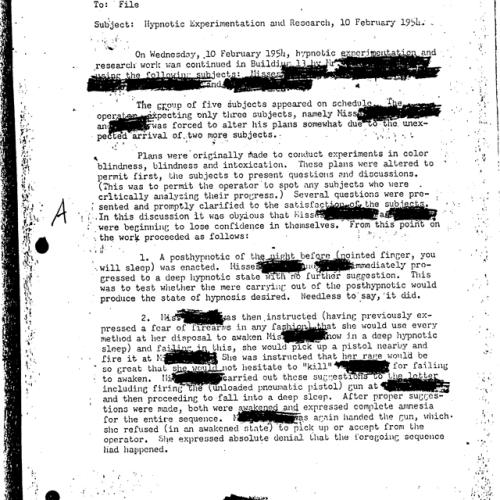
A newly released CIA document reveals a chilling blueprint to manipulate minds through covert drugging experiments. The report, added to the CIA's reading room in 2025, details the government's once top-secret Project Artichoke that ran from 1951 to 1956, focusing on behavior control, interrogation techniques and psychological manipulation. The seven-page document, titled 'Special Research for Artichoke,' with an attachment labeled 'Suggested Fields for Special Research Relative Artichoke,' outlines proposals to develop chemicals capable of altering human behavior. It discusses drugs designed for both immediate effects, like truth serums and long-term influence, potentially administered through food, water, alcohol or cigarettes. Researchers also suggested that such substances could be disguised in medical treatments such as vaccinations or injections. The CIA was also looking into methods beyond chemicals, listing hypnosis, sensory deprivation, gases and other psychological methods for interrogation and behavioral control. Artichoke served as a precursor to the CIA's MKUltra program, which later broadened mind-altering experiments on a larger scale. The researchers involved in the secret program emphasized that long-term compounds should be capable of producing 'an agitating effect (producing anxiety, nervousness, tension, etc.) or a depressing effect (creating a feeling of despondency, hopelessness, lethargy, etc.).'
Note: Learn more about the CIA's MKUltra Program and the mind control techniques perfected by Nazi scientists through disturbing WWII experiments in concentration camps. For more, read our concise summaries of news articles on intelligence agency corruption and mind control.
President Trump on Thursday suggested the federal government will soon share the information it has about extraterrestrials, UFOs and unidentified anomalous phenomena, the broader category of unexplained objects known as UAPs. In a brief post on Truth Social, Trump said he'll direct the Pentagon and other departments to begin the process of “identifying and releasing” government files related to these topics. “Based on the tremendous interest shown, I will be directing the Secretary of War, and other relevant Departments and Agencies, to begin the process of identifying and releasing Government files related to alien and extraterrestrial life, unidentified aerial phenomena (UAP), and unidentified flying objects (UFOs), and any and all other information connected to these highly complex, but extremely interesting and important, matters. GOD BLESS AMERICA!” he wrote. Earlier Thursday, Trump refused to say whether he's seen evidence that aliens had visited Earth. The president was asked directly about “nonhuman visitors” while talking to reporters aboard Air Force One. Trump said that former President Barack Obama shared classified information by recently suggesting that aliens are real. Obama, who made the statement in an interview, later clarified that his comments about aliens being real refer to a belief that, given the size of the universe, it is statistically unlikely we are the only life to exist.
Note: Our 26-minute video UFO Disclosure: Breakthrough Technology and Awakening Human Consciousness features interviews with leading experts along with well-sourced, verifiable information to help you make sense of this fascinating issue and its immense potential to transform our world. For more, explore the comprehensive resources provided in our UFO Information Center.
Emails released in the United States Department of Justice files show that the late convicted paedophile Jeffrey Epstein was offered the chance to buy into a sprawling building tied to the Department of Defense in 2016. The 84,710-square-metre (101,312-suqare-yard) complex, located roughly 1.6km (1 mile) from the Pentagon in Arlington, Virginia, was described in an investor deck as a “mission-critical” site and “the only property in Arlington, Virginia other than the Pentagon itself with the ability to meet the space and infrastructure needs of the DOD”. The proposed purchase price was about $116m. The structure of the deal would have made Epstein a co-owner and, effectively, a landlord to the US government. The Pentagon-linked proposal formed part of three documents – an email, an investor presentation and a deal summary – contained within the newly released files. David Stern, a businessman who referred to himself as Epstein’s “soldier”, forwarded the offer. Stern also served as a close aide to Andrew Mountbatten-Windsor, who was arrested on Thursday on “suspicion of misconduct in public office” following revelations in the Epstein files. Stern also sent Epstein a separate proposal in 2015 to invest in two FBI field offices in Richmond and Baltimore. That deal required an initial $25m, followed by a further $80m, with ownership routed through a Cayman Islands offshore entity. Real estate investor Jonathan D Fascitelli originated both property proposals.
Note: Don't miss Part 1 and Part 2 of our in-depth investigative series on this massive elite crime ring now coming to light in the documents being made public. For more along these lines, read our concise summaries of news articles on Jeffrey Epstein's criminal enterprise.
Important Note: Explore our full index to key excerpts of revealing major media news articles on several dozen engaging topics. And don't miss amazing excerpts from 20 of the most revealing news articles ever published.