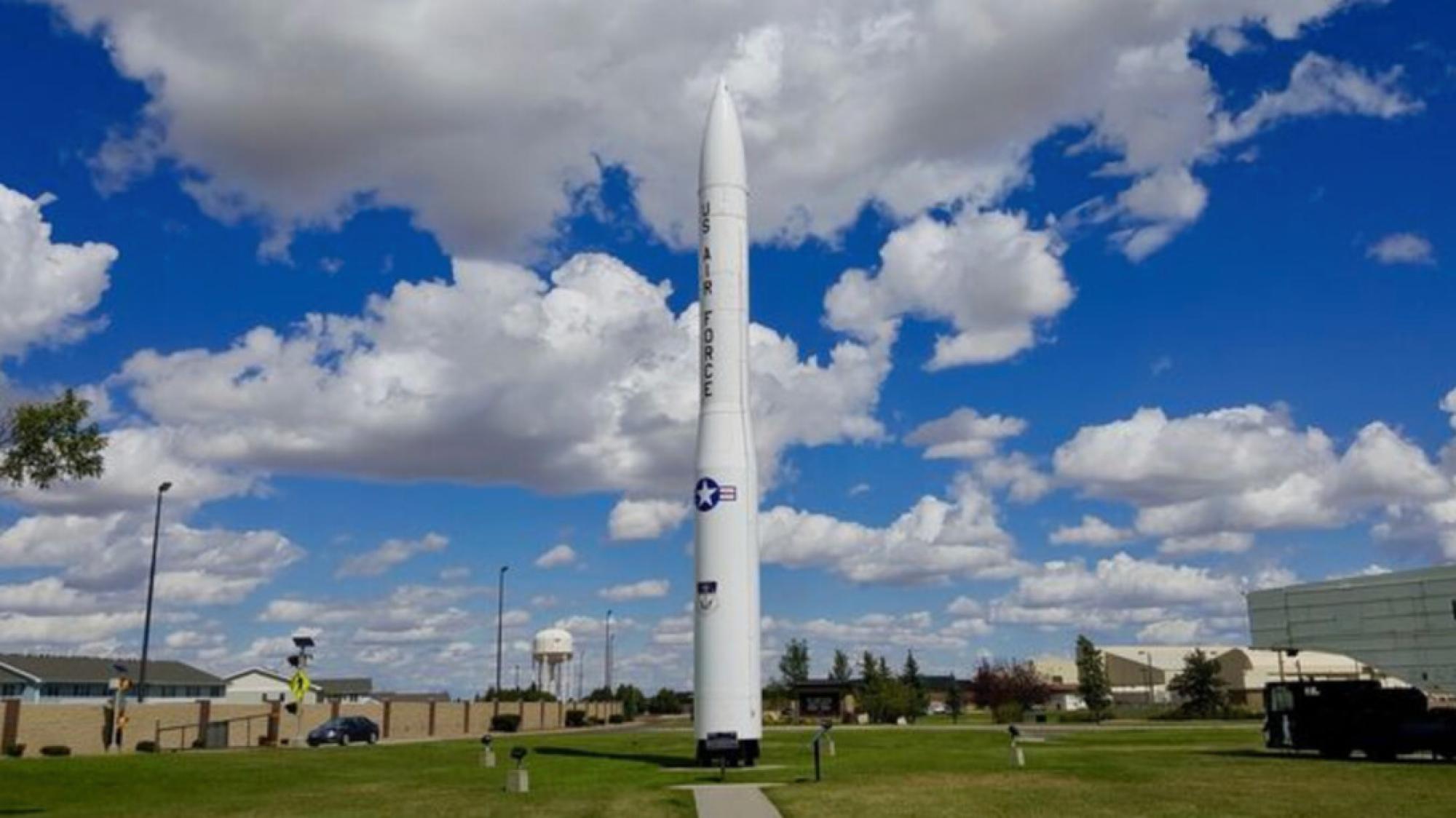
Since the United States detonated its first atomic bomb at the Trinity test site in 1945, dozens of accounts of UFOs have been logged by military witnesses and government scientists working with America's sensitive nuclear arsenal. Now a new, decades-long study has analyzed over 500 of the best supported UFO cases from the heights of the Cold War and hauntingly concluded: 'This intelligence understands atomics, and they understand atomic weaponry.' UFO reports over America's nuclear arsenal appeared to shift from sites where the bombs were made to missile silos and US air bases as the Cold War arms race grew. That's one of the key findings from the new work, a series of three studies led by a retired US Air Force staff sergeant, Larry Hancock, and a data analyst affiliate with Harvard's UFO-hunting Galileo Project, Ian Porritt. Their qualified, but haunting conclusion: Data from this three decade-long period lends credence to the idea that extraterrestrials, or some other intelligence, has methodically surveilled America's rise to a nuclear power. 'This intelligence understands the developmental cycle. They have some contextual knowledge of what they're looking at and what they're looking for,' Hancock [said]. Among the hundreds of cases included in their analysis was the infamous March 16, 1967 Malmstrom case in which Air Force witnesses reported that ten nuclear missiles were switched off by a UFO, confirmed by a US Strategic Air Command report.
Latest
Latest News
Each news summary is created according to strict standards. Here's how we do it.
Each summary is created using a consistent editorial procedure. The target length is approximately 16 lines of 11-point Arial text in a 650-pixel-wide column. Up to 25% of a summary may be set in bold to emphasize the most important ideas. Summaries are composed of verbatim excerpts presented in the same sequence as they appear in the original news source, with very minor editorial additions. Where material has been omitted between excerpts, the omission is indicated with ellipses (...). Any words added by an editor for clarity or context appear in [brackets]. Our original news editor was Fred Burks. Tod Fletcher edited most summaries from 2007 through 2014, and Mark Bailey has served as news editor since 2014.