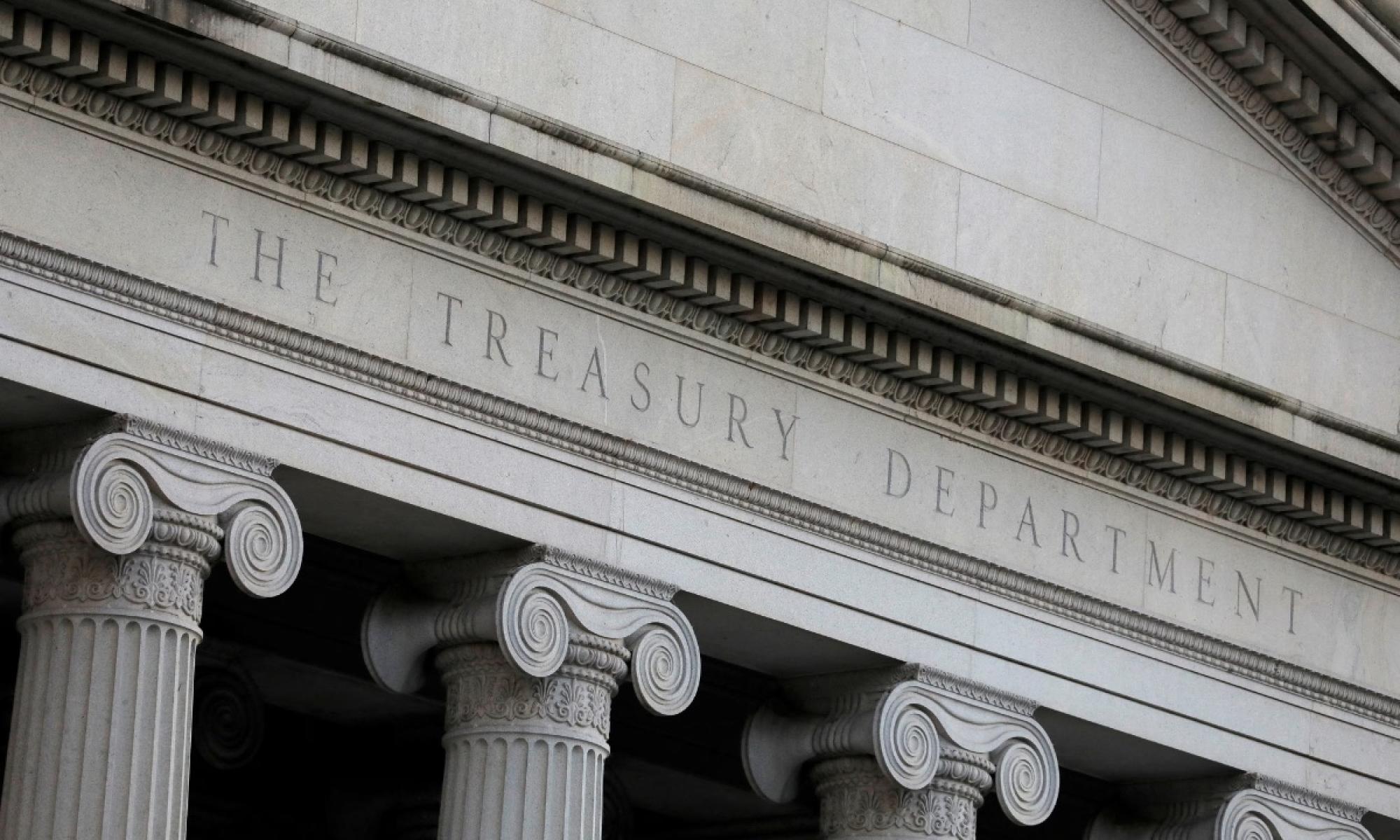
The Department of Government Efficiency (DOGE) announced Monday that some $4.7 trillion in payments from the Treasury Department were missing a critical tracking code, which made tracing the transactions "almost impossible." The transactions were reportedly missing the Treasury Account Symbol (TAS), an identification code which links a Treasury payment to a budget line item, according to DOGE, which described the use of such code as a "standard financial process." "In the Federal Government, the TAS field was optional for ~$4.7 Trillion in payments and was often left blank, making traceability almost impossible," read an X post from DOGE. The Elon Musk-led project to curb waste, fraud and abuse in the federal government said that in light of the discovery, use of the TAS code is now mandatory. "As of Saturday, this is now a required field, increasing insight into where money is actually going," DOGE said. "This is methodical and it is going to yield big savings," Treasury Secretary Scott Bessent said. DOGE recently proposed "deleting paper checks" at Treasury, arguing that it would save taxpayers "at least $750 million per year." The initiative noted that the Treasury Department must keep "a physical lockbox" to collect the more than 100 million checks it processes each year, which costs about $2.40 per check to maintain. In fiscal year 2023, some $25 billion in tax refunds were delayed or lost due to returned or expired checks.
Latest
Latest News
Each news summary is created according to strict standards. Here's how we do it.
Each summary is created using a consistent editorial procedure. The target length is approximately 16 lines of 11-point Arial text in a 650-pixel-wide column. Up to 25% of a summary may be set in bold to emphasize the most important ideas. Summaries are composed of verbatim excerpts presented in the same sequence as they appear in the original news source, with very minor editorial additions. Where material has been omitted between excerpts, the omission is indicated with ellipses (...). Any words added by an editor for clarity or context appear in [brackets]. Our original news editor was Fred Burks. Tod Fletcher edited most summaries from 2007 through 2014, and Mark Bailey has served as news editor since 2014.