



























Warfare Technology News Stories
The DoD has ambitious plans for full spectrum dominance, seeking control over all potential battlespaces: land, ocean, air, outerspace, and cyberspace. Artificial intelligence and other emerging technologies are being used to further these agendas, reshaping the military and geopolitical landscape in unprecedented ways.
In our news archive below, we examine how emerging warfare technology undermines national security, fuels terrorism, and causes devastating civilian casualties.
Related: Weapons of Mass Destruction, Biotech Dangers, Non-Lethal Weapons

The Pentagon has announced that they employ specialized energy weapons for defense. The Department of War’s Chief Technology Officer Emil Michael announced this development in an X post. The post ... included a pic of said weaponry firing a laser beam and a soldier holding his head in pain. Dubbed directed energy weapons or DEWs, these advanced instruments of war use focused rays to disable electronic weapons such as drones and incapacitate — or even kill — enemy soldiers. According to the X post, these beams are comprised of “concentrated electromagnetic energy or atomic or subatomic particles.” With this announcement, the Department of War seemingly confirmed years of so-called rumors that claimed that the government was developing this science fiction-esque weapon. Perhaps one of the most notable figures sounding the alarm was deceased scientist Amy Eskridge, 34, who was involved in extensive research into anti-gravity technology, UFOs, and extraterrestrial life. The researcher, who allegedly died of a self-inflicted gunshot wound in 2022, had claimed she was hit by a DEW attack in her own home in Huntsville, Alabama not too long before her death. Her theory was seconded by retired British intelligence officer Franc Milburn, whom she had enlisted to investigate harassment she received after she threatened to disclose information about the subjects of her research.
Note: Read more about the mysterious ailments said to be caused by directed energy weapons. Is there a connection to other missing or dead scientists? For more along these lines, read our concise summaries of news articles on non-lethal weapons and UFO disclosure.
Advances in neurological medicine might seem like a boon to humanity. However, UK scientists are warning that the tech could also be used to develop “brain weapons” that can alter human consciousness, perception, or behavior. This apocalyptic “wake-up call” was floated in the book, “Preventing Weaponization of CNS-acting Chemicals: A Holistic Arms Control Analysis,” by researchers Michael Crowley and Malcolm Dando. Dando, a biological and weapons control expert, said that the “same knowledge that helps us treat neurological disorders could be used to disrupt cognition” and “induce compliance.” It could even be used in the “future [to] turn people into unwitting agents,” like something out of a dystopian thriller, he argued. According to Crowley ... humanity has entered a new age of warfare where the “brain itself could become a battlefield” due to the increased ubiquity and sophistication of pharmaceutically-induced mind control. “The tools to manipulate the central nervous system – to sedate, confuse or even coerce – are becoming more precise, more accessible and more attractive to states,” Crowley said. Dando and Crowley are traveling to the Hague ... for a key meeting of the Conference of the States Parties (CSP), an international body that oversees the implementation of the Chemical Weapons Convention. While the convention prohibits the use of chemical weapons in war, there is a loophole that might permit their use in other sectors, like law enforcement. To safeguard against this possibility, Dando and Crowley propose a multi-pronged “Holistic Arms Control” approach.
Note: Read about the Pentagon's plans to use our brains as warfare, describing how the human body is war's next domain. Learn more about biotech dangers. For more along these lines, read our concise summaries of news articles on non-lethal weapons and mind control.
[Veteran journalist Katrina Manson's] new book, “Project Maven: A Marine Colonel, His Team, and the Dawn of AI Warfare,” is an ... account of the ongoing reconfiguration of the U.S. armed forces for a new technological era. “Project Maven” is structured as an intellectual and professional biography of Drew Cukor, a Marine Corps intelligence officer largely responsible for ... this military transformation. Cukor insists that Maven was never supposed to be a weapon. He frequently defends the project as nothing more than an integrated data platform ... for a world made better and safer by A.I. warfare. In 2018, Google employees staged a massive walkout to protest the company’s work on a primitive iteration of the project. In the aftermath of the Google fiasco, Cukor turns to Palantir (in addition to Microsoft and Amazon) to make Maven a reality. NATO now has its own Maven contract with Palantir, and that prompted ten member nations to pursue one, too. The Maven Smart System has become a global surveillance apparatus—it can keep track of forty-nine thousand airfields all over the world—but its current work is hardly limited to intelligence provision and analysis. A “single click,” [journalist Katrina] Manson reports, “could send coordinates through a tactical data link to a specific weapons platform so that it could fire at the target.” The entire process, from target identification to target destruction, is four clicks. Officials told Manson that Maven was “accelerating operations and ‘enabling lethality’ at combat headquarters around the world.” Maven is only one part of the A.I. tool kit. Manson uncovers evidence of two clandestine killer-robot programs, one aerial and the other aquatic, which are being developed in haste. For the first time, the Pentagon’s proposed budget contained a line item for comprehensively self-directing systems. A machine can shoot, Manson reports, up to “ten times faster than an assassin.”
Note: For more, read our concise summaries of news articles on AI and military corruption.
One of the most intriguing secrets of Operation Epic Fury is how, using an “exquisite” piece of classified technology, the CIA succeeded in finding the injured airman in Iran by detecting his heartbeat, the tiniest evidence of human life concealed in a narrow crevice up a 7,000ft mountain ridge. The technology that led to the airman’s rescue by Seal Team Six commandos has been outed as a CIA “tool” called Ghost Murmur. It was reportedly developed as a highly classified “blue skies” invention by Lockheed Martin’s Skunk Works, the famous laboratory where young, brilliant scientists and engineers devote their time to finding solutions to impossible concepts. John Ratcliffe, the CIA director, hinted at the new technology in a press conference this week. “We deployed both human assets and exquisite technologies that no other intelligence service in the world possess to a daunting challenge, comparable to hunting for a single grain of sand in the middle of a desert,” Ratcliffe said. On the face of it, a futuristic magnetic sensing device ... pinpointed the missing colonel’s heartbeat across a 40-mile stretch of land. Ghost Murmur, as described, would appear to push the boundaries of physics beyond even the most exceptional human brain or computer. Intelligence sources would not confirm or deny the existence of Ghost Murmur. But reportedly the “CIA tool” relies on what is called quantum magnetometry, which can find signals of human hearts, aided by artificial intelligence to separate out all the other noises getting in the way.
Note: While it's unclear whether the Ghost Murmur tool was actually responsible for rescuing the injured soldier, this technology is not out of the realm of possibility. Since the 1960s, the CIA had already developed poison weapons capable of causing heart attacks remotely. Learn more about real-life exotic weapon technologies used by militaries around the world. For more along these lines, read our concise summaries of news articles on AI and intelligence agency corruption.
Palantir (PLTR)’s Maven artificial intelligence system will become an official program of record, Deputy Secretary of Defense Steve Feinberg said in a letter to Pentagon leaders, a move that locks in long-term use of Palantir’s weapons-targeting technology across the U.S. military. Maven is a command-and-control software platform that analyzes battlefield data and identifies targets. It is already the primary AI operating system for the U.S. military, which has carried out thousands of targeted strikes against Iran over the last three weeks. Designating Maven as a program of record will streamline its adoption across all arms of the military. The memo ordered oversight of Maven be moved from the National Geospatial Intelligence Agency to the Pentagon’s Chief Digital Artificial Intelligence Office within 30 days. Future contracting with Palantir will be handled by the Army, the letter said. Feinberg’s order is a significant win for Palantir, which has landed a growing stream of contracts with the U.S. government, including a deal announced last summer with the U.S. Army worth up to $10 billion. Those awards have helped double the company’s stock price in the past year, lifting its market value to nearly $360 billion. Maven can rapidly analyze huge amounts of data from satellites, drones, radars, sensors and intelligence reports, and use AI to automatically identify potential threats or targets.
Note: For more along these lines, read our concise summaries of news articles on AI and military corruption.
Laser guns are real now. Actual militaries are deploying actual lasers in actual combat. “This is a technology that has been under development for decades,” [said] Iain Boyd, an aerospace engineer. “And it’s only really now just really starting to enter the public view.” The Army has outfitted trucks with anti-drone lasers, and the Air Force has added ground-based lasers to its arsenal. Russia, China, and the United Kingdom are all developing—and in some cases already deploying—laser weapons, and last year, Israel became the first country to use a laser in combat to destroy a drone. The very real lasers now being deployed on battlefields around the world have some notable differences from most of their science-fictional forebears. They’re silent, for one thing—no pew pew sound effects—and the beam they produce is invisible. Real lasers have a number of other advantages. $13 a shot is pretty good compared with the Navy’s standard missile interceptors, which cost $2 million apiece. Another advantage of lasers is that they just keep going. Last year, Chinese scientists successfully beamed a precision non-weapon laser all the way to the moon. But infinite range is also a drawback. If a laser missed a drone, Boyd said, the beam could continue for hundreds of miles and hit, say, a commercial airliner. Even if a laser beam did hit its target, Boyd said, its light could still scatter and cause all manner of collateral damage.
Note: For more, read our concise summaries of news articles on warfare technologies.
The Department of Defense has quietly signed a $210 million deal to buy advanced cluster shells from one of Israel’s state-owned arms companies, marking unusually large new commitments to a class of weapons and an Israeli defense establishment both widely condemned for their indiscriminate killing of civilians. The deal, signed in September and not previously reported, is the department’s largest contract to purchase weapons from an Israeli company in available records. The shells are designed to replace decades-old and often defective cluster shells that left live explosives scattered across Vietnam, Laos, Iraq, and other nations. The terror of cluster weapons persists long after the guns that fired them have quieted, as civilians return to fields, forests, and settlements laced with bomblets that can explode years later without warning. “The footprint of the injuries of these weapons is so horrifying,” said Alma Taslidžan, advocacy manager for the aid organization Humanity & Inclusion. The Cluster Munition Monitor has documented more than 24,800 cluster munition injuries and deaths since the 1960s, three-quarters from unexploded remnants. In 2024, cluster munitions killed at least 314 civilians, the majority of them in Ukraine. Major military powers — like Russia, China, Israel, India, Pakistan, and the United States — have never signed the Convention on Cluster Munitions, which bans its 112 member states from using or producing those weapons.
Note: American cluster bombs kill countless civilians in countries like Yemen while the world's biggest banks profit from the weapons trade. For more along these lines, read our concise summaries of news articles on war and military corruption.
The AI surveillance platform provider Palantir is no stranger to controversy. It brings in billions each year from controversial partnerships with groups like Immigration and Customs Enforcement (ICE) and the Israeli Defense Forces, something CEO Alex Karp isn’t keen on changing anytime soon. In an interview ... this week, Karp even took it a step further, arguing that legalizing US war crimes would open up a whole new market for Palantir. Unlike other moguls profiting off the military industrial complex who hide behind concepts like “democracy” and “national security,” the Palantir CEO isn’t afraid to put his mouth where his money is with disarmingly bombastic language. In a letter to shareholders earlier this year, for instance, Karp quoted hawkish political scholar Samuel Huntington in arguing that the “rise of the West was not made possible ‘by the superiority of its ideas or values or religion… but rather by its superiority in applying organized violence.'” While this could be seen as a damning indictment of Western civilization and its violent stranglehold over the world economy, Karp instead positions it as a source of inspiration. In another part of his interview ... the Palantir CEO reaffirmed his commitment to ICE, emphasizing the important role he plays in making immigrants lives worse. “I’m going to use my whole influence to make sure this country stays skeptical on migration and has a deterrent capacity that it only uses selectively,” Karp said.
Note: Listen to an audio clip of Jeffrey Epstein promoting Palantir to Ehud Barak. Read how Palantir helped the NSA spy on the entire planet. For more along these lines, read our concise summaries of news articles on Big Tech and the disappearance of privacy.
Newly surfaced audio recordings appear to capture Jeffrey Epstein advising former Israeli prime minister Ehud Barak on the tech company Palantir, raising fresh questions about Epstein's global intelligence connections and influence. The recordings feature Epstein attempting to introduce Barak to Peter Thiel, Palantir's billionaire co-founder, describing the company and its potential board positions. Epstein's pitch highlighted the influence of major venture capital firms, including Andreessen Horowitz, positioning himself as the connector for powerful business and intelligence networks. Barak, a former head of Israeli military intelligence, later founded a security company reportedly invested in by Epstein, further fueling speculation about Epstein's ties to intelligence operations. Analysts note that Epstein's discussions with Barak blend technology advisory with geopolitical reach, suggesting that Palantir's capabilities may have been leveraged as part of broader influence operations. Previously released documents indicate he filed Freedom of Information Act (FOIA) requests with the CIA in 1999 and again in 2011, seemingly seeking acknowledgement of past affiliations. Additional FBI reports, now partially confirmed by the recordings, describe Epstein as a confidential human source with ties to both US and allied intelligence services. Conversations with Alan Dershowitz reportedly involved debriefs with Mossad.
Note: Read our latest in-depth Epstein files investigation, titled "Beyond Sex Trafficking—Zorro Ranch and a Darker Scientific Agenda." Listen to the audio clip of Jeffrey Epstein promoting Palantir to Ehud Barak. Read how Palantir helped the NSA spy on the entire planet. For more along these lines, read our concise summaries of news articles on Jeffrey Epstein's crime ring and intelligence agency corruption.
A mysterious UFO has been allegedly stored at a little-known US Navy base on the East Coast for decades as the military continues to reverse-engineer its secrets. A new report has claimed that Naval Air Station Patuxent River in Maryland, better known as Pax River, has kept an 'exotic vehicle of unknown origin' secretly housed there, possibly since the 1950s. According to anonymous sources tied to Naval Air Systems Command (NAVAIR), which is headquartered at Pax River, certain military programs at the base have been involved in analyzing and exploiting technology recovered from non-human craft for years. UFO whistleblower Luis Elizondo stated in written testimony to Congress that a specially built hangar was constructed at Pax River specifically for the transfer of extraterrestrial technology. Under oath, Elizondo described a plan where this hangar would help major defense contractor Lockheed Martin move non-human technology to another company called Bigelow Aerospace for further study and analysis. Last year, Dr Hal Puthoff, a physicist and electrical engineer who worked on the government's psychic spy and UFO research programs, revealed on the Joe Rogan Experience podcast that the US military has recovered more than 10 spacecraft since the infamous Roswell incident. Puthoff claimed that some of these craft were actually fully intact craft that had been 'gifted' to humans by extraterrestrials.
Note: Our 26-minute video UFO Disclosure: Breakthrough Technology and Awakening Human Consciousness features interviews with leading experts along with well-sourced, verifiable information to help you make sense of this fascinating issue and its immense potential to transform our world. For more, explore the comprehensive resources provided in our UFO Information Center.
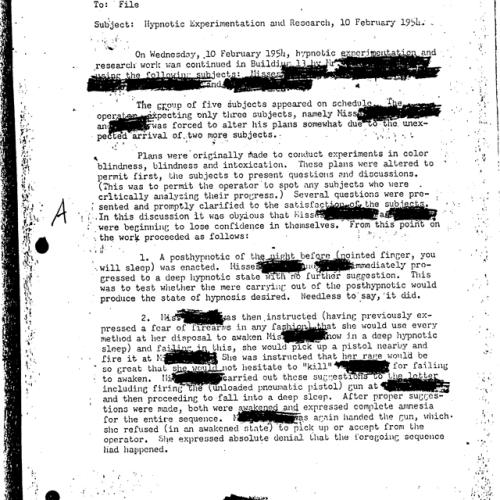
“We had no way to compete with their technology, with their weapons. I swear, I’ve never seen anything like it,” a Venezuelan security guard says in a video widely shared on social media and promoted by the White House. His account tells how U.S. special forces in Venezuela captured then-President Maduro using new technology which incapacitated the entire protective team and allowed two dozen U.S. troops to easily defeat hundreds of defenders. Guard: "At one point, they launched something—I don't know how to describe it... it was like a very intense sound wave. Suddenly I felt like my head was exploding from the inside. We all started bleeding from the nose. Some were vomiting blood. We fell to the ground, unable to move." In the 90’s and early 2000s, the Pentagon poured resources into the Joint Non-Lethal Weapons Directorate, now rebranded the Joint Intermedia Force Capabilities Office. Their task was to develop non-lethal, or less-lethal weapons which ... would disable or incapacitate people. The Pentagon worked on a wide variety of concepts, including strobe dazzlers, malodorants and electroshock projectiles. One of the biggest was the millimeter-wave Active Denial System or ‘pain beam’ which could inflict severe pain and drive back rioters from several hundred meters away. A patented device known as Electromagnetic Personnel Interdiction Control (EPIC) ... uses radio waves “to excite and interrupt the normal process of human hearing and equilibrium.”
Note: Acoustic or sonic weapons can vibrate the insides of humans to stun them, nauseate them, or even "liquefy their bowels and reduce them to quivering diarrheic messes," according to a Pentagon briefing. These devices can also cause excruciating pain, with some able to heat up skin from a distance and others that can beam sound into the skull of a human. Learn more about non-lethal weapons in our comprehensive Military-Intelligence Corruption Information Center.
The Defense Department has spent more than a year testing a device purchased in an undercover operation that some investigators think could be the cause of a series of mysterious ailments impacting US spies, diplomats and troops that are colloquially known as Havana Syndrome. A division of the Department of Homeland Security, Homeland Security Investigations, purchased the device for millions of dollars in the waning days of the Biden administration, using funding provided by the Defense Department, according to two ... sources. Officials paid “eight figures” for the device, these people said, declining to offer a more specific number. The device is still being studied and there is ongoing debate ... over its link to the roughly dozens of anomalous health incidents that remain officially unexplained. The device acquired by HSI produces pulsed radio waves, one of the sources said, which some officials and academics have speculated for years could be the cause of the incidents. Although the device is not entirely Russian in origin, it contains Russian components. The device could fit in a backpack. Havana Syndrome, known officially as “anomalous health episodes” ... first emerged in late 2016, when a cluster of US diplomats stationed in the Cuban capital of Havana began reporting symptoms consistent with head trauma, including vertigo and extreme headaches. In subsequent years, there have been cases reported around the world.
Note: Read more about Havana Syndrome. For more along these lines, read our concise summaries of news articles on intelligence agency corruption.
On Thursday, lawmakers in the House approved a “pilot program” in the pending Pentagon budget bill that could eventually open the door to sending billions to big contractors, while providing what critics say would be little benefit to the military. The provision, which appeared in the budget bill after a closed-door session overseen by top lawmakers, would allow contractors to claim reimbursement for the interest they pay on debt they take on to build weapons and other gadgets for the armed services. One big defense contractor alone, Lockheed Martin, reported having more than $17.8 billion in outstanding interest payments last year, said Julia Gledhill, an analyst at the nonprofit Stimson Center. “The fact that we are even exploring this question is a little crazy in terms of financial risk for the government,” Gledhill said. Gledhill said even some Capitol Hill staffers were “scandalized” to see the provision in the final bill, which will likely be approved by the Senate. The switch to covering financing costs seems to be in line with a larger push this year to shake up the defense industry. The Pentagon itself was dubious in a 2023 study conducted by the Office of the Under Secretary of Defense for Acquisition and Sustainment. The Pentagon found that policy change might even supercharge the phenomenon of big defense contractors using taxpayer dollars for stock buybacks instead of research and development.
Note: Read our concise summaries of news articles on government corruption.
The American weapons maker Anduril ... is partnering with EDGE Group, a weapons conglomerate controlled by the United Arab Emirates, a nation run entirely by the royal families of its seven emirates that permits virtually none of the activities typically associated with democratic societies. In the UAE, free expression and association are outlawed, and dissident speech is routinely and brutally punished without due process. A 2024 assessment of political rights and civil liberties by Freedom House, a U.S. State Department-backed think tank, gave the UAE a score of 18 out of 100. The EDGE–Anduril Production Alliance, as it will be known, will focus on autonomous weapons systems, including the production of Anduril’s “Omen” drone. The UAE has agreed to purchase the first 50 Omen drones built through the partnership. EDGE Chair Faisal Al Bannai explained in a 2019 interview that EDGE was working to develop weapons systems tailored to defeating low-tech “militia-style” militant groups. Nathaniel Raymonds, who leads the Humanitarian Research Lab at the Yale School of Public Health ... argued that “not since Operation Cyclone,” the CIA effort to arm the Afghan mujahideen, “has there been a covert action by any nation state to arm a paramilitary proxy group at this scale and sophistication and try to write it off as just a series of happy coincidences.”
Note: For more, read our concise summaries of news articles on war.
By leveraging the dual-use nature of many of their products, where defense technologies can be integrated into the commercial sector and vice versa, Pentagon contractors like Palantir, Skydio, and General Atomics have gained ground at home for surveillance technologies — especially drones — proliferating war-tested military tech within the domestic sphere. Palantir’s Gotham platform was initially promoted as intelligence software for defense and counter-terrorism purposes. Now adopted among U.S. law enforcement, hundreds of police departments can use Gotham to analyze data on civilians’ whereabouts. Palantir has gone on to sell similar software to other government agencies, obtaining a $30 million ICE contract this spring to help the agency track undocumented immigrants. L3Harris Stingrays, or cell site simulators, are sophisticated phone trackers originally designed for military use. Police departments subsequently adopted these systems to track and collect information on crime suspects. Defense contractors are similarly leveraging their battle-tested drones to capitalize on a booming domestic market. The broader public safety drone market is expected to nearly triple within the next 10 years. The DRONE Act, meanwhile, included in the FY2026 National Defense Authorization Act, would let police purchase and operate the systems with federal grants, thus flooding drone procurement processes with more federal funds.
Note: For more along these lines, read our concise summaries of news articles on Big Tech and police corruption.
During the Cold War, the first implants showing that we could control animal minds sparked panic. The C.I.A. had its own clandestine experimental mind-control program. People warned of brain warfare. Those fears [are] back, along with a conversation about what it means to have freedom of thought at a time when technology is literally being implanted in our brains. Brain computer interface, or B.C.I. ... are very small devices that go right on the surface of your brain, where they can pick up neural activity. The data is transmitted via Bluetooth to a computer program, which decodes the information. In a sense, they’re hooked up to an artificial intelligence. So the neural network inside your mind communicates with a neural network outside. And through that, we are able to reconstruct people’s intentions. For people with degenerative diseases, or who are paralyzed, or who otherwise have lost important abilities, these implants have been totally revolutionary. These patients can move their hands, type and in some cases, speak again. Optogenetics, a technique for turning isolated neurons on and off, has been used to implant false memories in mice, raising the possibility that, in the distant future, something similar could be done in humans. Neuroprivacy is the idea that we should have to give consent to anyone who wants access to our innermost selves. But there’s a question: Does neuroprivacy apply only to my unspoken thoughts? Or does it apply to the electrical activity in my brain?
Note: Read about the Pentagon's plans to use our brains as warfare, describing how the human body is war's next domain. Learn more about biotech dangers. For more along these lines, read our concise summaries of news articles on Big Tech and microchip implants.
November 30 marks the International Day of Remembrance for all Victims of Chemical Warfare. Between 1961 and 1971, the U.S. military sprayed an estimated 20 million gallons of herbicides over southern Vietnam, along the Ho Chi Minh Trail in Laos, and parts of Cambodia. Nearly two-thirds was Agent Orange, later discovered to be contaminated with 2,3,7,8-Tetrachlorodibenzo-p-dioxin (TCDD) — a potent, long-lasting dioxin. TCDD is a known human carcinogen and an endocrine disruptor, linked to cancers, reproductive disorders, and birth defects that can span generations. By the letter of the CWC, Agent Orange is not classified as a “chemical weapon.” If you ask a Vietnam veteran suffering from Parkinson’s, cancer, heart disease, or any of the 19 types of conditions the Department of Veterans Affairs (VA) associates with Agent Orange exposure, you’ll hear a very different story. To them, it was every bit a weapon designed to destroy life and health. A 2018 Government Accountability Office report found that over 757,000 veterans — about one in four who served — were receiving benefits linked to Agent Orange. The 2022 PACT Act broadened that circle to veterans who served in other areas where Agent Orange was used. By 2024, more than 84,000 new Vietnam-era veterans were granted compensation, many due to exposure. Fifty years after the Vietnam War ended, the toxic legacy of Agent Orange and other dioxins lingers on.
Note: For more along these lines, read our concise summaries of news articles on military corruption and toxic chemicals.
Future wars just might revolve around insect-size spy robots. A recent digest of present-day microbots by US national security magazine The National Interest breaks down the many machines currently in development by the US military and its associates. They include sea-based microdrones, cockroach-style surveillance bots, and even cyborg insects. Arguably the most refined program to date is the RoboBee, currently being shopped by Harvard’s Wyss Institute. Originally funded by a $9.3 million grant from the National Science Foundation in 2009, the RoboBee is a bug-sized autonomous flying vehicle capable of transitioning from water to air, perching on surfaces, and autonomous collision avoidance in swarms. The RoboBee features two “wafer-thin” wings that flap some 120 times a second to achieve vertical takeoff and mid-air hovering. The US Defense Advanced Research Projects Agency (DARPA) has reportedly taken a keen interest in RoboBee prototypes, sponsoring research into microfabrication technology, presumably for quick field deployments. Other developments, like the aforementioned cyborg insect, remain in early stages. Researchers have successfully demonstrated the capabilities of these remote-control systems using of a range of insect hosts, from the unicorn beetle to the humble cockroach. Underwater microrobotics are another area of interest for DARPA.
Note: Explore all news article summaries on emerging warfare technology in our comprehensive news database.
AI could mean fewer body bags on the battlefield — but that's exactly what terrifies the godfather of AI. Geoffrey Hinton, the computer scientist known as the "godfather of AI," said the rise of killer robots won't make wars safer. It will make conflicts easier to start by lowering the human and political cost of fighting. Hinton said ... that "lethal autonomous weapons, that is weapons that decide by themselves who to kill or maim, are a big advantage if a rich country wants to invade a poor country." "The thing that stops rich countries invading poor countries is their citizens coming back in body bags," he said. "If you have lethal autonomous weapons, instead of dead people coming back, you'll get dead robots coming back." That shift could embolden governments to start wars — and enrich defense contractors in the process, he said. Hinton also said AI is already reshaping the battlefield. "It's fairly clear it's already transformed warfare," he said, pointing to Ukraine as an example. "A $500 drone can now destroy a multimillion-dollar tank." Traditional hardware is beginning to look outdated, he added. "Fighter jets with people in them are a silly idea now," Hinton said. "If you can have AI in them, AIs can withstand much bigger accelerations — and you don't have to worry so much about loss of life." One Ukrainian soldier who works with drones and uncrewed systems [said] in a February report that "what we're doing in Ukraine will define warfare for the next decade."
Note: As law expert Dr. Salah Sharief put it, "The detached nature of drone warfare has anonymized and dehumanized the enemy, greatly diminishing the necessary psychological barriers of killing." For more, read our concise summaries of news articles on AI and warfare technology.
“Ice is just around the corner,” my friend said, looking up from his phone. A day earlier, I had met with foreign correspondents at the United Nations to explain the AI surveillance architecture that Immigration and Customs Enforcement (Ice) is using across the United States. The law enforcement agency uses targeting technologies which one of my past employers, Palantir Technologies, has both pioneered and proliferated. Technology like Palantir’s plays a major role in world events, from wars in Iran, Gaza and Ukraine to the detainment of immigrants and dissident students in the United States. Known as intelligence, surveillance, target acquisition and reconnaissance (Istar) systems, these tools, built by several companies, allow users to track, detain and, in the context of war, kill people at scale with the help of AI. They deliver targets to operators by combining immense amounts of publicly and privately sourced data to detect patterns, and are particularly helpful in projects of mass surveillance, forced migration and urban warfare. Also known as “AI kill chains”, they pull us all into a web of invisible tracking mechanisms that we are just beginning to comprehend, yet are starting to experience viscerally in the US as Ice wields these systems near our homes, churches, parks and schools. The dragnets powered by Istar technology trap more than migrants and combatants ... in their wake. They appear to violate first and fourth amendment rights.
Note: Read how Palantir helped the NSA and its allies spy on the entire planet. Learn more about emerging warfare technology in our comprehensive Military-Intelligence Corruption Information Center. For more, read our concise summaries of news articles on AI and Big Tech.
Important Note: Explore our full index to revealing excerpts of key major media news stories on several dozen engaging topics. And don't miss amazing excerpts from 20 of the most revealing news articles ever published.